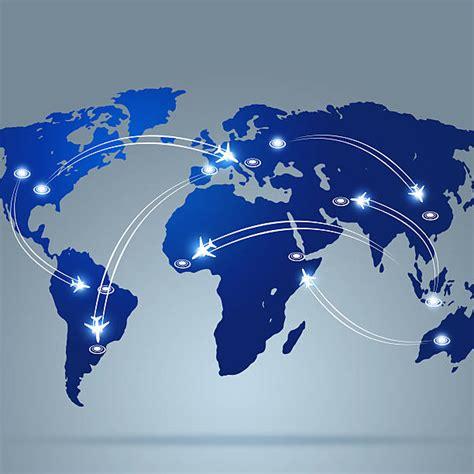
India is emerging as the epicenter of a transformative global aviation renaissance, driven by soaring travel demand, economic resurgence, and strategic geopolitical realignments. In a decisive shift, powerhouse nations including France, Greece, Italy, Germany, Switzerland, the Netherlands, and Denmark are boldly integrating transcontinental air networks with India, unlocking new corridors of commerce, tourism, and bilateral influence. This synchronized expansion not only strengthens Europe’s connectivity to South Asia but also positions India as the critical hub in the next era of global air supremacy.
European airlines are taking decisive steps to increase their footprint in India’s aviation market, responding to a notable rise in demand for both leisure and business travel. As global connectivity reshapes post-pandemic, carriers across Europe are actively launching or planning direct routes to India’s key cities, signaling a new phase of international aviation strategy focused on the South Asian giant. The Scandinavian airline SAS is set to begin five weekly nonstop flights between Copenhagen and Mumbai starting in June next year. This marks a strategic move to connect one of Scandinavia’s major hubs with one of India’s busiest financial centers. The route is expected to serve as a vital bridge for travelers connecting from Northern Europe and North America into India and vice versa. SAS plans to facilitate seamless transfers via Copenhagen to cities like New York, Toronto, and Boston, enhancing access for Indian travelers across the Atlantic.
This development coincides with increased attention on Copenhagen’s role as a transit hub. With India’s growing outbound travel market, Copenhagen is positioned to become a gateway between India, Europe, and North America, supporting the broader objective of expanding trade, tourism, and mobility between the regions. At present, Air India operates direct flights between Delhi and Copenhagen five times a week, although temporarily reduced to three weekly until mid-July. IndiGo has also revealed its intention to operate flights to Copenhagen using wet-leased Boeing 787 Dreamliner aircraft, reflecting the airline’s ambition to grow its international long-haul operations. The entry of multiple carriers on this route underscores both the volume and profitability of the India-Northern Europe corridor.
Beyond Scandinavia, other major European airlines are also adding capacity to the Indian market. KLM is preparing to launch direct flights from Amsterdam to Hyderabad in September, further expanding connectivity to southern India. This new service will complement the airline’s existing flights to Delhi, Mumbai, and Bengaluru, offering travelers more options between Europe and India’s tech and commercial hubs. Simultaneously, Air France is expected to increase the frequency of its Delhi service during the winter season to accommodate peak travel demand. This wave of expansions by European airlines marks a deliberate realignment of their route networks to capture the opportunity in India’s expanding aviation sector.
The country is witnessing sustained growth in air traffic, fueled by a burgeoning middle class, increasing business exchanges, and a rebound in outbound tourism. Europe remains one of the most preferred destinations for Indian travelers, and with evolving bilateral partnerships, the demand for direct connections continues to surge. Meanwhile, regional carriers are also making their move. Aegean Airlines, the national airline of Greece, has announced its interest in launching flights to India once it receives its first batch of Airbus A321LR aircraft in early 2027. The airline is currently analyzing the Indian market as part of its long-haul expansion strategy. Apart from rising travel demand, the improved diplomatic and trade ties between India and Greece are contributing to the airline’s optimistic outlook. With India emerging as a priority tourism and trade partner, Greece sees this as a timely opportunity to strengthen people-to-people and economic connectivity.
Looking further west, Italy’s ITA Airways is preparing to scale its operations in India. Following its existing service to Delhi, the airline is planning to introduce direct flights between Rome and Mumbai by 2026, utilizing its incoming Airbus A330neo aircraft. This addition will allow the airline to serve India’s two largest urban centers, offering Italian and Indian travelers more flexibility in air travel. ITA’s expansion into Mumbai will significantly increase travel options between Western Europe and western India, with the potential to support tourism, business, and VFR (visiting friends and relatives) segments.
As part of the Lufthansa Group, ITA Airways will join an extensive European network that already includes flights from Frankfurt, Munich, and Zurich (the latter operated by Swiss). The group’s coordinated network offers efficient connectivity for Indian passengers traveling to various parts of Central and Western Europe, making the region more accessible from multiple Indian metros.
These developments are more than just route expansions—they represent a deeper recalibration of international air connectivity. European airlines are no longer treating India as a secondary market but rather as a critical growth pillar in their global strategy. The country’s air travel demand is forecast to more than double over the next decade, and international carriers are preparing early to secure a competitive foothold. Additionally, these moves contribute to India’s own aviation and economic ambitions. As India works to position itself as a global trade and tourism hub, improved connectivity with major European centers strengthens its global integration.
Passengers benefit from more choices, competitive fares, and quicker access to international destinations without the need for time-consuming layovers. India is seizing global aviation leadership as surging demand, economic momentum, and strategic ties prompt France, Greece, Italy, Germany, Switzerland, the Netherlands, and Denmark to launch bold transcontinental network integrations, cementing India’s role as a pivotal hub in global air connectivity. With strategic cities like Mumbai, Delhi, Hyderabad, and Bengaluru increasingly connected to global hubs like Rome, Copenhagen, Paris, and Amsterdam, a new chapter in Indo-European aviation is unfolding. This multi-airline, multi-destination expansion reinforces the growing interdependence of India and Europe—driven by shared business interests, booming tourism exchanges, and a mutual vision of deeper cooperation in a post-COVID world.
As the global aviation industry stabilizes and demand rebounds, the India-Europe air corridor is emerging as one of the most dynamic and strategically important segments, offering immense potential for both airlines and passengers alike.
In conclusion, the ongoing expansion of European airlines into the Indian market not only reflects the rising importance of India as a major player in global aviation but also signifies the country’s potential to redefine its role in international air travel. With each new route and partnership, the landscape of global connectivity is being reshaped, paving the way for enhanced economic collaboration and cultural exchange between India and Europe.