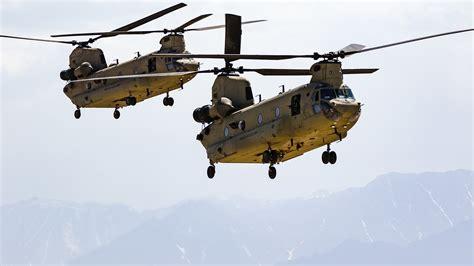
The Chinook helicopter family represents one of the most enduring and recognizable icons in military aviation. Both the CH-47 and MH-47 share the same foundational design and dual-rotor configuration, but under the skin, they serve vastly different operational roles and are optimized for entirely separate mission profiles. As of 2025, these two heavy-lift giants remain integral to modern warfare, logistics, and special operations, thanks to decades of upgrades and mission-specific adaptations.
The Origins of the Chinook Legacy
The CH-47 Chinook entered service in 1961, originally conceived to meet the U.S. Army’s demand for a high-capacity, versatile transport helicopter during the Vietnam War. Designed by Boeing Vertol, it quickly proved indispensable, capable of hauling troops, artillery, and critical cargo across rugged, unforgiving terrain. Over time, the Chinook evolved through various iterations, culminating in the latest variant: the CH-47F Block II. This version boasts a reinforced airframe, digital avionics, and upgraded rotor systems that deliver superior performance in conventional military operations.
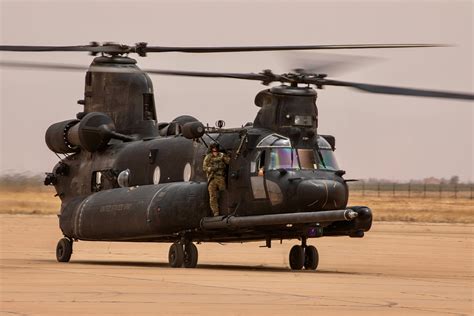
In contrast, the MH-47 series was born out of the U.S. Army’s need for a helicopter tailored for special operations. Operated exclusively by the 160th Special Operations Aviation Regiment (SOAR) — the legendary “Night Stalkers” — the MH-47 series adapted the base CH-47 platform into a covert operations machine. First appearing in the mid-1980s as the MH-47D and evolving through the MH-47E, the latest model, the MH-47G Block II, now represents one of the most technologically advanced helicopters in service today.
Airframe Similarities and Diverging Technologies
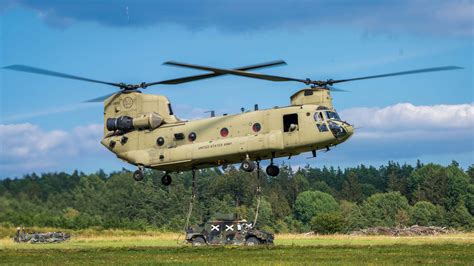
At first glance, the CH-47F and MH-47G look nearly identical. Both are built on the same dual-rotor airframe and are capable of carrying massive payloads. However, that’s where the similarities end. The CH-47F Block II has been designed with a primary focus on logistics, mobility, and payload capacity for conventional military missions. It includes:
- Common Avionics Architecture System (CAAS) for integrated navigation and flight control
- Advanced Composite Rotor Blades (ACRB) for improved lift and performance
- Reinforced drivetrain to carry up to 27,700 pounds
- Extended Range Fuel System (ERFS) to support longer flights without refueling
On the other hand, the MH-47G Block II has been fine-tuned for covert and high-risk missions, integrating capabilities that allow it to operate deep behind enemy lines. These enhancements include:
- Terrain-following and terrain-avoidance radar for low-level flight in poor visibility
- Forward-Looking Infrared (FLIR) and electro-optical sensors
- In-flight refueling probe for extended mission duration
- Electronic warfare and survivability systems
- Fast-rope insertion/extraction systems for special forces
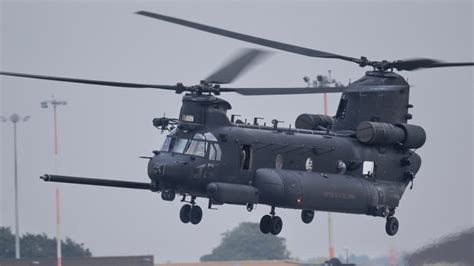
These specialized systems allow the MH-47G to perform infiltration, exfiltration, direct action raids, and hostage rescues, often under cover of darkness and in heavily defended areas.
The Operational Roles: Conventional Logistics vs. Elite Missions
The CH-47F, despite its age, remains one of the most important logistical tools in the U.S. and allied inventories. It is used extensively for troop movement, artillery placement, resupply missions, and disaster relief. One of the most vivid recent examples of its versatility occurred in August 2023, when two CH-47 Chinooks from the Hawaii Army National Guard were deployed to fight wildfires on Maui. Over a five-hour period, they completed 58 water bucket drops, dispensing over 100,000 gallons of water to suppress the flames.
Outside the United States, the CH-47F is operated by numerous allies, including Canada, Australia, the Netherlands, Japan, and the United Kingdom, many of whom customize their Chinooks to meet national requirements. These helicopters are not just workhorses — they are strategic assets that provide operational reach and responsiveness in complex combat theaters.
Conversely, the MH-47G exists in a very different sphere. Flown by the 160th SOAR, it is rarely seen and seldom discussed in detail due to operational secrecy. However, what is known is that the MH-47G continues to play a critical role in special operations worldwide. For example, in September 2024, a detachment of MH-47G helicopters was deployed to the United Kingdom for a joint special forces training exercise with British counterparts. These operations often involve low-altitude insertion, hostile extractions, and high-value target raids in politically sensitive environments.
Avionics, Survivability, and Mission Flexibility
While the CH-47F’s CAAS system allows for better interoperability with other Army aircraft and simplifies maintenance and training, the MH-47G’s avionics are tailored for combat survivability. The MH-47G features advanced GPS-denied navigation systems, defensive countermeasure suites, and encrypted communication systems that ensure mission success in electronic warfare environments.
Moreover, the MH-47G is fitted with ballistic protection, radar warning receivers, and infrared countermeasures. These features allow it to operate in denied airspace and against near-peer adversaries, where conventional aircraft would not survive. The CH-47F, while rugged and durable, lacks this level of protection due to its focus on conventional mission sets rather than contested infiltration.
Payload and Performance Comparison
Despite their differing roles, both helicopters have similar base performance metrics:
- Maximum Gross Weight: Approx. 54,000 lbs (24,494 kg)
- Cruising Speed: ~170 knots (196 mph / 315 km/h)
- Operational Ceiling: ~20,000 feet
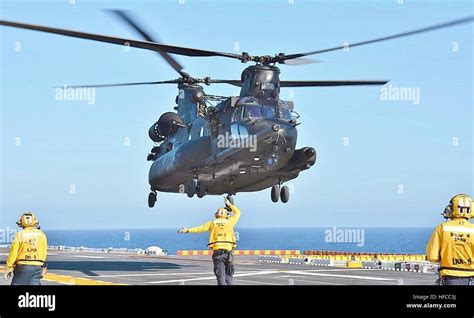
However, the MH-47G often sacrifices some payload for additional mission systems and fuel capacity. With its in-flight refueling capability, the MH-47G can stay airborne far longer than the CH-47F, a key asset for operations deep inside hostile territory. In contrast, the CH-47F can haul more cargo internally or externally, including vehicles, artillery pieces, and building materials, making it a backbone asset for conventional operations.
Tactical Flexibility and Future Outlook
As warfare becomes more asymmetric and global in nature, the ability of helicopters to adapt across mission types has become invaluable. The CH-47F will likely continue to serve as a logistical powerhouse in environments ranging from the Arctic to the Middle East. With Block II upgrades expected to remain in service into the 2040s, its future appears secure.
The MH-47G’s future is equally assured, if not more critical, as special operations remain central to modern military doctrine. The U.S. Army and Boeing continue to invest in next-gen features for the MH-47G, including enhanced low-signature technologies, artificial intelligence-assisted avionics, and autonomous flight capabilities to reduce pilot workload.
Conclusion: A Platform Diverged in Purpose
In essence, the CH-47F and MH-47G represent two very different answers to the same design question. Both were born from the same airframe but have evolved to tackle divergent operational challenges. The CH-47F is the ultimate logistics and support helicopter, while the MH-47G stands as the epitome of special operations aviation. Their coexistence underlines the versatility and longevity of the Chinook platform — a design so effective, it continues to define rotorcraft warfare more than six decades after its first flight.
From the deserts of Iraq to the jungles of Southeast Asia, and from urban hostage rescues to wildfire response missions, these aircraft are more than just tools of war — they are enduring symbols of tactical innovation, mission success, and global military reach.