The United States remains the undisputed heavyweight champion of global aviation, and 2026 will reinforce that reality in loud, jet-fueled fashion. With tens of millions of flights annually, the US domestic market functions less like a transport system and more like a circulatory system—constantly pumping people, cargo, and capital across a continent-sized economy. While there are many ways to measure airline dominance, scheduled flight volume offers a uniquely revealing lens. It exposes network density, operational philosophy, fleet utilization, and strategic intent all at once.
This ranking of the seven US airlines with the most flights scheduled in 2026, based on Cirium data, highlights not only who flies the most, but how and why they do it. Some carriers prioritize short-haul frequency over distance. Others chase long-haul reach and global connectivity. Together, they form a layered ecosystem that keeps America moving at industrial scale.
Globally, carriers like Ryanair, IndiGo, and China Southern dominate their respective regions by flight count, yet none operate within a domestic market as vast and fragmented as the United States. With 88.2 million domestic seats offered in December 2025 alone, US airlines are playing a different game—one that rewards frequency, flexibility, and ruthless efficiency.
7. Spirit Airlines: High-Frequency Flying Under Financial Pressure
Spirit Airlines enters 2026 ranked seventh by scheduled flights, with 137,710 departures planned across its network. On paper, that translates to 26.7 million seats and 25.3 billion available seat miles (ASMs)—numbers that place Spirit squarely in the national conversation despite its relatively modest market share.
Headquartered in Dania Beach, Florida, Spirit is one of the most recognizable ultra-low-cost carriers (ULCCs) in the United States. Its business model is brutally simple: strip fares to the bone, charge for everything else, and fly aircraft as often as possible. This strategy favors short-haul, high-density routes, particularly to leisure-heavy destinations across the US, the Caribbean, and Latin America.
Spirit’s all-Airbus fleet of 129 A320-family aircraft is among the youngest in the country, averaging just 8.1 years. That fleet mix—spanning A320ceos, A320neos, A321ceos, and A321neos—allows for flexible capacity deployment while keeping maintenance costs under control.
Yet the airline’s aggressive growth ambitions are clouded by financial turbulence. Having exited one Chapter 11 restructuring in early 2025 only to refile later that year, Spirit’s 2026 schedule represents both resilience and risk. Whether those flights materialize exactly as planned remains one of the industry’s most closely watched questions.
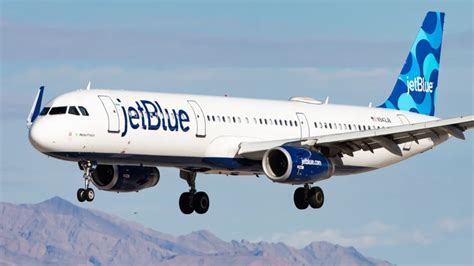
6. JetBlue Airways: Frequency With Flair and a Focus on Experience
With 333,822 scheduled flights, JetBlue more than doubles Spirit’s operational footprint in 2026, signaling its evolution from niche disruptor to full-scale national carrier. Those flights are expected to carry 53.3 million passengers and generate 69.9 billion ASMs, reflecting a network that balances frequency with longer average stage lengths.
JetBlue’s identity has always been slightly rebellious. Founded in 1998 and headquartered in New York, the airline carved out a loyal following by offering better onboard comfort—more legroom, free Wi-Fi, and live TV—while maintaining low-cost DNA. That philosophy continues to shape its route strategy, especially in competitive transcontinental and Caribbean markets.
The airline now operates an all-Airbus fleet, having fully retired its Embraer E190s. Its aircraft roster includes A220-300s for thinner routes and A320/A321 variants, including the long-range A321LR and XLR, for premium-heavy missions. Nearly 100 additional aircraft on order suggest JetBlue is far from done refining its network.
Despite operating far more flights than Spirit, JetBlue’s domestic market share sits at 4.6%, underscoring how concentrated the US airline market has become at the top.
5. Alaska Airlines: A Regional Powerhouse Goes Global
Alaska Airlines claims the fifth spot with 530,710 flights scheduled in 2026, a figure that reflects its steady transformation from regional specialist to national contender. Those flights will carry 71.5 million seats and produce 88.5 billion ASMs, placing Alaska firmly ahead of most non-“Big Four” competitors.
The airline’s ongoing acquisition of Hawaiian Airlines marks a strategic inflection point. While Hawaiian will retain its brand, the combined operation gives Alaska access to widebody aircraft, including Boeing 787 Dreamliners, and unlocks long-haul international ambitions that were previously out of reach.
Historically, Alaska’s strength has been operational reliability and dominance along the US West Coast and Alaska itself. Its Boeing 737-centric mainline fleet, supported by Embraer 175 regional jets operated by partners, allows for dense, high-frequency scheduling in challenging geographies.
With a 6.1% domestic market share, Alaska punches well above its weight. The addition of widebody capability suggests its 2026 flight count may only be a waypoint, not a ceiling.
4. Southwest Airlines: The Frequency King of the Domestic Skies
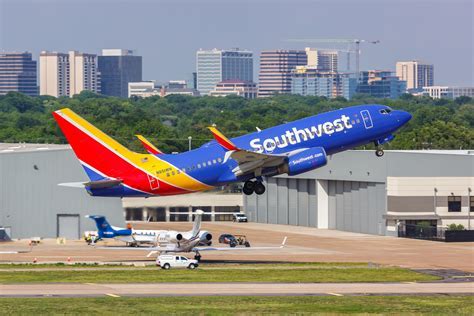
Southwest Airlines is scheduled to operate an astonishing 1,192,990 flights in 2026, making it the busiest airline in the world by domestic departures alone. Those flights will offer 192 million seats and generate 153 billion ASMs, all without relying on long-haul international routes.
Southwest’s model is deceptively simple: fly point-to-point, avoid hub congestion, and keep aircraft in the air as much as possible. Its all-Boeing 737 fleet, now totaling 803 aircraft, is the largest single-type jet fleet on Earth—a logistical advantage that simplifies training, maintenance, and scheduling.
The airline serves over 100 destinations across 42 states, plus select Caribbean markets. Despite its size, Southwest remains fundamentally domestic, a choice that prioritizes frequency over distance.
With a 16.8% domestic market share, Southwest sits just behind Delta and ahead of United, proving that relentless short-haul flying can rival global networks in sheer scale.
3. United Airlines: Fewer Flights, Farther Reach
United Airlines ranks third by flight count with 1,854,797 scheduled flights, but this number understates its true operational weight. Those flights will carry 239 million passengers and generate a colossal 349 billion ASMs, the highest of any US carrier in 2026.
The reason is distance. United’s network is built around longer average stage lengths, spanning the Atlantic, Pacific, and deep into Latin America. While American and Delta fly more segments, United’s flights simply go farther.
Its 1,060-aircraft fleet is one of the most diverse in the world, featuring a massive widebody presence. United operates the second-largest widebody fleet globally, trailing only Emirates, and uses it to anchor a truly worldwide route map.
Domestically, United holds a 16.5% market share, but internationally its influence is even greater. In 2026, United’s schedule reflects an airline optimized not for volume alone, but for global connectivity at scale.
2. Delta Air Lines: Precision, Scale, and Operational Discipline
Delta Air Lines will operate 1,875,491 flights in 2026, narrowly edging United by frequency while carrying 257 million passengers. Its 314 billion ASMs place it third nationally, but raw numbers tell only part of the story.
Delta is widely regarded as the most operationally disciplined airline in the United States. Its fleet of 988 aircraft is deliberately diverse, allowing the airline to tailor capacity precisely to demand. Delta is also the world’s largest operator of the Boeing 717, 757, and 767, aircraft types it has extracted extraordinary value from.
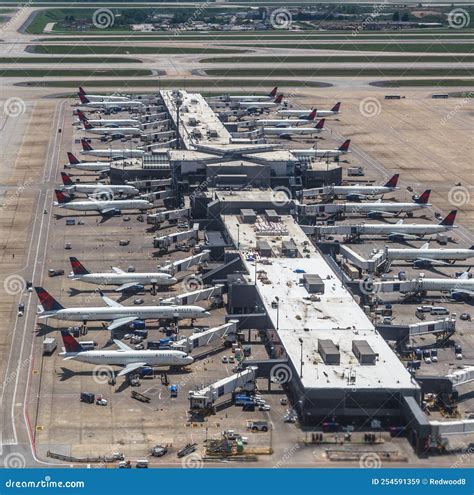
With a 17.9% domestic market share, Delta leads the nation, supported by fortress hubs in Atlanta, Detroit, Minneapolis, and Salt Lake City. Its history—shaped by the Pan Am asset acquisition and the Northwest merger—has produced an airline that blends legacy reach with modern efficiency.
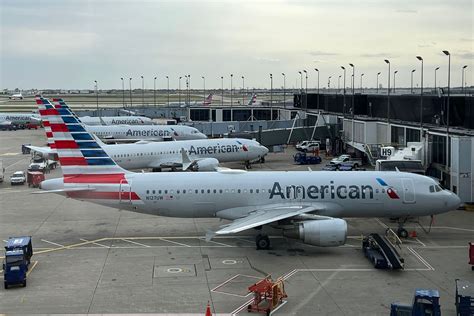
1. American Airlines: The Undisputed Frequency Champion
American Airlines stands alone at the top, with 2,392,110 flights scheduled in 2026—more than half a million more than Delta. Those flights will offer 295.5 million seats, the most of any airline in the world.
American’s dominance is built on short-haul density. Its routes are, on average, shorter than those of its peers, resulting in 324 billion ASMs, second only to United. This strategy maximizes market presence, especially in the central and eastern United States.
Operating a fleet of over 1,013 aircraft, American serves nearly 350 destinations across 48 countries and anchors the oneworld alliance in North America. Despite its immense scale, American’s market valuation trails rivals—a reminder that flying the most does not always mean earning the most.
Still, in pure operational terms, no airline comes close. In 2026, American Airlines will quite literally own the US skies by frequency, stitching together the largest aviation network the country has ever seen.
In 2026, these seven airlines will collectively operate well over 9 million flights, shaping not just travel patterns, but economic rhythms across the United States. Frequency is power, and in American aviation, power has never been more concentrated—or more fascinating to watch.