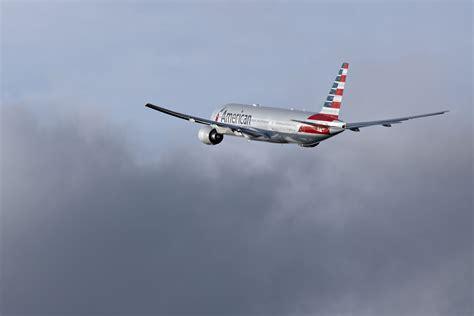
For decades, American Airlines built its international strategy around powerful hubs such as Dallas/Fort Worth, Miami, Charlotte, Chicago O’Hare, Philadelphia, and New York JFK. These airports provided the airline with enormous connecting traffic, strong corporate contracts, and a reliable stream of passengers feeding long-haul routes. That is precisely why the launch of a nonstop flight between Seattle-Tacoma International Airport (SEA) and London Heathrow Airport (LHR) in March 2021 surprised many industry observers.
Seattle was never a traditional American Airlines stronghold. The carrier had only a modest presence there compared to competitors, particularly Alaska Airlines and Delta Air Lines. Yet American chose to deploy one of the world’s most valuable international route pairings—Seattle to London Heathrow—during one of the most challenging periods in aviation history.
The decision was not random. It was the product of a larger strategic vision involving alliances, competition, market positioning, and the future of airline partnerships in North America. Although the route lasted only until October 2023, its brief existence offers a fascinating look into how major airlines attempt to expand beyond their traditional boundaries.
The story of American Airlines’ Seattle–London experiment reveals how bold network strategies can appear highly logical on paper while proving much more difficult in practice.
After all, airlines do not launch transatlantic routes on a whim. Every new international flight represents millions of dollars in investment, years of planning, and a significant commitment of aircraft and personnel.
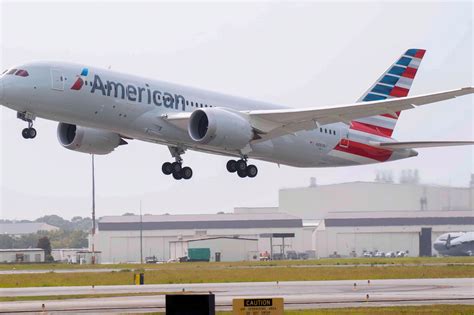
The Real Reason American Airlines Started Flying Between Seattle And London
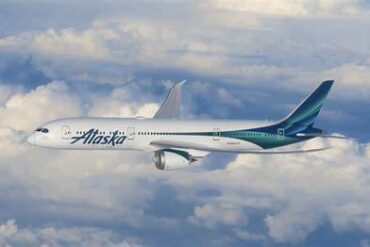
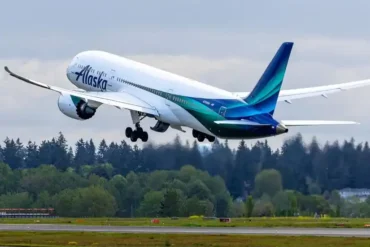
The primary catalyst behind the route was American Airlines’ expanding partnership with Alaska Airlines.
In 2020, American and Alaska announced an ambitious West Coast International Alliance designed to strengthen both carriers’ positions against competitors. The partnership became even more significant when Alaska Airlines officially joined the oneworld alliance in March 2021.
This alliance dramatically changed the strategic landscape on the U.S. West Coast.
Alaska Airlines possessed something American desperately needed: an enormous domestic network throughout the Pacific Northwest and along the West Coast. Seattle served as Alaska’s largest hub, generating thousands of daily passengers traveling to destinations throughout North America. While Alaska excelled at domestic connectivity, it lacked a substantial long-haul international network of its own.
American Airlines saw an opportunity.
By operating international flights from Seattle, American could effectively become the global extension of Alaska’s domestic network. Passengers from cities such as Spokane, Portland, Boise, Anchorage, Sacramento, and dozens of smaller markets could connect through Seattle onto American’s long-haul services.
In theory, the arrangement created a powerful ecosystem. Alaska would provide domestic feed, while American would provide international reach.
London Heathrow represented the perfect starting point because it remains one of the most important business and leisure destinations in the world. Heathrow also functions as a gateway to countless destinations across Europe, Africa, the Middle East, and Asia.
From a strategic perspective, Seattle–London appeared to be a natural fit.
Seattle Was Becoming One Of America’s Most Important Global Cities
Another major factor behind the route was Seattle’s transformation into a global economic powerhouse.
Over the previous two decades, Seattle had evolved from a regional city into one of the world’s most influential technology and aerospace centers. Major multinational corporations established enormous operations throughout the metropolitan area, creating substantial demand for international business travel.
Among the region’s most prominent companies are:
- Amazon
- Microsoft
- Boeing
- Starbucks
- Expedia
- T-Mobile
These corporations maintain extensive business relationships throughout Europe, making London a particularly important destination.
The Seattle metropolitan area also experienced strong population growth, attracting highly educated professionals and internationally connected residents. This demographic shift increased demand for both business and leisure travel to Europe.
For American Airlines, the market fundamentals appeared attractive.
The city generated premium travelers willing to pay for business-class tickets. It possessed strong economic growth. It maintained deep international ties. And London remained one of the most sought-after destinations for travelers on both sides of the Atlantic.
Viewed in isolation, Seattle looked like a market capable of supporting additional transatlantic capacity.

The Battle Against Delta Air Lines
The Seattle–London route was not simply about serving passenger demand.
It was also about competition.
For years, Delta Air Lines had aggressively expanded its presence in Seattle. What began as a relatively modest operation evolved into one of Delta’s most strategically important West Coast hubs.
Delta recognized Seattle’s geographic advantages early.
The airport provided excellent positioning for flights to Asia, strong local demand, and growing corporate travel opportunities. Throughout the 2010s, Delta invested heavily in facilities, routes, and partnerships to strengthen its foothold.
This expansion inevitably created tension with Alaska Airlines, which historically dominated Seattle.
As Delta grew, competition intensified. American Airlines saw an opportunity to align with Alaska and collectively challenge Delta’s increasing influence.
Launching Seattle–London allowed American to send a clear message to both travelers and competitors: the American-Alaska partnership intended to compete for premium international traffic originating in the Pacific Northwest.
The route therefore carried symbolic importance beyond its direct financial performance.
It demonstrated that American was willing to use alliance relationships creatively rather than relying exclusively on traditional hub operations.
Why The Timing Could Hardly Have Been Worse
Unfortunately, even the most carefully designed strategy cannot escape unfavorable circumstances.
American Airlines launched Seattle–London in March 2021, during the lingering effects of the COVID-19 pandemic.
International travel demand remained severely depressed. Border restrictions changed frequently. Corporate travel budgets were constrained. Many companies continued relying on virtual meetings rather than international business trips.
The airline industry was still operating in an environment characterized by uncertainty.
Normally, a new international route requires time to mature. Airlines often accept modest losses during the early months while passengers become familiar with the service. The pandemic made that process dramatically more difficult.
Travel patterns that had existed for decades suddenly became unpredictable.
Many premium travelers—the passengers most critical to transatlantic profitability—were among the slowest groups to return. Corporate travel recovery lagged behind leisure demand, undermining one of the key assumptions supporting the Seattle–London route.
While leisure passengers eventually returned in significant numbers, airlines generally rely on higher-yield business travelers to generate sustainable profits on long-haul international routes.
That recovery took much longer than many carriers initially expected.
The Problem With Operating From A Non-Hub
Even beyond pandemic-related challenges, American faced a structural disadvantage.
Seattle was not an American Airlines hub.
This distinction mattered enormously.
Successful international routes often depend on large connecting networks controlled by the operating airline. At American’s major hubs, passengers arrive from hundreds of domestic flights before dispersing onto international departures.
This creates network flexibility and traffic diversity.
Seattle lacked those advantages for American.
Although Alaska provided valuable connecting passengers, those customers were still primarily loyal to Alaska rather than American. The relationship was beneficial, but it was not identical to operating a fully integrated hub where the airline controls every aspect of the customer journey.
Corporate contracts also presented challenges.
American lacked the deep historical business relationships in Seattle that it enjoyed in Dallas, Miami, or Charlotte. Building those relationships requires years of investment and market presence.
As a result, American entered a highly competitive market without many of the structural advantages that typically support long-haul international success.
Competition Created Additional Pressure
The route also faced competition from an unexpected source.
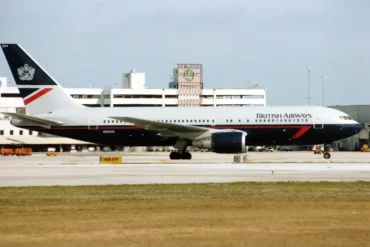
American Airlines and British Airways maintain one of the airline industry’s most extensive transatlantic joint ventures. Under this arrangement, both carriers coordinate schedules, pricing, and revenue sharing across many routes.
British Airways already operated flights between Seattle and London.
While the joint venture meant the airlines cooperated financially, it also raised questions about whether additional capacity was truly necessary.
When multiple flights serve the same city pair, airlines must ensure sufficient demand exists to fill seats profitably. During periods of weakened international travel demand, excess capacity can become a serious challenge.
The market therefore faced a delicate balancing act.
Too little capacity risks losing customers to competitors. Too much capacity can dilute profitability across all participating airlines.
The Seattle–London market struggled to find the optimal balance during an exceptionally turbulent period for global aviation.
American’s Larger Seattle Ambitions
The London route represented only one component of a much broader vision.
American Airlines had ambitious plans to transform Seattle into a meaningful international gateway connected to Alaska’s domestic network.
Among the most notable proposals were nonstop services to Bangalore and Shanghai.
The Bangalore route attracted significant attention because Seattle and Bangalore share deep technology-sector connections. Major companies operating in both regions generate substantial business travel demand.
However, the route never materialized as originally planned.
Pandemic disruptions delayed the launch. Later, geopolitical developments complicated operations further. The closure of Russian airspace to U.S. airlines significantly altered routing options and economics, making the service increasingly difficult to justify.
Shanghai faced similar obstacles.
Ongoing travel restrictions and uncertain demand prevented the route from launching as scheduled.
As these projects disappeared, Seattle–London increasingly stood alone as the most visible example of American’s international ambitions in the Pacific Northwest.
Without a broader portfolio of long-haul destinations, sustaining momentum became more challenging.
Why American Finally Abandoned The Route
By October 2023, American Airlines quietly ended Seattle–London service.
The decision reflected a combination of factors rather than a single fatal flaw.
Demand recovery remained uneven. Competition persisted. Operating costs increased. Corporate travel patterns evolved. The route’s strategic value no longer justified continued deployment of scarce long-haul aircraft.
Airlines constantly evaluate where each aircraft can generate the highest return.
A Boeing 787 assigned to Seattle–London cannot simultaneously operate another potentially more profitable route elsewhere in the network.
As demand returned globally, American had numerous opportunities to redeploy aircraft toward stronger-performing markets connected to its core hubs.
From a network planning perspective, reallocating resources became increasingly logical.
The airline ultimately concluded that the Seattle–London experiment had not delivered sufficient long-term value to warrant continuation.
What The Route Taught The Airline Industry
Although the route failed to survive, it provided valuable lessons about modern airline strategy.
The experiment demonstrated both the potential and limitations of alliance-driven expansion.
On one hand, partnerships can create access to new markets without requiring airlines to build hubs from scratch. Alaska’s domestic network unquestionably enhanced American’s ability to compete in Seattle.
On the other hand, alliance connectivity alone may not fully replicate the advantages of operating a genuine hub with deep local market penetration and longstanding customer relationships.
The experience also highlighted how external events can dramatically reshape route economics.
Few planners could have predicted the unprecedented disruption caused by the pandemic or the subsequent shifts in corporate travel behavior. Strategies that appeared sound in 2019 often looked very different by 2023.
The Seattle–London route became a real-world case study in balancing ambition with operational realities.
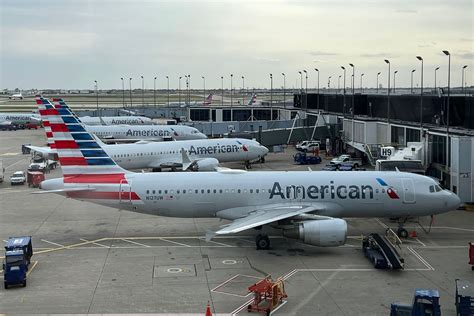
The American–Alaska Partnership Continues To Matter
Importantly, the route’s cancellation did not signal the failure of the broader American-Alaska relationship.
The partnership continues to provide significant benefits for both airlines and their customers.
Travelers enjoy expanded connectivity, reciprocal loyalty benefits, coordinated schedules, and improved access to destinations throughout North America and beyond. The alliance remains one of the most strategically significant partnerships in the U.S. airline industry.
Future opportunities may emerge in different forms.
As international demand evolves and new market opportunities develop, American may continue leveraging Alaska’s network to reach customers throughout the Pacific Northwest. The approach may simply involve different routes, different destinations, or different operational structures.
What remains clear is that Seattle continues to be strategically important.
The city’s economic influence, corporate base, and international connectivity ensure it will remain a valuable aviation market for years to come.
American Airlines’ brief Seattle–London adventure ultimately serves as a reminder that aviation is a business where bold ideas must continually prove themselves in the marketplace. The route made perfect strategic sense from certain perspectives: it leveraged a powerful alliance, targeted a wealthy metropolitan area, and challenged a major competitor. Yet success in airline planning requires more than a compelling strategy. It requires favorable timing, sustained demand, competitive advantages, and economic resilience.
For just over two years, American Airlines attempted to make Seattle–London a cornerstone of its Pacific Northwest ambitions. The route may be gone, but the lessons it provided about alliances, competition, and network strategy continue to influence how airlines think about expansion in an increasingly interconnected world.