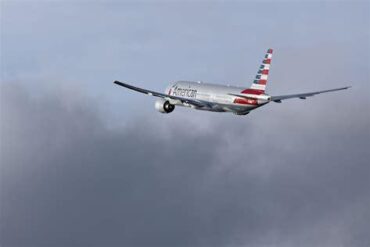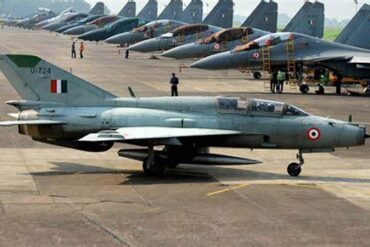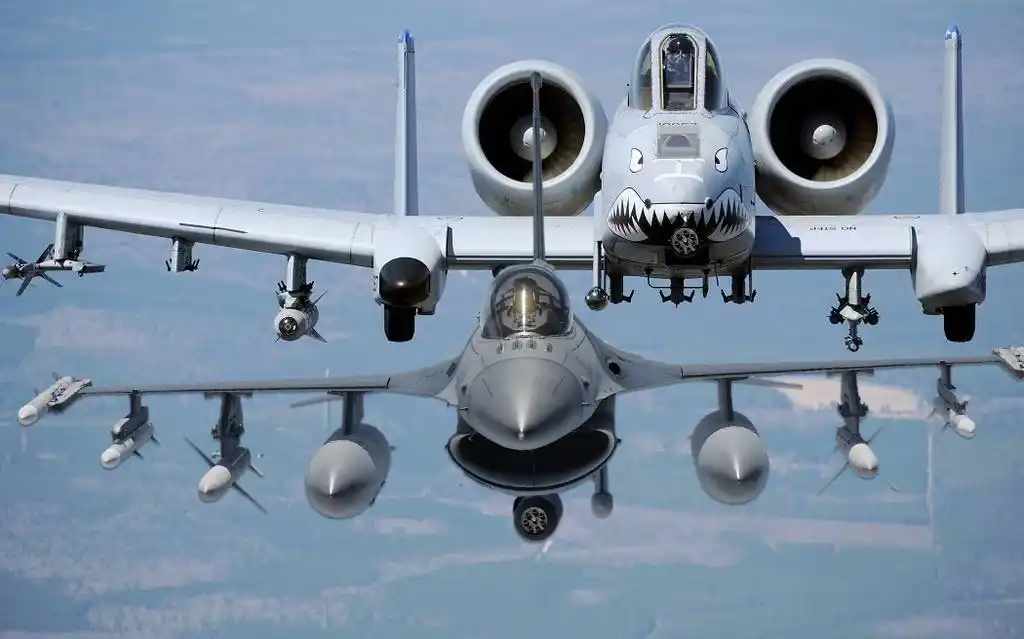
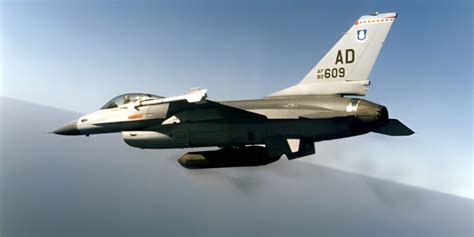
The F-16 Fighting Falcon is one of the most versatile multirole fighter jets ever designed, excelling in air superiority and precision strike missions. On the other hand, the GAU-8 Avenger, a powerful 30mm seven-barrel Gatling gun, remains synonymous with the A-10 Thunderbolt II, an aircraft built explicitly for close air support and anti-armor operations. Despite their respective successes, attempts to integrate the GAU-8’s firepower onto the F-16 platform resulted in failure due to fundamental structural and operational incompatibilities.
The GAU-8 Avenger: A Powerhouse of Destruction
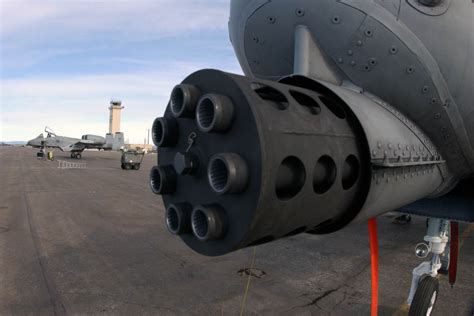
The GAU-8/A Avenger is an engineering marvel, originally developed for the A-10 “Warthog” to fulfill its role in tank-killing and ground support. It fires 30mm depleted uranium armor-piercing rounds with extreme efficiency, capable of destroying armored targets at a rapid rate of 1,800–4,200 rounds per minute. The gun itself is massive, measuring 6.4 meters in length and weighing approximately 1.83 metric tons, including its ammunition feed system.
This powerful system is integrated into the A-10’s fuselage, requiring a reinforced airframe to withstand the enormous recoil force of 35 kN. The aircraft is practically built around the gun, with the main landing gear positioned to accommodate the weapon’s size.
Attempts to Equip the F-16 with the GAU-8: The A-16 Program
In the 1980s, the U.S. Air Force sought a lighter alternative to the A-10 for close air support (CAS). This led to the development of the A-16, a modified F-16 variant that was intended to utilize a variant of the GAU-8. However, due to the F-16’s compact airframe, integrating the massive seven-barrel cannon internally was impossible. As a compromise, the program developed the GPU-5/A Pave Claw, an external gun pod housing the GAU-13/A, a four-barrel variant of the GAU-8.
Challenges and Failures of the GPU-5/A Gun Pod
Despite its potential, the GPU-5/A pod suffered from numerous issues:
1. Excessive Recoil and Airframe Instability
The F-16’s lightweight structure was not designed to handle the recoil force of such a powerful weapon. During test firings, the aircraft experienced severe vibrations, making it difficult for pilots to maintain accuracy. The recoil force caused oscillations in the airframe, leading to a significant increase in shot dispersion.
2. Poor Targeting Capabilities
Unlike the A-10, which operates at lower speeds and is built for sustained ground attack runs, the F-16’s high-speed maneuverability worked against its effectiveness in CAS roles. The limited time available to line up targets reduced the effectiveness of the GPU-5/A.
Additionally, the F-16’s fire control system lacked continuous computed impact point (CCIP) targeting for the gun pod, making it difficult for pilots to accurately aim and adjust fire.
3. Real-World Combat Performance and Operational Rejection
During the Gulf War, the GPU-5/A pod was deployed for combat evaluation. However, pilots found it to be unreliable in actual combat scenarios, leading to its removal from service after limited use. The inaccuracy, recoil, and lack of precision guidance meant that F-16 pilots preferred using cluster bombs and precision-guided munitions instead.
The failure of the A-16 concept reinforced the need for a dedicated CAS aircraft rather than a multi-role fighter attempting to take on this role with a makeshift gun system.
Why the F-16 Sticks with the M61 Vulcan
Rather than using the GAU-8 or GPU-5/A, the F-16 Fighting Falcon continues to rely on the M61A1 Vulcan, a 20mm six-barrel Gatling gun with a much higher rate of fire (4,000–6,000 rounds per minute) but significantly lower recoil and lighter weight. This allows the F-16 to effectively engage enemy aircraft and lightly armored ground targets without compromising its flight performance.
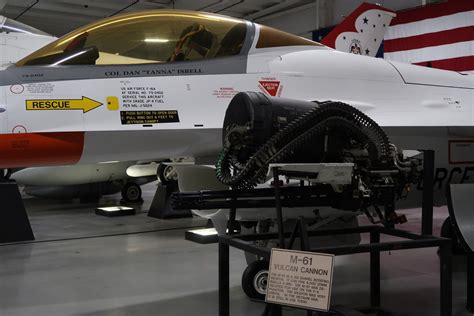
Comparison of GAU-8, GPU-5/A, and M61A1
| Feature | GAU-8/A (A-10) | GPU-5/A (F-16 Attempt) | M61A1 Vulcan (F-16 Standard) |
|---|---|---|---|
| Caliber | 30mm | 30mm | 20mm |
| Barrels | 7 | 4 | 6 |
| Rate of Fire | 1,800–4,200 RPM | 2,400 RPM | 4,000–6,000 RPM |
| Weight | 1.83 tons | 635 kg | 112 kg |
| Recoil Force | 35 kN | 18 kN | 5.3 kN |
| Combat Performance | Effective for CAS | Poor accuracy | Air-to-air & light CAS |
Conclusion
The attempt to integrate the GAU-8’s firepower onto the F-16 proved to be an ill-fated endeavor. While the A-16 project and the GPU-5/A gun pod demonstrated theoretical advantages, the incompatibility between the gun system and the F-16’s airframe ultimately rendered the effort impractical. The excessive recoil, poor targeting, and lack of stability led to operational rejection, reaffirming the need for specialized aircraft like the A-10 for close air support roles.
As the A-10 nears retirement, the U.S. Air Force is shifting toward precision-guided munitions rather than heavy onboard cannons. The lessons learned from the F-16 GAU-8 experiment continue to influence future aircraft weapons integration strategies, emphasizing that not all aircraft can be multi-role platforms without compromising effectiveness.
FAQ
1. Why couldn’t the F-16 use the GAU-8 like the A-10?
The F-16’s airframe was too lightweight to handle the recoil force and physical size of the GAU-8 Avenger. Unlike the A-10, which was specifically built around the gun, the F-16’s design did not allow for such integration without severe operational issues.
2. What happened to the A-16 project?
The A-16 project was canceled after testing revealed significant issues with the GPU-5/A gun pod, including severe recoil, poor accuracy, and difficulty in targeting ground units. Pilots abandoned the gun pod in favor of precision-guided munitions and cluster bombs.
3. What is the primary gun used by the F-16?
The F-16 uses the M61A1 Vulcan, a 20mm six-barrel rotary cannon designed for air-to-air combat and light ground support, which is better suited to the aircraft’s capabilities compared to the GAU-8’s excessive recoil and weight.