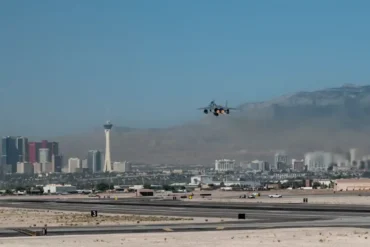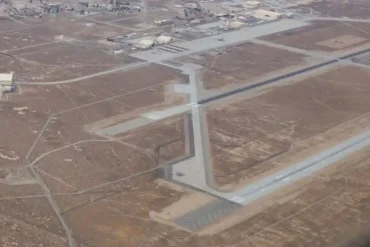
The United States Air Force is often defined in the public imagination by vast airfields, endless flight lines, and constant activity from combat jets or heavy airlifters. Names like Eglin, Nellis, and Andrews dominate discussions because they visibly project American airpower on a massive scale. Yet beneath this highly visible layer exists a quieter, more restrained aviation footprint—air bases that are small in daily activity, limited in permanently assigned aircraft, and tightly focused in mission, but no less critical to national defense.
We examine five of the smallest U.S. Air Force bases that still operate active runways within U.S. territory. These installations are not auxiliary fields, nor are they runway-less intelligence or space bases. Each one maintains a functioning airfield, yet operates at a scale more comparable to regional or specialized airports than to sprawling military hubs. Their importance lies not in volume, but in precision, specialization, and strategic flexibility.
“Small,” in this context, does not imply short runways, weak pavement, or low standards. Several of these bases can support aircraft larger than those seen at many civilian airports. What unites them is a narrow mission scope, low aircraft density, or a flight schedule shaped by training or specialized operations rather than constant deployment. In several cases, the runway exists as much for contingency access and future flexibility as for routine use.
This contrast between physical capability and operational quiet is what makes these bases strategically compelling. They illustrate how the modern Air Force increasingly values mission focus over mass, and how aviation infrastructure can remain essential even when daily flight activity is limited.
Grand Forks Air Force Base: A Strategic Airfield Quieted by Mission Evolution
For decades, Grand Forks Air Force Base in North Dakota stood as a pillar of Strategic Air Command power. During the Cold War, the base hosted Boeing B-52 bombers and later KC-135 Stratotankers under the 319th Bomb Wing and subsequent refueling units. The runway was once a conduit for global nuclear deterrence, with aircraft launching regularly on alert missions and long-range training sorties.
Today, that same runway tells a very different story.
Although Grand Forks retains extensive airfield infrastructure—including a long, heavy-rated concrete runway—the base no longer hosts a permanently assigned fleet of large crewed aircraft. Daily fixed-wing activity is minimal, and the once-crowded flight line is largely quiet. The base’s modern mission centers on intelligence, surveillance, and reconnaissance, particularly remotely piloted aircraft operations under the 319th Reconnaissance Wing.
This evolution underscores a key theme in contemporary Air Force basing: strategic relevance does not require constant runway use. Grand Forks maintains its airfield to preserve flexibility for future missions, contingency deployments, and temporary aircraft basing. The runway remains operationally viable, even as the primary mission shifts toward digital, remote, and information-centric warfare.
The base’s inclusion among the smallest aviation-active Air Force installations highlights a paradox. Physically, Grand Forks is expansive. Operationally, it is restrained. This contrast reflects how legacy infrastructure is being adapted to modern mission sets without abandoning aviation access altogether.
Altus Air Force Base: Heavy Aircraft Operations Within a Compact Training Environment
Altus Air Force Base in southwestern Oklahoma presents a different form of smallness. Unlike Grand Forks, Altus maintains consistent aircraft operations. What makes it small is not inactivity, but mission design.
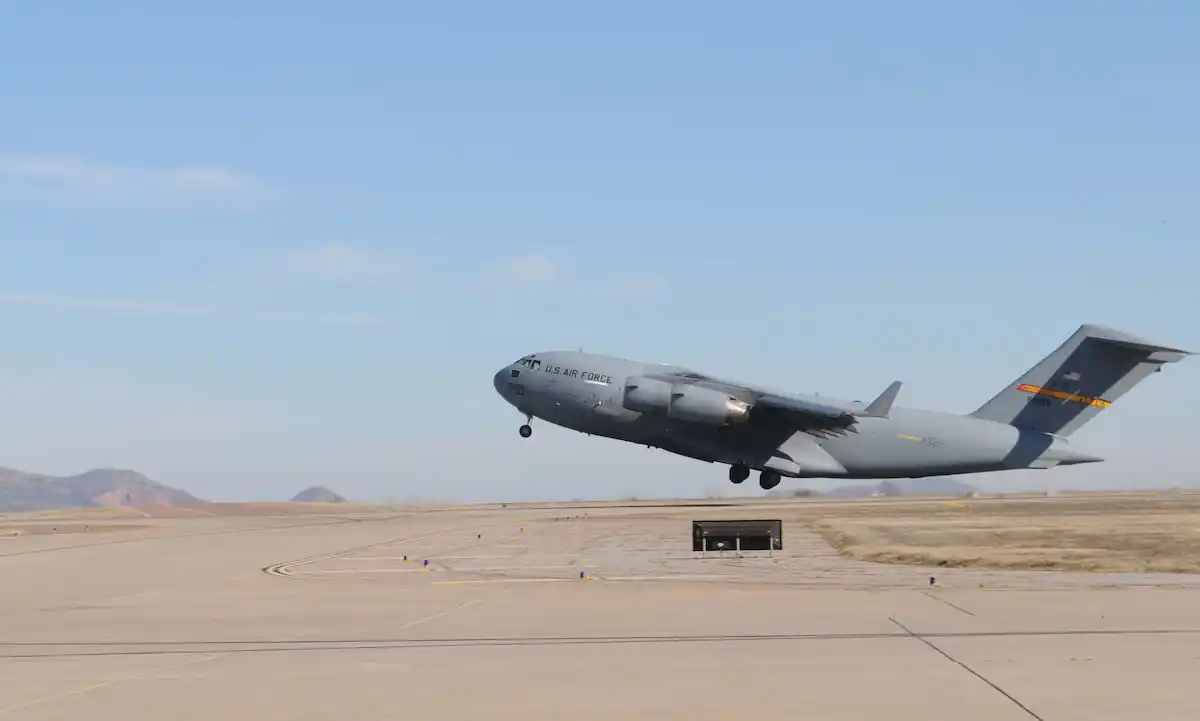
Home to the 97th Air Mobility Wing, Altus trains aircrew members on the C-17 Globemaster III and KC-46 Pegasus. These are among the largest aircraft in the Air Force inventory, yet the base operates them within a tightly controlled and compact airfield layout. There is no constant deployment cycle, no large permanently assigned combat fleet, and no need for sprawling ramp space.
The runway and taxiways are engineered to handle heavy loads, but the airfield supports predictable, repetitive training sorties rather than surge operations. This allows Altus to function efficiently with limited apron complexity and a relatively small operational footprint. Aircraft movements are scheduled with precision, enabling multiple training cycles per day without congestion.
Altus demonstrates that aircraft size does not define airfield scale. A base can support widebody military aircraft while remaining operationally small if its mission emphasizes training consistency over global reach. The result is a quiet, disciplined aviation environment that maximizes instructional throughput while minimizing infrastructural sprawl.
Columbus Air Force Base: High-Tempo Flight Training on a Lean Airfield
If Grand Forks is quiet by design and Altus is compact by mission, Columbus Air Force Base in Mississippi is small by physical necessity. The base is built almost entirely around undergraduate pilot training, and its airfield reflects that singular purpose.
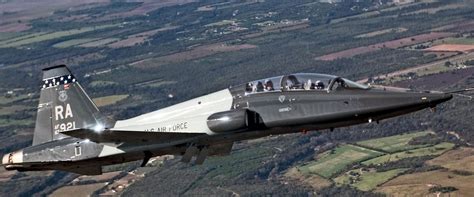
Columbus operates a streamlined set of runways and ramps supporting T-6A Texan II turboprops and T-38C Talon jet trainers. From an airport operations perspective, it resembles a busy regional training airport rather than a multi-mission military hub. Aircraft movements are frequent, but infrastructure remains lean and highly organized.
The base’s strength lies in tempo efficiency. Student pilots fly multiple sorties daily, generating intense runway usage without requiring expansive taxiway networks or large parking aprons. Even with the inactivation of legacy squadrons such as the 50th Flying Training Squadron, Columbus continues to sustain a high operational rhythm through consolidated training units.
This balance between high activity and limited physical scale illustrates a crucial Air Force principle: training effectiveness depends on precision and repetition, not size. Columbus proves that a small airfield can sustain demanding aviation schedules when designed around a focused mission set.
Laughlin Air Force Base: Concentrated Pilot Production Through Predictable Operations
Among all U.S. Air Force training bases, Laughlin Air Force Base in Texas may best exemplify how a small airfield can deliver outsized results. Laughlin’s footprint is compact, yet it supports one of the most intense and disciplined pilot training pipelines in the service.
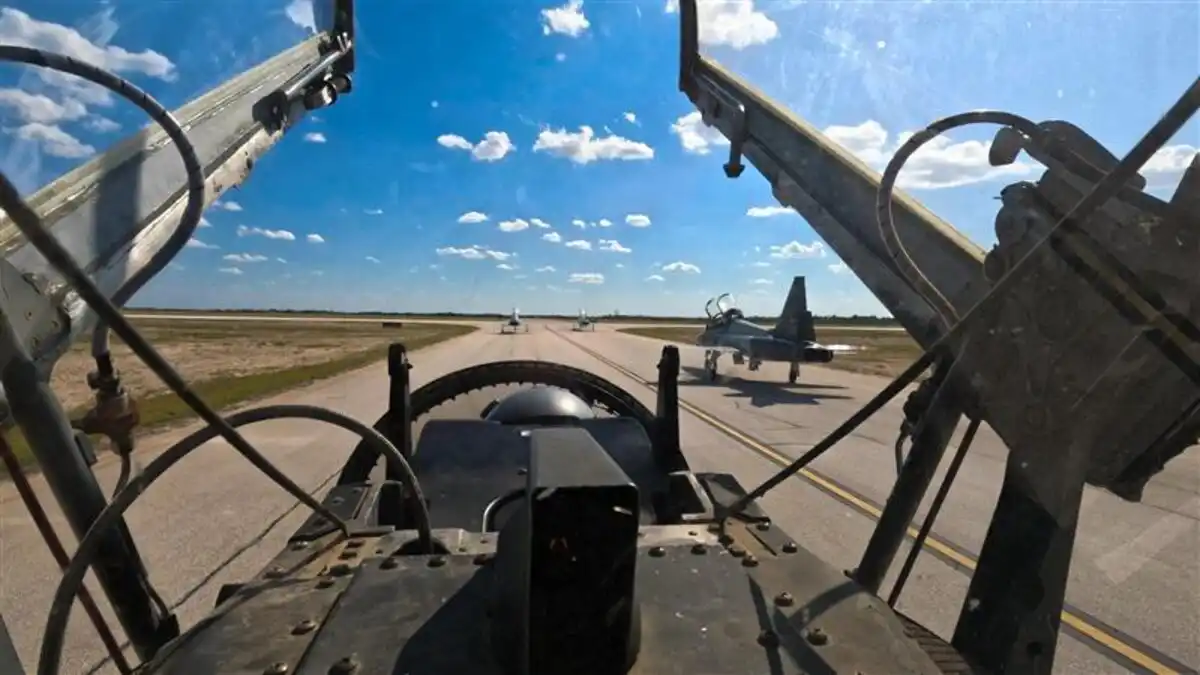
The 47th Flying Training Wing conducts Specialized Undergraduate Pilot Training using the T-6A Texan II and T-38C Talon. Unlike multi-role bases, Laughlin’s airfield exists for a single purpose: efficient pilot production. There are no combat squadrons, no airlift units, and no deployment-driven surge requirements.
What distinguishes Laughlin is the predictability of its flight operations. Sorties follow structured patterns, runway usage is optimized for training cycles, and maintenance and fueling are synchronized to support constant throughput. The base previously supported the T-1A Jayhawk, but recent mission realignments further narrowed its focus, reinforcing its identity as a specialized training installation.
Laughlin shows how an Air Force base can remain small while maintaining relentless operational tempo. Its aviation environment is dense in activity but narrow in scope, allowing it to operate with minimal infrastructure while delivering consistent, measurable outcomes.
Cannon Air Force Base: Specialized Warfare From a Modest Runway Network
Cannon Air Force Base in New Mexico stands apart from the others on this list because of the complexity of its missions rather than the simplicity of its operations. Despite a relatively modest airfield footprint, Cannon supports some of the Air Force’s most technically demanding aviation roles.
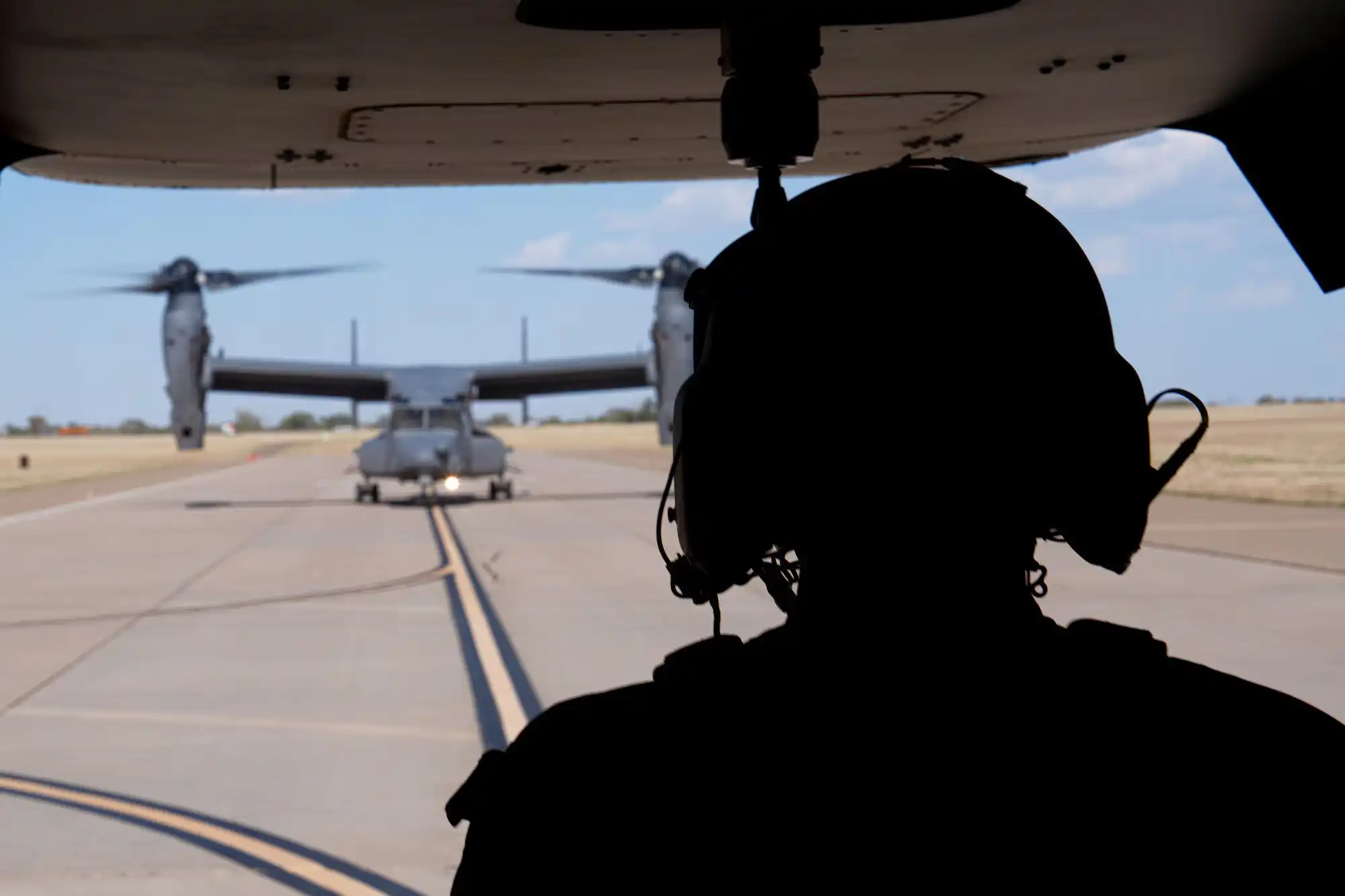
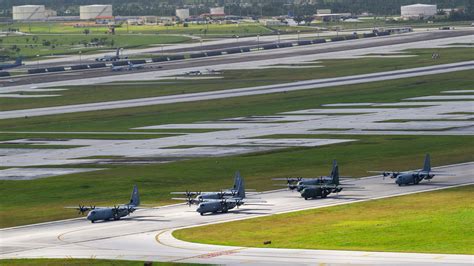
Home to the 27th Special Operations Wing, Cannon hosts aircraft such as the CV-22B Osprey, MC-130J Commando II, AC-130J Ghostrider, MQ-9 Reaper, and U-28A Draco. These platforms conduct night operations, infiltration and exfiltration training, close air support, and specialized intelligence missions—often under conditions that demand extreme precision.
The base operates two runways capable of handling diverse aircraft types without the need for expansive taxiway systems or massive ramps. From an airport operations standpoint, Cannon functions somewhere between a purpose-built special operations field and a lightly used military airfield. Aircraft density is low, but mission intensity is high.
Cannon’s inclusion underscores a critical insight: small aviation footprints can support disproportionately complex missions. The base’s value lies not in volume, but in its ability to generate specialized capabilities that few other installations can replicate.
Strategic Lessons From the Air Force’s Smallest Runway Bases
Taken together, these five installations challenge conventional assumptions about military aviation infrastructure. Size, in the Air Force context, is no longer synonymous with importance. Instead, relevance is increasingly defined by mission clarity, adaptability, and operational efficiency.
Small bases offer strategic advantages. They are easier to secure, simpler to manage, and more flexible in responding to evolving mission demands. Their runways remain vital nodes in a distributed network, ready to support contingency operations, training surges, or specialized deployments without the overhead of constant activity.
As the Air Force continues to balance crewed aviation with remote, digital, and space-enabled missions, these installations illustrate how legacy airfields can remain relevant without remaining busy. They embody a quieter form of airpower—one that prioritizes readiness over visibility and specialization over scale.
In an era where effectiveness matters more than spectacle, the smallest U.S. Air Force bases with active runways quietly sustain some of the service’s most essential capabilities.