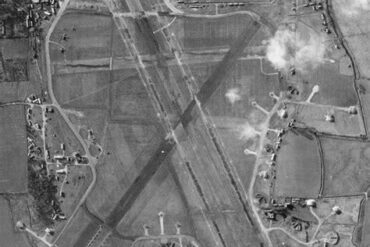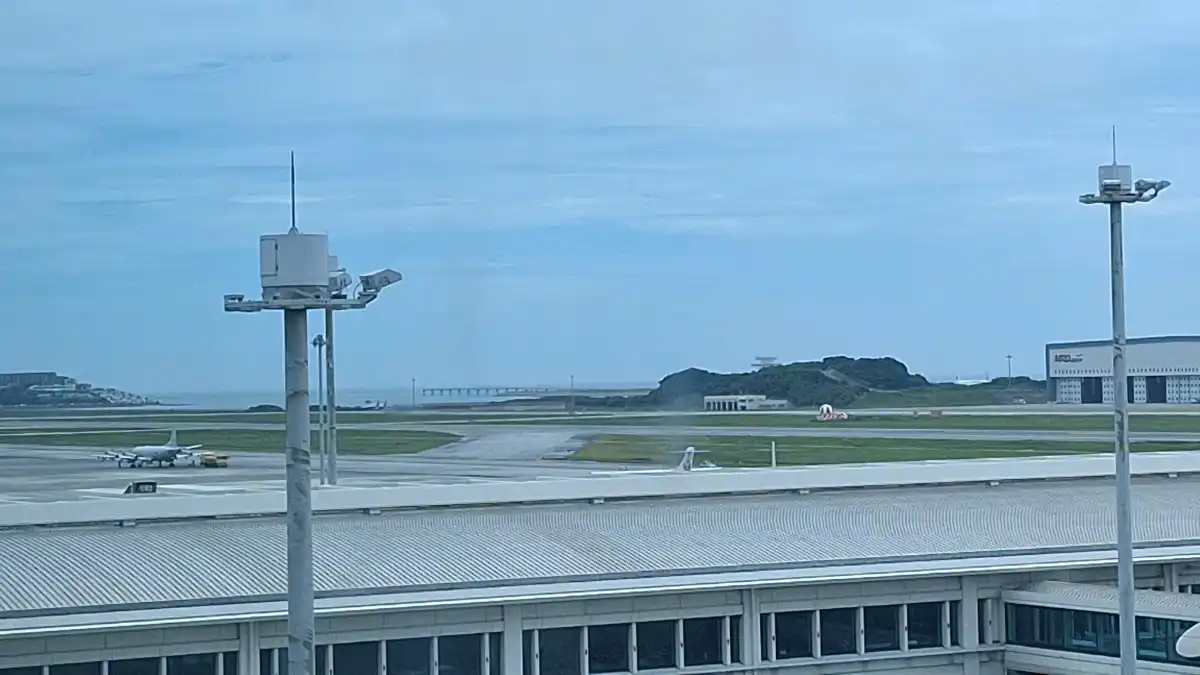
Modern aviation in the United States extends far beyond commercial terminals and airline schedules. Across the country, dozens of airports serve a dual purpose, welcoming millions of civilian travelers while simultaneously supporting critical military operations. These shared-use airfields represent one of the most efficient examples of infrastructure cooperation, allowing commercial aviation and national defense to operate from the same runways without compromising safety or operational effectiveness.
The Federal Aviation Administration recognizes two primary categories of these facilities. Some are joint-use airports, where the military owns the airfield and civilian airlines operate under formal agreements. Others are shared-use airports, where civilian airport authorities own the infrastructure while military organizations lease dedicated sections of the property. Although ownership varies, the operational concept remains remarkably similar. Passenger aircraft, military transports, aerial refueling tankers, helicopters, and occasionally fighter aircraft all utilize the same runway system while maintaining separate terminals, maintenance areas, hangars, and security zones.
The relationship highlights decades of planning, investment, and cooperation between civilian aviation authorities and the United States military. Rather than duplicating expensive infrastructure, both sectors maximize existing runways, taxiways, navigation systems, and air traffic control services. For travelers, this often means boarding a commercial flight while enormous military cargo aircraft quietly prepare for missions only a few hundred yards away.
Charlotte Douglas International Airport: A Major Airline Hub With Strategic Airlift Power
Charlotte Douglas International Airport (CLT) ranks among America’s busiest aviation hubs, welcoming more than 50 million passengers annually while serving as the second-largest hub for American Airlines. Every day, hundreds of commercial departures connect North Carolina with destinations across North America, Europe, Latin America, and the Caribbean.
Hidden in plain sight on the eastern side of the airport sits Charlotte Air National Guard Base, home to the 145th Airlift Wing of the North Carolina Air National Guard. Although occupying just a fraction of the airport’s enormous footprint, the installation plays an outsized role in America’s global air mobility network.
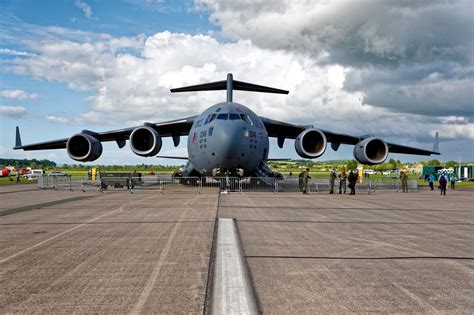
The wing currently operates eight Boeing C-17 Globemaster III strategic airlifters, among the most versatile military transport aircraft ever built. Designed for both intercontinental logistics and tactical operations, the C-17 can carry heavy armored vehicles, humanitarian supplies, disaster relief equipment, helicopters, and hundreds of personnel while operating from relatively short runways.
Transitioning from the aging C-130 Hercules fleet to the larger C-17 represented one of the most significant infrastructure upgrades in the installation’s history. More than thirty construction projects transformed the base, including expanded aircraft parking ramps, specialized maintenance facilities, upgraded fueling systems, modern simulator buildings, and reinforced taxiways capable of handling the Globemaster’s considerably higher weight. The overall investment exceeded $1 billion, demonstrating the strategic importance of maintaining modern airlift capabilities.
The wing entered a new operational chapter in 2025, completing its first overseas combat deployment with the C-17. Airmen spent approximately ninety days supporting air mobility operations throughout the Middle East before returning to Charlotte, reinforcing the airport’s unique role as both a commercial gateway and military logistics center.
Passengers looking out their aircraft windows during departure often spot the massive gray transports parked neatly on the military apron. Their presence serves as a reminder that one of America’s busiest civilian airports also contributes directly to global humanitarian relief, disaster response, and military mobility.
Charleston International Airport: Where Commercial Flights Operate From Military-Owned Runways
Unlike most shared airports, Charleston International Airport (CHS) reverses the traditional relationship between military and civilian aviation.
Rather than the military occupying part of a civilian airport, Charleston’s commercial operations function within Joint Base Charleston, meaning the Department of Defense owns the runways, taxiways, and much of the underlying aviation infrastructure. Civilian airlines access these facilities through a long-standing joint-use agreement administered by the Charleston County Aviation Authority.
This arrangement means every airline departure, landing, taxi movement, and runway operation takes place on infrastructure maintained by the U.S. military.
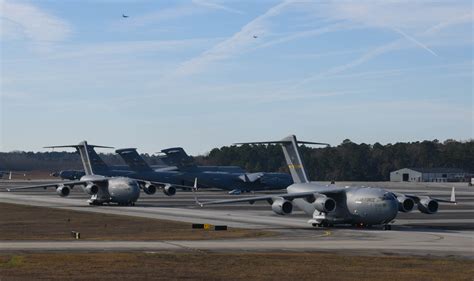
Joint Base Charleston houses the 437th Airlift Wing, one of the Air Force’s premier strategic airlift organizations. Together with the 315th Airlift Wing, an Air Force Reserve Command unit, the installation operates one of the world’s largest concentrations of C-17 Globemaster III aircraft.
These aircraft support an extraordinary range of missions. They transport military personnel across continents, deliver humanitarian aid after natural disasters, evacuate civilians during crises, and carry oversized military equipment into operational theaters worldwide. Located along the Atlantic coast, Charleston provides direct access to Europe, Africa, and the Middle East, making it one of the most strategically valuable airlift hubs in the United States.
Supporting these flying organizations is the 628th Air Base Wing, responsible for managing the joint installation that accommodates both Air Force and Navy operations. The complexity of maintaining continuous military readiness while simultaneously supporting millions of airline passengers demonstrates the remarkable coordination taking place behind the scenes every day.
Commercial aviation has expanded rapidly alongside these military activities. More than 6.1 million passengers passed through Charleston in 2023, with airlines including American Airlines, Delta Air Lines, United Airlines, Southwest Airlines, JetBlue Airways, and Breeze Airways significantly increasing service.
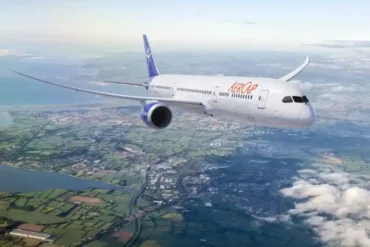
Another distinctive feature lies adjacent to the airfield: Boeing’s final assembly facility for the 787 Dreamliner, where new long-haul aircraft are manufactured and tested before entering airline service worldwide. Few airports combine military logistics, commercial passenger traffic, and advanced aerospace manufacturing so seamlessly.
Nashville International Airport: Berry Field’s Military Legacy Lives On
Many travelers passing through Nashville International Airport (BNA) never realize that the airport’s three-letter identifier preserves its original name: Berry Field.
Established in 1937, Berry Field quickly became home to the Tennessee Air National Guard’s 105th Observation Squadron, beginning one of the nation’s longest uninterrupted military presences at a commercial airport.
Although the passenger airport eventually adopted the Nashville International name, military facilities retained the Berry Field designation, now formally known as Joint Base Berry Field.
The installation has witnessed nearly every major chapter in American military aviation. Throughout its history, resident units have operated aircraft ranging from P-47 Thunderbolts and P-51 Mustangs to the versatile C-130 Hercules transport aircraft. During the Cold War and beyond, Berry Field became an important training location for both American and international aircrews learning tactical airlift operations.
Today’s mission reflects the Air National Guard’s continued evolution. The 118th Wing now operates the MQ-9 Reaper, one of the military’s most advanced remotely piloted aircraft systems. Rather than launching directly from Nashville, these aircraft are flown remotely while personnel at Berry Field conduct global intelligence, surveillance, reconnaissance, and precision strike missions from sophisticated control stations.
The installation also supports the Tennessee Army National Guard’s 1/230th Air Cavalry Squadron, operating UH-60 Black Hawk helicopters for domestic emergency response, disaster relief, and military operations.
Approximately 1,500 military personnel work within the joint base, occupying the eastern side of the airport while commercial operations continue independently across the remainder of the property.
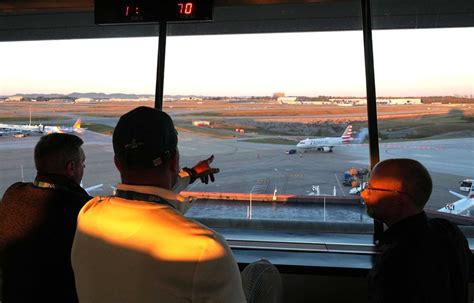
Meanwhile, Nashville has become one of America’s fastest-growing airports. Serving nearly one hundred destinations, including nonstop international service to London Heathrow, BNA averages roughly 600 aircraft movements every day across four runways. The coexistence of one of America’s busiest expanding airports with an active military installation illustrates how decades of thoughtful planning can successfully balance national defense with commercial growth.
Daniel K. Inouye International Airport: Hawaii’s Civilian Gateway and Pacific Military Headquarters
Few airports possess as much historical and strategic significance as Daniel K. Inouye International Airport (HNL) in Honolulu.
Sharing its runway complex with Joint Base Pearl Harbor-Hickam, HNL functions not only as Hawaii’s busiest commercial airport but also as a cornerstone of American military operations throughout the Indo-Pacific.
The origins of this partnership stretch back to 1935, when Hickam Air Force Base was established adjacent to what was then John Rodgers Airport. Only six years later, both Hickam and nearby Pearl Harbor became central targets during the Japanese attack on December 7, 1941, forever altering American history.
Following extensive reconstruction during World War II, Hickam evolved into what became known as “America’s Bridge Across the Pacific.” Massive transport aircraft departed almost continuously, moving personnel, equipment, and supplies across thousands of miles of ocean during World War II, the Korean War, and the Vietnam War.
Today, that strategic role remains every bit as important.
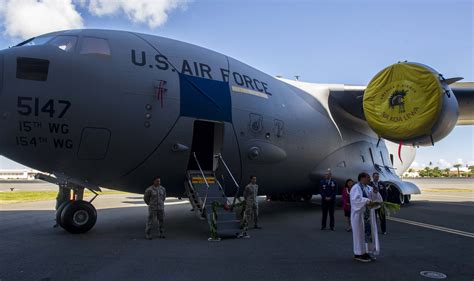
Joint Base Pearl Harbor-Hickam hosts the 15th Wing, the 154th Wing of the Hawaii Air National Guard, and perhaps most significantly, the headquarters of Pacific Air Forces (PACAF). From this installation, the Air Force oversees operations spanning an enormous geographic region stretching from the western United States across the Pacific to Asia.
More than 19,000 active-duty personnel work on the installation, making it one of the largest military complexes in the Pacific.
At the same time, over 20 million commercial passengers travel through Honolulu annually. Visitors arriving for Hawaiian vacations may share taxiways with military cargo aircraft, aerial refueling tankers, reconnaissance platforms, and visiting allied aircraft from nations participating in multinational exercises across the Indo-Pacific region.
The airport’s dual identity perfectly reflects Hawaii itself—a world-renowned tourism destination that also serves as one of America’s most strategically important military locations.
Pittsburgh International Airport: Tankers and Strategic Airlifters Share the Airfield
Pittsburgh International Airport (PIT) demonstrates how military aviation can evolve alongside commercial development across generations.
Military operations began here in 1947, shortly after World War II, when fighter squadrons equipped with P-47 Thunderbolt aircraft established themselves at what was then Greater Pittsburgh Airport. Over subsequent decades, aircraft types, missions, and organizational structures changed dramatically, eventually leading to the formation of today’s 171st Air Refueling Wing.
Since 1977, the wing has operated the iconic KC-135 Stratotanker, one of the most important force multipliers in military aviation. Rather than transporting cargo or troops, these aircraft dramatically extend the operational range of fighters, bombers, reconnaissance aircraft, and transport fleets through aerial refueling.
The 171st currently flies 16 KC-135T Stratotankers, each capable of carrying approximately 200,000 pounds of fuel while transferring fuel at rates exceeding 700 gallons per minute through the aircraft’s flying boom system.
Their operational tempo remains remarkably high. On most flying days, crews launch between four and six missions supporting training exercises, overseas deployments, NATO operations, and strategic mobility requirements. During one exceptionally busy day in October 2022, the wing launched ten tankers, supporting missions that ranged from refueling stealth bombers to enabling troop movements toward Southeast Asia.
The wing also played a historic role during the terrorist attacks of September 11, 2001. Within minutes of the first attack, Pittsburgh launched its only immediately available KC-135 to support combat air patrol aircraft protecting the eastern United States, while United Flight 93 tragically crashed less than eighty miles away.
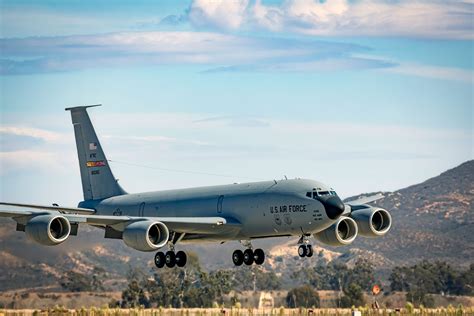
Pittsburgh’s military aviation presence extends beyond aerial refueling. The airport also hosts the 911th Airlift Wing, an Air Force Reserve Command unit operating the C-17 Globemaster III. Together, the two organizations create an unusually diverse military environment where strategic cargo aircraft and aerial refueling tankers operate side by side.
Across the airport, commercial airlines including Southwest Airlines, American Airlines, Delta Air Lines, United Airlines, Spirit Airlines, and numerous additional carriers continue serving millions of travelers annually. Looking across the airfield, passengers frequently see rows of gray military aircraft preparing for missions that span the globe.
Why Shared Military-Civilian Airports Continue to Matter
The coexistence of commercial aviation and military operations represents far more than a logistical convenience. Shared-use airports reduce infrastructure costs, maximize land utilization, strengthen regional economies, and enhance national resilience by maintaining aviation facilities capable of supporting both civilian transportation and defense requirements.
These airports also provide substantial economic benefits through thousands of military and civilian jobs, construction investment, aircraft maintenance, aerospace manufacturing, and local business development. Communities surrounding shared airfields often benefit from a stable economic foundation supported by both airline growth and long-term military investment.
From Charlotte’s strategic airlifters and Charleston’s military-owned runways to Nashville’s decades-old Air National Guard presence, Honolulu’s Pacific command headquarters, and Pittsburgh’s aerial refueling operations, these five airports showcase the remarkable partnership between commercial aviation and national defense. Every day, millions of passengers pass through these terminals largely unaware that just beyond the passenger gates, military crews are preparing aircraft for humanitarian missions, global logistics operations, disaster response, and strategic deployments that help shape aviation far beyond the boundaries of the airport itself.