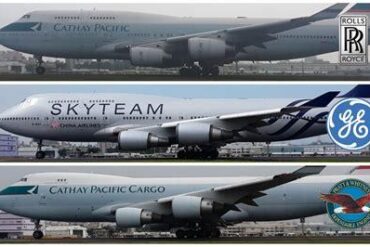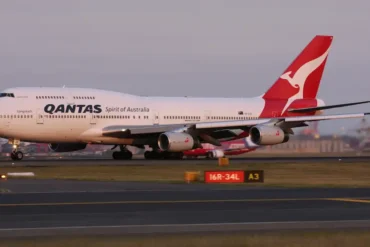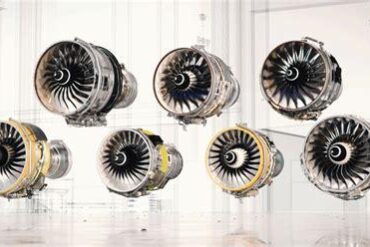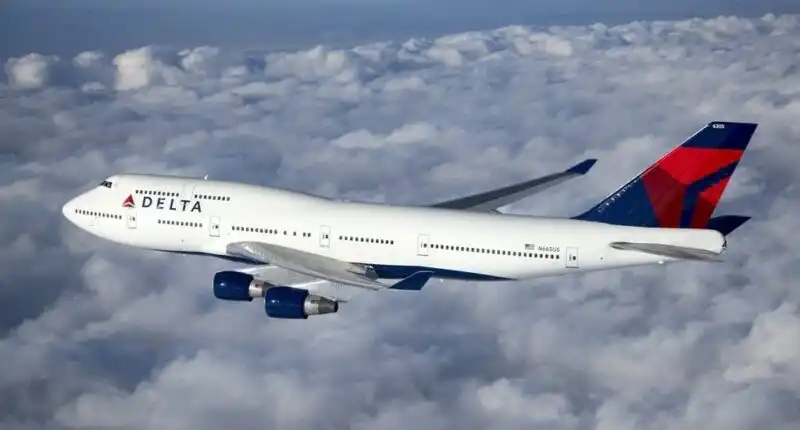
The notion that the Boeing 747-400 and Boeing 757 share the same engines has floated through aviation forums and hangar debates for years. Given the overlapping service lifespans, shared engine manufacturer, and visual similarities of the two aircraft’s powerplants, the idea isn’t completely unfounded. However, the belief that these two iconic aircraft use identical engines falls apart under technical scrutiny. While both utilize variants of the Rolls-Royce RB211 engine family, the differences between the engines fitted on each model are considerable in terms of thrust, size, and application.
The Roots of Confusion: A Shared Engine Name
The RB211 engine series, developed by Rolls-Royce in the 1970s, has powered a range of aircraft and evolved through numerous configurations. In both the 747-400 and the 757, the RB211 name appears on their nacelles, leading many to infer they must be the same engine. While the assumption has merit at face value, the truth lies in the engine subseries.
The 747-400 is powered by RB211-524G/H engines, whereas the 757 uses the RB211-535E4. Both belong to the RB211 family but serve very different roles tailored to the aircraft they were built for. Think of them as cousins rather than twins—close in lineage but engineered with distinct performance envelopes.
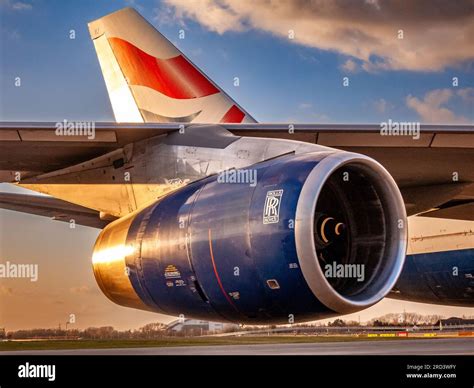
The Boeing 747-400: A Technological Leap in Jumbo Jet Power
Introduced in 1989, the Boeing 747-400 represented a transformative chapter in long-haul air travel. It came with extended wings, winglets, advanced avionics, and—most significantly—engines that offered greater efficiency and thrust than its predecessors. Rolls-Royce responded with the RB211-524G and -524H, engineered specifically for the aircraft’s increased payload and performance requirements.
These engines are triple-spool, high-bypass turbofans delivering thrust levels of 56,870 to 59,450 pounds-force. The -524H, in particular, marked a technological milestone by incorporating full authority digital engine control (FADEC)—a first for the RB211 series. This not only improved fuel efficiency but also simplified engine handling for pilots and maintenance teams.
The engines were originally developed for the Lockheed L-1011 TriStar but were significantly upgraded for the heavier, more demanding 747-400 platform. The -524H’s high overall pressure ratio of 32.9:1 speaks to its ability to compress and combust air at unprecedented efficiencies during its era.
The Boeing 757: The RB211 Engine That Defied Expectations
The Boeing 757, first flown in 1983, was designed as a narrow-body, twin-engine aircraft to succeed the 727. Its performance required an engine that was both compact and powerful. Rolls-Royce’s answer came in the form of the RB211-535 series.
Derived from its larger RB211 siblings, the RB211-535E4 became the engine of choice for airlines like American Airlines and British Airways. Producing 42,540 pounds-force of thrust, the 535E4 was lighter and had a smaller fan diameter (74.1 inches) than its 747-400 counterpart, making it optimal for the 757’s narrower fuselage and twin-engine configuration. Its overall pressure ratio of 25:1 ensured robust climb performance and reliability in various operating conditions.
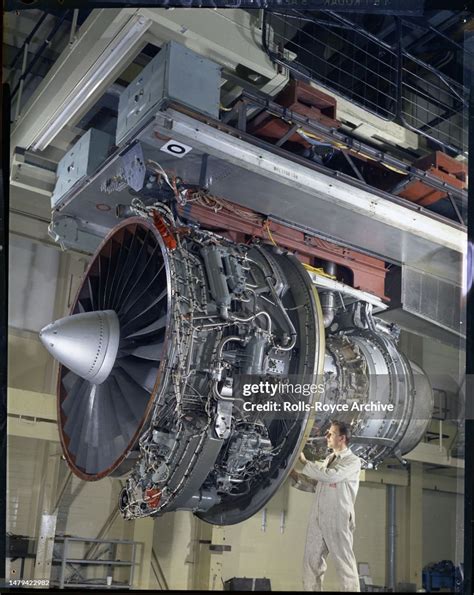
What made the 535E4 particularly valuable was its ability to achieve ETOPS certification—Extended-range Twin-engine Operational Performance Standards—which allowed airlines to fly longer routes over water with confidence in engine redundancy. Its high reliability record also attracted military interest, with the U.S. Air Force C-32B variant using this engine.
Key Technical Differences Between the RB211-524 and RB211-535
Although they share core design philosophies, the RB211-524 and RB211-535 differ significantly in specification and application:
- Thrust: The RB211-524H generates up to 59,450 lbf, while the RB211-535E4 peaks at 42,540 lbf.
- Fan Diameter: The -524H features a fan diameter of 86.3 inches, compared to the 535E4’s 74.1 inches.
- Bypass Ratio: Slightly higher in the 535E4 (4.4:1) than in the 524H (4.3:1), optimizing fuel efficiency for the 757.
- Dry Weight: The 524H weighs 12,764 lbs, nearly 4,600 lbs more than the 535E4.
These distinctions reflect the demands of different mission profiles. The 747-400 needed engines that could sustain heavy long-haul loads with four-engine redundancy, while the 757 prioritized range, speed, and climb capabilities in a twin-engine setup.
Fleet Usage and Engine Integration
Today, the 747-400 has largely exited passenger service in favor of newer wide-body aircraft like the 777 and 787. However, the 747-400F freighter remains active, with operators such as Atlas Air, UPS, and Cargolux relying on the aircraft’s massive payload capacity and trusted engines.
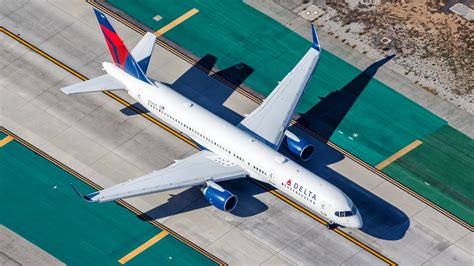
Meanwhile, the 757 remains a staple among carriers such as Delta Air Lines and United, especially for transcontinental and high-performance takeoff operations. Its engines continue to provide stellar service even decades after the last unit rolled off the assembly line.
Evolutionary Influence: From RB211 to Trent
The RB211 series didn’t end with the 757 and 747. In fact, the RB211-524L laid the groundwork for what would become the Rolls-Royce Trent series—one of the most dominant engine families in aviation today. The Trent 700, 800, and 1000 variants now power a wide range of aircraft, including the Airbus A330 and Boeing 787 Dreamliner.
This progression is a testament to the original RB211 design’s adaptability. It’s not that the engines were the same—but rather that the same engineering philosophy was extended, improved, and adapted to meet the evolving demands of commercial aviation.
Why the Confusion Persists
The similarity in nomenclature, overlapping production timelines, and visual likeness of the engines contribute to the ongoing misconception. For airline ground staff or even casual enthusiasts, the RB211 badge may suggest interchangeability. However, airlines and maintenance crews know better: the engines are non-interchangeable, built to different performance standards, with distinct certification paths and integration designs.
Understanding these nuances matters. Aviation is a field where margins of performance, engineering tolerances, and operational purpose define every component. While the RB211 family brought unity in name and design heritage, its application to the 747-400 and 757 was highly specific and deliberate.
Conclusion: From One Engine Family, Two Distinct Powerhouses
In conclusion, no, the Boeing 747-400 is not powered by 757 engines. It is powered by a more powerful variant of the same engine family—the Rolls-Royce RB211. Specifically, the 747-400 uses the RB211-524G/H, while the 757 uses the RB211-535E4. Their differences are not just in numbers but in engineering purpose, design adaptation, and performance delivery.
The myth of shared engines is rooted in truth but veiled in oversimplification. To appreciate the brilliance of these aircraft, one must understand the precise mechanics that lift them into the sky—mechanics that vary not only by model, but by mission. The RB211 legacy continues to soar today, not by blurring the lines between models, but by customizing excellence to every aircraft it empowers.