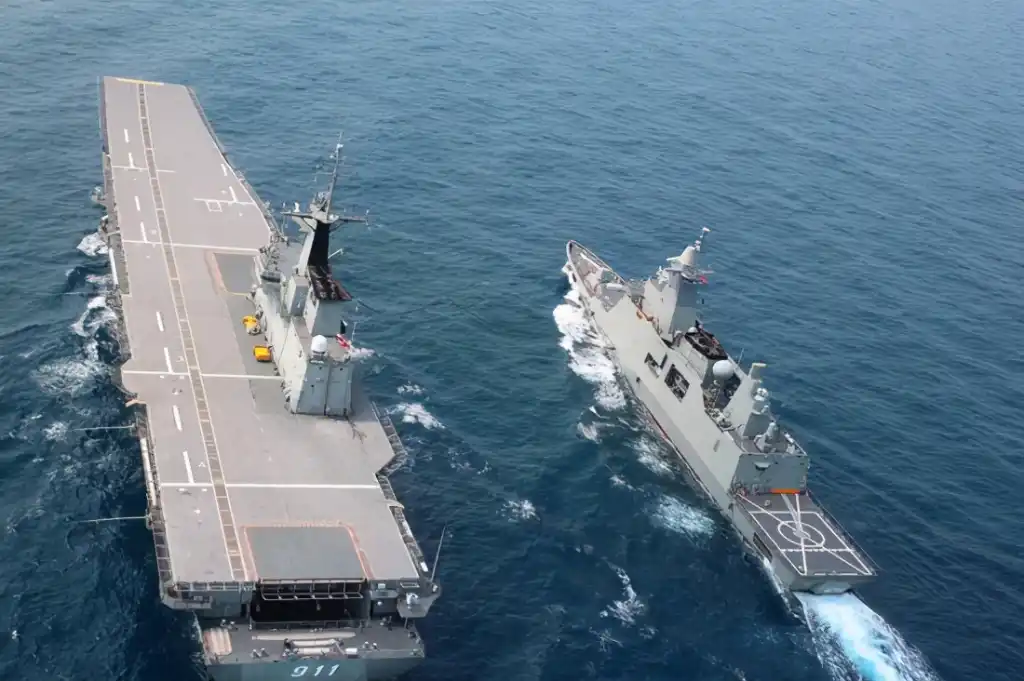
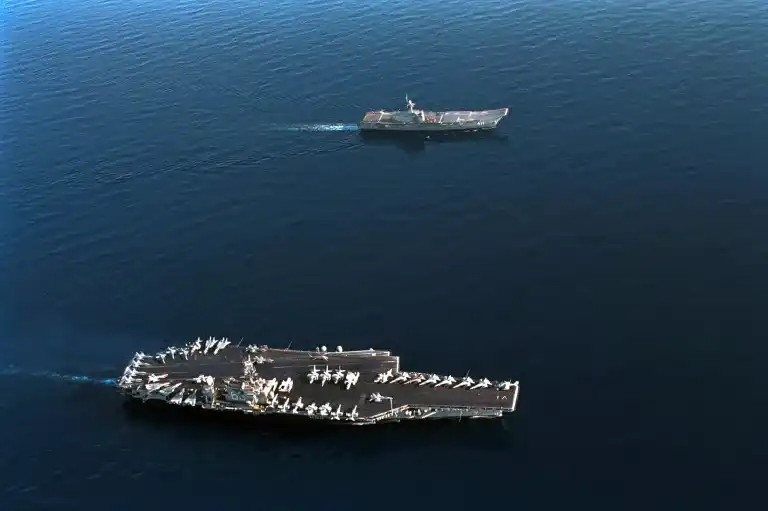
When most people imagine an aircraft carrier, they picture colossal floating cities like the USS Gerald R. Ford or the Nimitz-class vessels of the United States Navy. These giants dominate the seas, stretching more than 1,000 feet in length and displacing over 100,000 tons of seawater. Yet, hidden within the naval fleets of the world lies a very different kind of carrier—smaller, more economical, and tailored for regional defense needs. The HTMS Chakri Naruebet, operated by the Royal Thai Navy, holds the distinction of being the smallest aircraft carrier in the world.
Despite its size, this vessel embodies Thailand’s naval ambitions and stands as a symbol of regional military capability. Launched in 1997, the Chakri Naruebet remains Thailand’s flagship warship, and while its role has evolved over the years, it still occupies a unique position in global naval history.
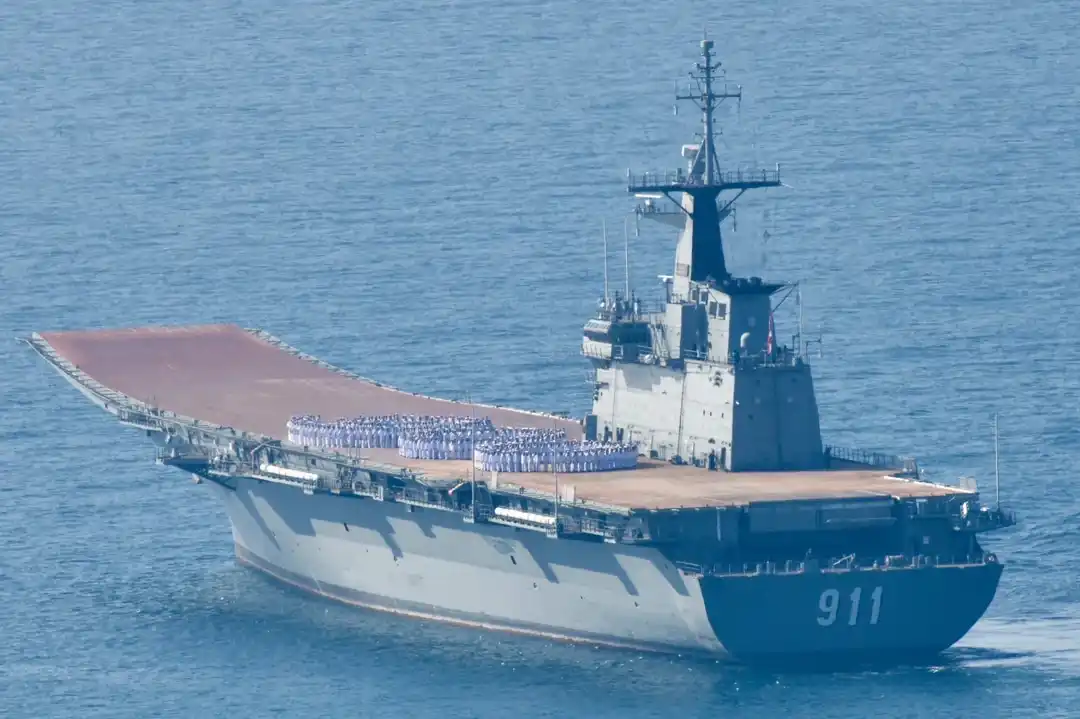
Origins of the HTMS Chakri Naruebet
The story of the HTMS Chakri Naruebet (CVH-911) began in the early 1990s when Thailand sought to modernize its naval power. At the time, no Southeast Asian nation operated a full-fledged aircraft carrier, and Bangkok’s decision to commission one marked a significant step in asserting regional influence.
The vessel was constructed by the Spanish shipbuilder Bazán (now Navantia), the same company that built Spain’s Príncipe de Asturias, which heavily inspired the Thai design. Construction began in 1992, and after five years, the Chakri Naruebet was launched in January 1996 and officially commissioned in 1997. The total cost was approximately $285 million—a fraction of what supercarriers cost, but still a major investment for Thailand.
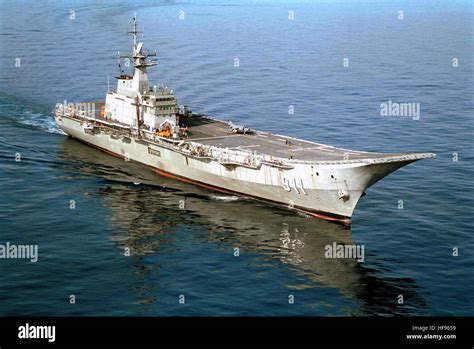
Specifications: Size and Capability
To fully understand why the Chakri Naruebet is called the world’s smallest carrier, its specifications must be compared against larger vessels.
| Specification | HTMS Chakri Naruebet | USS Gerald R. Ford (CVN-78) | HMS Queen Elizabeth (R08) |
|---|---|---|---|
| Length | 597 ft (182 m) | 1,092 ft (333 m) | 920 ft (280 m) |
| Beam (Width) | 100 ft (30.5 m) | 256 ft (78 m) | 239 ft (73 m) |
| Displacement | 11,485 tons | 100,000+ tons | 65,000 tons |
| Crew | 455 personnel | 4,539 personnel | 1,600 personnel |
| Top Speed | 26 knots (48 km/h) | 30+ knots (56 km/h) | 25 knots (46 km/h) |
The stark difference in size demonstrates why the HTMS Chakri Naruebet is unique. At just under 600 feet in length, it is barely more than half the size of Britain’s Queen Elizabeth-class carriers and just over half the width of a U.S. Ford-class carrier. Its displacement of 11,500 tons is closer to that of a large destroyer than a modern supercarrier.
Original Air Wing: AV-8B Harriers
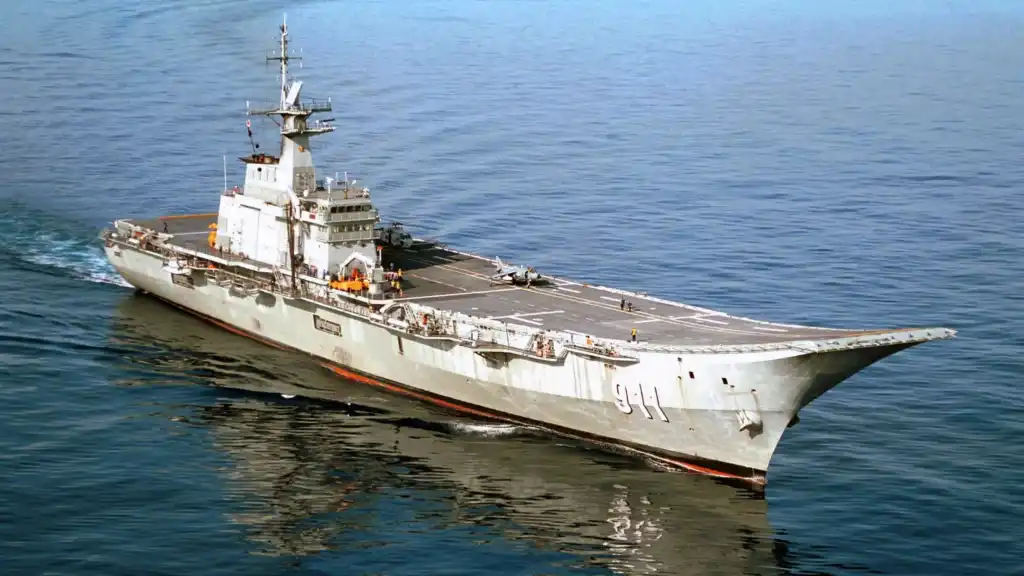
When commissioned, the Chakri Naruebet operated a small but capable air wing of nine AV-8B Harrier II jump jets, capable of short takeoff and vertical landing (STOVL). This gave Thailand a true fixed-wing naval aviation capability, something rare in Southeast Asia.
However, the Harriers suffered from high maintenance costs, limited spare parts, and financial constraints within the Royal Thai Navy. By the mid-2000s, all of Thailand’s Harriers had been retired, leaving the carrier without fixed-wing combat aircraft.
Transition to a Helicopter Carrier
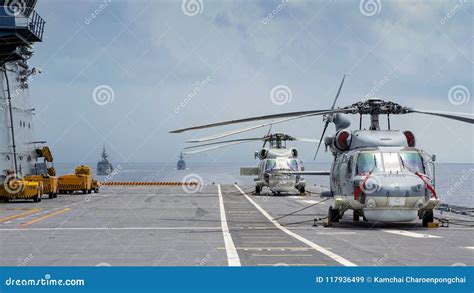
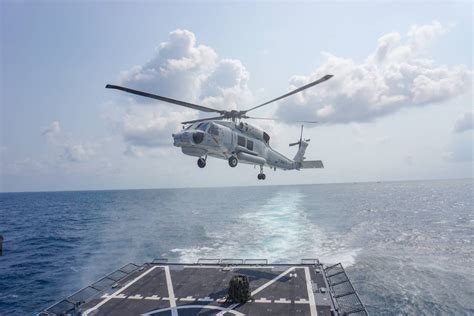
Following the retirement of the Harriers, the HTMS Chakri Naruebet was reclassified more as a helicopter carrier than a traditional aircraft carrier. Its deck now supports rotary-wing operations, particularly the Sikorsky S-70B Seahawk and MH-60S Knighthawk helicopters.
These aircraft provide the Royal Thai Navy with critical capabilities such as:
- Anti-submarine warfare (ASW)
- Maritime patrol and surveillance
- Search and rescue missions (SAR)
- Humanitarian assistance and disaster relief (HADR)
During natural disasters like the 2004 Indian Ocean tsunami, the Chakri Naruebet played a crucial role in transporting supplies, evacuating civilians, and providing medical assistance.
Armament and Defensive Systems
While the Chakri Naruebet is not heavily armed compared to frontline warships, it still possesses essential defensive systems:
- Mistral surface-to-air missile launchers for aerial defense.
- Planned integration of the RIM-7 Sea Sparrow surface-to-air missile system.
- Four Phalanx CIWS (Close-In Weapon System) for short-range protection against missiles and aircraft.
- Multiple .50 caliber machine guns for close defense.
These systems ensure the ship can defend itself against limited aerial and missile threats, though it relies heavily on escort vessels for full protection.
Crew and Operations
The crew complement of the Chakri Naruebet is significantly smaller than that of larger carriers. It includes:
- 62 officers
- 248 sailors
- 145 aircrew members
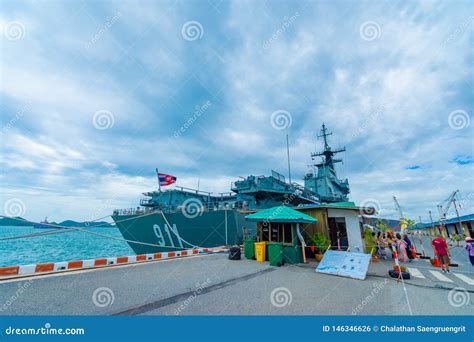
This totals 455 personnel, making it easier to operate but also highlighting the ship’s limited scale. Despite being Thailand’s flagship, the vessel is often seen docked at Sattahip Naval Base, where it is sometimes open to the public as a floating museum when not deployed.
Criticism and Public Perception
Over time, the Chakri Naruebet has faced criticism within Thailand. Nicknamed the “Thai Royal Yacht”, the carrier has often been viewed as a symbol of prestige rather than practical utility, especially after the loss of its Harrier jets. Maintenance costs remain high, and the ship spends much of its time docked rather than at sea.
Nonetheless, the vessel plays important roles in humanitarian aid, disaster relief, and naval exercises with allied nations. For Thailand, ownership of an aircraft carrier—even the world’s smallest—carries significant diplomatic and symbolic weight.
Potential Future Upgrades
In theory, the HTMS Chakri Naruebet could be modernized to operate new-generation aircraft. Some analysts have speculated whether it could support F-35B Lightning II short takeoff and vertical landing jets. However, budgetary constraints make such upgrades unlikely in the near future.
Instead, the vessel will likely continue serving as a helicopter carrier and flagship, providing Thailand with limited power projection and humanitarian relief capacity.
Conclusion
The HTMS Chakri Naruebet may be the smallest aircraft carrier in the world, but its importance cannot be measured by size alone. As Thailand’s only carrier and Southeast Asia’s sole flat-top warship, it remains a strategic asset with regional and symbolic significance. While critics argue its utility is limited without fixed-wing aircraft, the ship still represents Thailand’s maritime ambitions and continues to serve important roles in defense, diplomacy, and disaster relief.
FAQ
1. Why is the HTMS Chakri Naruebet considered the smallest aircraft carrier?
It is considered the smallest because, at just 597 feet in length and 11,500 tons displacement, it is much smaller than standard aircraft carriers like the U.S. Ford-class or even medium-sized carriers like Britain’s Queen Elizabeth-class.
2. Does the HTMS Chakri Naruebet still operate fighter jets?
No. The ship originally operated AV-8B Harrier II aircraft but retired them in the mid-2000s. Today, it only carries helicopters such as the Seahawk and Knighthawk.
3. Is the Chakri Naruebet still active in the Royal Thai Navy?
Yes. It remains the flagship of the Royal Thai Navy, though it spends significant time docked at Sattahip. It is used primarily for helicopter operations, humanitarian missions, and naval exercises.