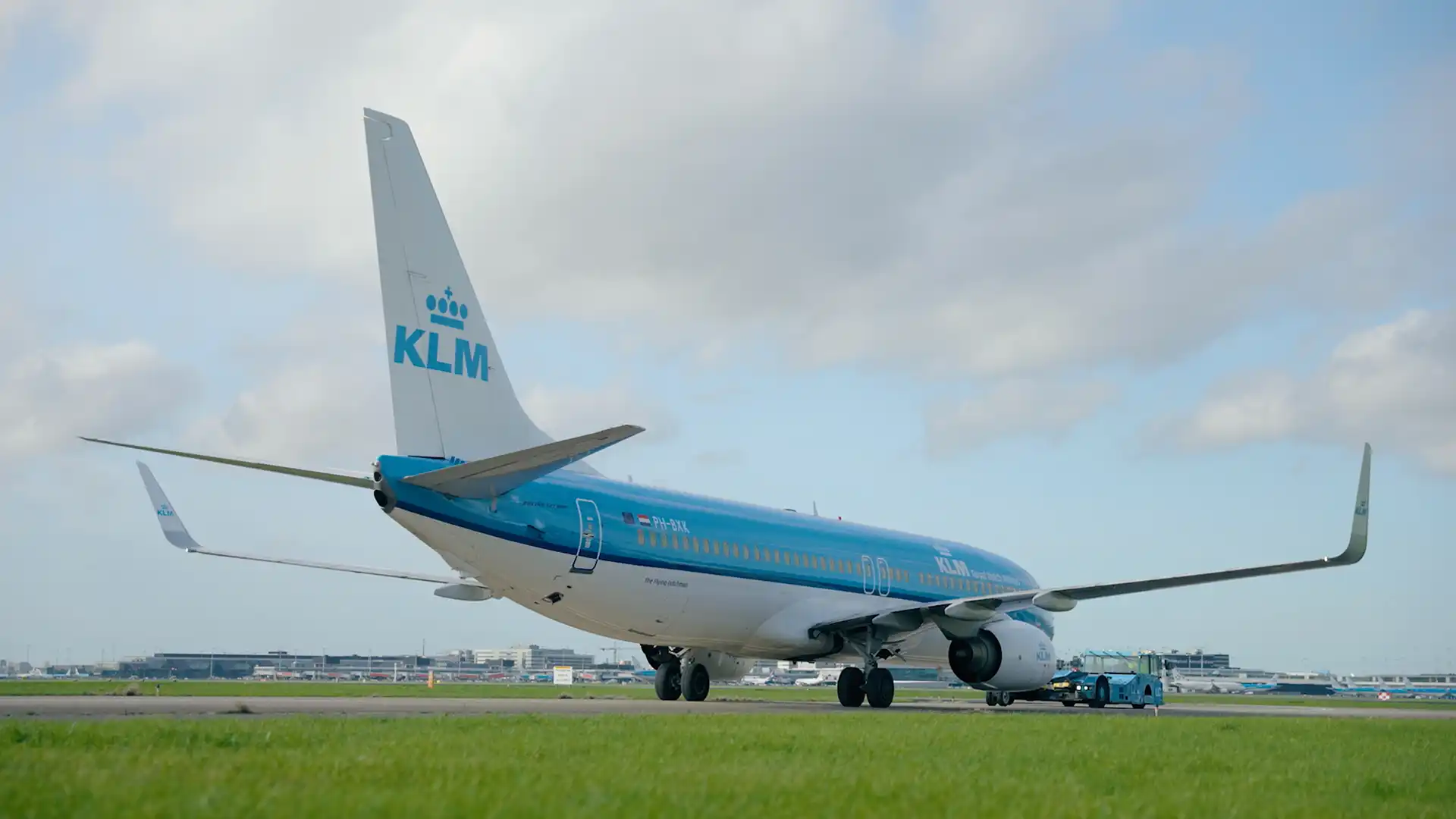
The Dutch flag carrier has officially retired the first Boeing 737-800 in its fleet, marking an emotional yet strategically significant shift in the airline’s operational future. The aircraft, registered PH-BXK, completed its final passenger service into Amsterdam Schiphol Airport before embarking on a short repositioning hop to Twente Airport for dismantling, part-out harvesting, and full recycling. While the moment resonates deeply with aviation enthusiasts and longtime KLM followers, the event is far more than a nostalgic goodbye — it signals a fleet philosophy being reshaped from the ground up.
KLM’s Engineering & Maintenance division pre-emptively removed PH-BXK’s engines and APU for integration into its active fleet, maximizing asset value before teardown. The remaining structure now sits under the expertise of AELS, a specialist organization responsible for part-out and material recovery. What cannot serve another aircraft will be melted, broken down, and reborn into future aerospace life cycles — a fitting end for an airframe that carried millions across Europe.
KLM Confirms A Symbolic First Step In A Large-Scale Fleet Transition
The retirement of PH-BXK is not an isolated event. KLM has confirmed that another Boeing 737-800 will follow into storage in January 2026, marking the gradual dissolution of its backbone short-haul fleet. For decades, the 737 series has been the muscle behind KLM’s European network — dependable, familiar, and ubiquitous. Today, however, operational priorities are evolving. Noise standards are tightening, carbon metrics matter more than ever, and airlines increasingly position sustainability as a competitive business lever.
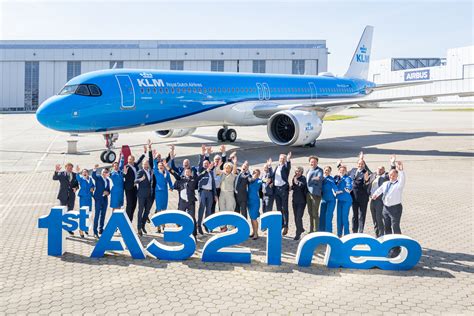
KLM is replacing the Boeing 737 family with the Airbus A321neo, part of an $8.15 billion modernization strategy expected to reshape network economics. The next-generation Airbus narrowbody offers a quieter cabin footprint, reduced emissions, and lower per-seat operating cost — critical advantages at congestion-sensitive hubs like Amsterdam Schiphol, where noise quotas, emissions ceilings, and slot scarcity are shaping the next era of capacity planning.
Why The Airbus A321neo Matters To KLM’s Future
Fleet modernization at this scale goes beyond mere replacement. KLM’s adoption of the A321neo and A320neo introduces longer range, higher seating density, and improved fuel burn efficiency, empowering the airline to boost its intra-European traffic without increasing aircraft movements. Demand to primary business markets such as London, Paris, Milan, and Scandinavia is expected to absorb the improved gauge comfortably, while leisure-heavy routes enjoy new aircraft economics that make marginal seasonal scheduling more viable.
The airline’s direction is clear: every decision points toward an operational ecosystem optimized for sustainability, predictable maintenance cycles, and carbon reduction. In this view, PH-BXK’s farewell is symbolic but also practical — a milestone showing where KLM has been and where its future capacity ambitions lie.
A Broader, Multi-Platform Renewal Program Already In Motion
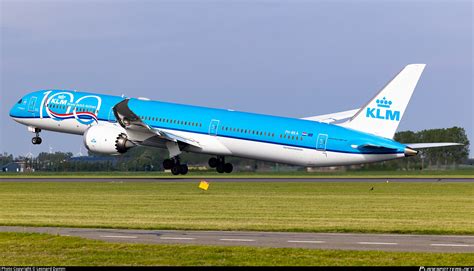
KLM has confirmed that fleet renewal extends well beyond the Boeing 737 retirement stream. Embraer E195-E2s are replacing aging E190s at KLM Cityhopper, boosting capacity while reducing per-seat emissions and community noise. Long-haul modernization is advancing in parallel, with new Boeing 787-10 Dreamliners entering service and Airbus A350-900 aircraft scheduled to replace older Boeing 777s and Airbus A330s. Cargo operations will also transform with the incoming A350F freighter, which will eventually phase out remaining Boeing 747 cargo units.
In total, the airline’s investment surpasses $8.15 billion, representing one of the most extensive renewal programs in European commercial aviation. Each retirement — including PH-BXK — is a small tile in a much larger mosaic of strategy, economics, sustainability, and brand evolution.
The End Of An Aircraft — And The Start Of Something Larger
PH-BXK’s departure is a farewell rooted in memory, but also a doorway into KLM’s next chapter. The aircraft helped define a generation of European connectivity, linking business capitals, holiday coastlines, and aviation history itself. Now, it will live on in parts shared across today’s active fleet, while its legacy fuels a future built on quieter engines, cleaner exhaust, and smarter efficiency.
The final taxi of a Boeing 737 is not just the end of service life — it is a visible shift from old metal to new ambition. KLM flies forward, and Europe’s skies will look different because of it.