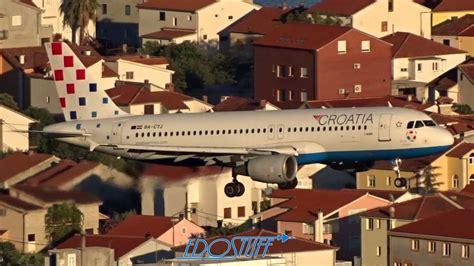
The countdown has quietly begun. On 4 February, the aviation world will turn its attention to a narrow slice of European airspace where Croatia Airlines is preparing to close a long and meaningful chapter in its operational history. After decades of dependable service, the Airbus A320-200—once the backbone of the carrier’s short-haul fleet—is approaching its final scheduled passenger flights. This is not a sudden goodbye, but a carefully choreographed exit tied to a broader transformation reshaping the Croatian flag carrier from the inside out.
For years, the A320 family symbolized Croatia Airlines’ connectivity across Europe. These aircraft linked Zagreb with key business and leisure destinations, carrying tourists to the Adriatic coast and business travelers to northern Europe with quiet consistency. Now, with fleet renewal accelerating, February 2026 has become the definitive turning point.
By the time the calendar reaches its second week, only four flights will remain for the type. After that, the A320 era at Croatia Airlines will officially conclude.
A Short February Schedule Marks A Long Goodbye
Industry data confirms that just four Airbus A320 flights are scheduled for February, underscoring how close the end truly is. Three of these flights will take place on 8 February, beginning with a round trip between Zagreb (ZAG) and Copenhagen (CPH). The aircraft will then operate a domestic sector to Split (SPU), where it will remain overnight.
The final passenger service is planned for 9 February, when the aircraft will return from Split to Zagreb for the last time. That flight will not simply be another rotation—it will mark the official retirement of the Airbus A320 from scheduled Croatia Airlines operations.
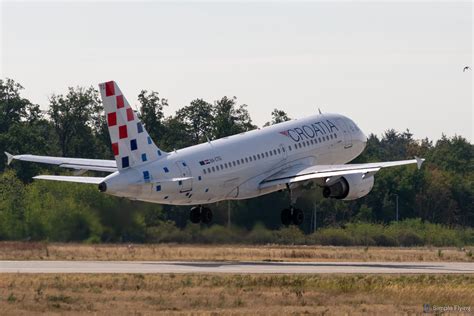
Originally, retirement had been expected later in the first quarter of 2026. Earlier reports suggested January 31 as the final date, followed by a brief extension into mid-February. The latest schedule revision pulls that date forward, tightening the timeline and signaling just how committed the airline is to moving ahead with its modernization strategy.
The Last Active A320 In The Fleet
While fleet records still list two Airbus A320-200s registered to Croatia Airlines, operational reality tells a simpler story. One aircraft, registered 9A-CTK, has already been withdrawn from service after its final flight in November. That leaves a single active airframe—9A-CTO—as the last representative of the type.
This aircraft is instantly recognizable thanks to its Star Alliance special livery, a fitting visual tribute for an airplane carrying the alliance’s emblem into retirement. At just under 22 years old, 9A-CTO has accumulated a long and international service history, previously flying for Air Malta, Vueling, and TAP Air Portugal before joining Croatia Airlines in 2022.
Named “Dubrovnik,” the aircraft reflects both national identity and operational heritage. Since entering service with Croatia Airlines, it has represented the airline on some of its most visible European routes, making its final flights especially symbolic for aviation enthusiasts and frequent flyers alike.
Why The A320 No Longer Fits The Future
The decision to retire the Airbus A320 is not rooted in sentiment—it is driven by strategy. Croatia Airlines is reshaping its fleet around efficiency, right-sized capacity, and lower operating costs. The A320, while reliable, no longer aligns with those priorities in a market that increasingly favors flexible, fuel-efficient aircraft optimized for short- to medium-haul routes.
As fuel prices fluctuate and sustainability targets tighten, operating a small sub-fleet of older narrowbodies becomes harder to justify. Maintenance complexity, parts logistics, and training costs all rise when only one or two aircraft remain in service. From a planning perspective, the A320’s exit simplifies operations and frees resources for the next phase.
The Airbus A220 Takes Center Stage
Replacing the A320 is the Airbus A220, an aircraft purpose-built for modern regional and thin-route operations. Croatia Airlines has already integrated seven A220s into its fleet, with eight more on order, bringing the total to 15 aircraft in the coming years.
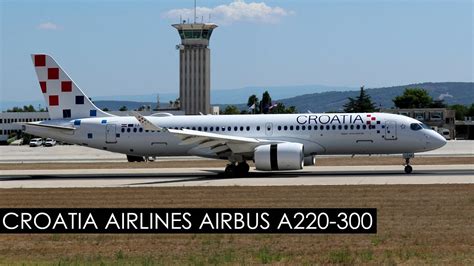
The fleet includes both the A220-100 and A220-300, each tailored to specific route profiles. The A220-100s feature one of the densest cabin layouts in the world, maximizing capacity without sacrificing efficiency. Meanwhile, the A220-300s offer increased range and flexibility, allowing the airline to serve longer European sectors with improved economics.
Since the first A220 entered service in mid-2024, the type has steadily replaced older aircraft while delivering quieter cabins, lower fuel burn, and reduced emissions. For passengers, the transition brings wider seats, larger windows, and a more modern onboard experience. For the airline, it represents a cleaner, more competitive future.
An Era Ends, A Strategy Continues
The retirement of the Airbus A320 on 4 February flights is more than a schedule adjustment—it is a visible milestone in Croatia Airlines’ long-term evolution. As the final aircraft returns to Zagreb and shuts down its engines for the last time, it leaves behind decades of service that helped shape the airline’s network and reputation.
In its place stands a fleet designed for the next generation of European travel. Leaner, quieter, and more adaptable, the A220 now carries the responsibility once held by the A320. The transition may be subtle on the surface, but its implications are lasting.
For Croatia Airlines, February is not about looking back—it is about moving forward, one final flight at a time.