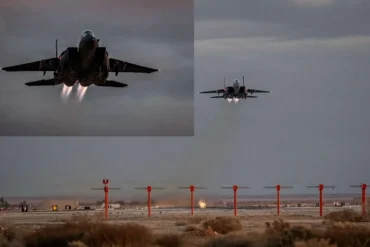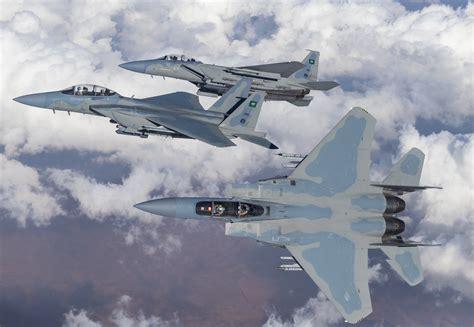
The Boeing F-15 Eagle family is entering one of the most unusual transition periods in its long history. While the US Air Force is retiring 119 F-15E Strike Eagle fighters, one of America’s closest allies is investing billions of dollars to transform its own F-15 fleet into a far more advanced combat platform. The contrast highlights a major shift in modern air warfare: older aircraft are not necessarily becoming obsolete, but their future depends heavily on electronics, software, sensors, and network connectivity.
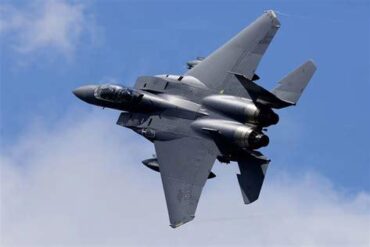
Saudi Arabia is moving forward with a massive modernization effort for its F-15SA Eagle air superiority fighters, spending approximately $5 billion on new systems and upgrades designed to bring the aircraft close to the capability level of the latest F-15EX Eagle II. At the same time, the US Air Force is reducing its F-15E Strike Eagle fleet because it is prioritizing newer aircraft, including the F-15EX and future sixth-generation platforms.
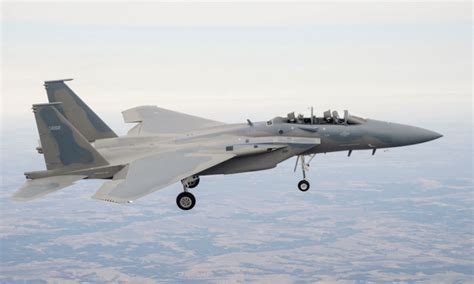
The situation may appear contradictory: why would one country spend billions upgrading a fighter that another country is retiring? The answer lies in the different conditions facing each fleet. The Royal Saudi Air Force (RSAF) operates relatively young F-15SA aircraft with advanced structural designs, while many American F-15Es have accumulated decades of demanding service. The US Air Force is not abandoning the Eagle concept; instead, it is reshaping the fleet around newer airframes and upgraded technologies.
Why the US Air Force Is Retiring 119 F-15E Strike Eagles
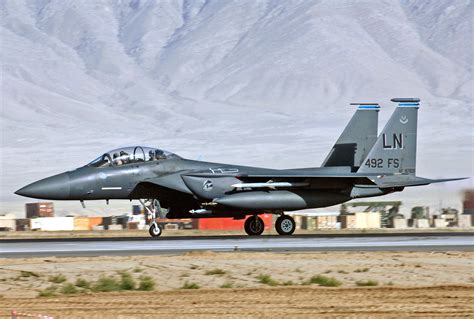
The F-15E Strike Eagle remains one of the most successful combat aircraft in aviation history. Developed during the Cold War as a dual-role fighter capable of both air-to-air combat and precision ground attack, the aircraft has served in conflicts around the world. Its combination of range, payload capacity, speed, and reliability made it one of the most important tactical aircraft in the US military.
However, age has become a major factor. The US Air Force originally operated more than 200 F-15E fighters, but the service has decided to keep only the most capable examples while retiring aircraft that offer less future value. Around 119 F-15E Strike Eagles equipped with older Pratt & Whitney F100-PW-220 engines are scheduled for retirement, while approximately 99 aircraft with the more advanced F100-PW-229 engines will remain in service.
This decision is part of a broader fleet modernization strategy. The US Air Force is preparing for an era dominated by advanced sensors, artificial intelligence, stealth aircraft, unmanned systems, and interconnected combat networks. Rather than spending unlimited resources keeping every older aircraft operational, the service is concentrating funding on platforms that can contribute effectively to future conflicts.
The retirement does not mean the F-15E has failed. Instead, it reflects a difficult military planning decision: maintaining older aircraft requires significant investment, and those resources may generate greater capability when directed toward newer platforms.
Saudi Arabia’s F-15SA Upgrade Creates a Digital Eagle
Saudi Arabia’s situation is very different. The RSAF’s F-15SA Eagle fleet was delivered as one of the most advanced versions of the classic F-15 design. Unlike older F-15E aircraft built decades earlier, the F-15SA was designed with many features that connect it directly to the latest F-15EX Eagle II.
One of the biggest advantages of the F-15SA is its modern fly-by-wire flight control system. This technology improves aircraft handling while allowing additional weapons stations and greater flexibility in future upgrades. The F-15SA and F-15EX share a similar structural foundation, meaning Saudi Arabia can modernize its fighters without requiring expensive structural rebuilds.
The upgrade program focuses heavily on creating a more capable digital combat aircraft. Modern fighter effectiveness is no longer determined only by speed, maneuverability, or weapons load. Today’s aircraft must collect information, process enormous amounts of data, communicate with other platforms, and operate inside a highly connected battlefield environment.
Saudi Arabia’s upgraded Eagles will receive advanced computing systems, improved electronic warfare capabilities, and enhanced radar technology. These improvements transform the F-15SA from a traditional fighter into a networked combat platform capable of operating alongside modern aircraft and defense systems.
F-15SA and F-15EX Share Advanced Computing Power
One of the most important upgrades involves the aircraft’s computing architecture. The RSAF F-15SA already uses the Advanced Display Core Processor II, the same advanced computer system installed in the F-15EX Eagle II.
Modern combat aircraft require enormous processing power. Radar data, electronic warfare information, weapons guidance, communication networks, and sensor inputs must be processed instantly. The Advanced Display Core Processor II provides the computing capability needed for these complex missions.
This open mission system architecture also allows future upgrades without completely redesigning the aircraft. New weapons, sensors, and software applications can be integrated more easily, extending the useful life of the fighter.
The US Air Force’s remaining F-15E Strike Eagles will receive major upgrades as well, including improved electronic warfare systems. However, the older aircraft do not share the same level of computing architecture as the F-15SA and F-15EX. This means Saudi Arabia’s upgraded fighters could eventually become more advanced than some American Strike Eagles.
That difference demonstrates how aircraft generations are becoming less important than technology generations. A newer electronic system installed on an older airframe can sometimes provide greater combat value than a newer aircraft with outdated technology.
APG-82 Radar Gives Saudi Eagles Powerful Air Combat Capability
Another major improvement coming to Saudi Arabia’s F-15SA fleet is the installation of the Raytheon APG-82 active electronically scanned array (AESA) radar.
The APG-82 represents a dramatic improvement over older mechanical radar systems. AESA technology provides greater detection range, improved reliability, faster target tracking, and the ability to engage multiple targets simultaneously.
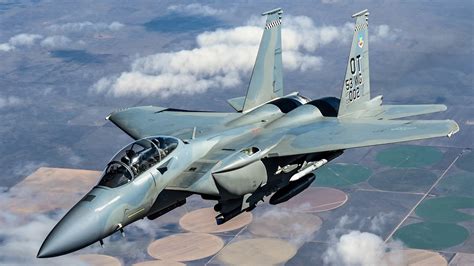
For the RSAF, this upgrade is especially important because its regional security environment includes threats such as cruise missiles, drones, and low-altitude aircraft. These targets can be difficult to detect because they often fly close to terrain and create complicated radar conditions.
The APG-82 improves the ability of the F-15SA to identify small and low-observable targets while filtering out background interference. This gives pilots a much clearer picture of the battlefield and improves their ability to respond quickly.
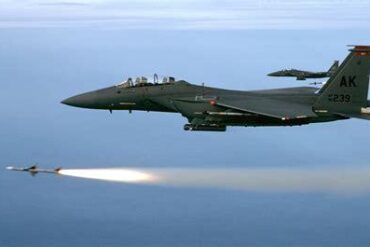
The radar also enhances the effectiveness of the AIM-120 Advanced Medium-Range Air-to-Air Missile (AMRAAM). With improved tracking and data-link capabilities, the fighter can engage multiple targets while maintaining situational awareness.
This capability is particularly valuable in scenarios involving drone swarms or multiple airborne threats. Instead of relying on older radar limitations, the upgraded F-15SA can manage a much larger amount of information during complex engagements.
EPAWSS Turns the Strike Eagle Into a Digital Battlefield Aircraft
While Saudi Arabia upgrades its F-15SA fleet, the US Air Force is also investing in the future of its remaining F-15E fighters through the Eagle Passive Active Warning Survivability System (EPAWSS).
Developed by BAE Systems, EPAWSS represents a major leap forward from older electronic warfare systems. Traditional systems were designed primarily to detect threats and provide warnings. EPAWSS adds advanced digital processing, allowing the aircraft to identify, analyze, and respond to threats across the electromagnetic spectrum.
Electronic warfare has become increasingly important because modern air defenses rely heavily on radar detection and missile guidance systems. A fighter that cannot protect itself electronically may struggle even if it has impressive speed and weapons.
EPAWSS allows the Strike Eagle to jam hostile systems, confuse enemy sensors, and improve survivability in contested environments. This gives the F-15E a renewed role as a highly connected combat aircraft rather than simply an aging strike platform.
The F-15EX Replaces Quantity With Future Capability
The US Air Force’s decision to retire some F-15Es is closely linked to its expanding F-15EX program. Originally, the service planned to purchase fewer aircraft, but later increased the planned fleet size as the Eagle II became more valuable.
The F-15EX provides several advantages over older Eagles. It features improved engines, modern avionics, greater weapons capacity, and enhanced connectivity. It is designed to operate alongside stealth aircraft such as the F-22 Raptor and future sixth-generation fighters.
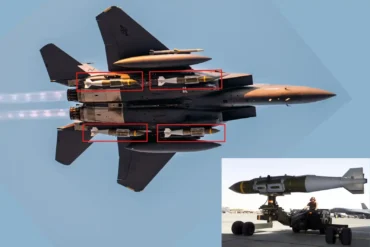
One of the F-15EX’s most important roles will be as a missile carrier. Because it can carry a very large weapons load, the aircraft can launch large numbers of long-range weapons while relying on other platforms for stealth penetration and targeting information.
This concept fits into the future “combat cloud” environment, where aircraft, satellites, drones, and ground systems share information instantly.
The Future Role of F-15s Includes Loyal Wingman Drones
The next stage of Eagle modernization could involve cooperation with unmanned aircraft. The US Air Force is developing Collaborative Combat Aircraft (CCA), often described as loyal wingman drones, that will operate alongside crewed fighters.
Future F-15E and F-15EX aircraft may serve as command platforms for these autonomous systems. Instead of operating alone, a fighter pilot could control multiple unmanned aircraft that extend sensor coverage, carry additional weapons, or absorb risks during dangerous missions.
These drones are expected to become an important part of future air combat operations. The combination of advanced fighters and autonomous systems could dramatically change how air forces conduct missions.
For the F-15 family, this means the aircraft’s future will depend less on being the fastest or stealthiest fighter and more on its ability to connect with the broader battlefield network.
A Tale of Two Eagles: Retirement and Reinvention
The retirement of 119 US Air Force F-15E Strike Eagles and Saudi Arabia’s $5 billion F-15SA modernization program represent two different approaches to extending the life of a legendary fighter family.
The United States is moving toward a smaller but more advanced Eagle fleet centered around the F-15EX and upgraded Strike Eagles. Saudi Arabia, meanwhile, is maximizing the value of its relatively new F-15SA aircraft by transforming them into some of the most capable non-stealth fighters in service.
The F-15’s story is no longer simply about an aircraft designed in the 1970s. It is about how advanced technology can redefine the usefulness of an existing platform. Through digital systems, electronic warfare, advanced radar, and network integration, the Eagle continues adapting to the demands of modern warfare.
Even as some F-15E aircraft leave American service, the broader F-15 family remains a powerful example of how a proven design can survive through constant innovation. The Eagle is not disappearing; it is evolving into a new generation of combat capability.