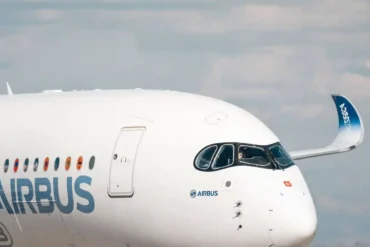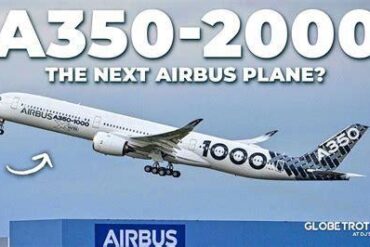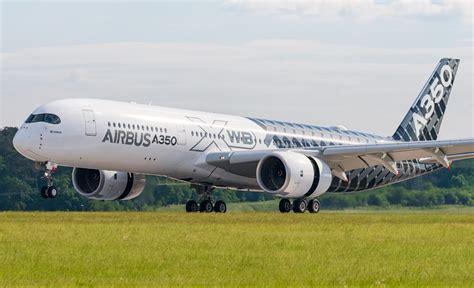
Airbus may be laying the groundwork for a new chapter in its long-haul aircraft portfolio. Guillaume Faury, CEO of Airbus, has opened the door to a possible stretched version of the A350, a move that could directly challenge Boeing’s upcoming 777X, particularly the 777-9. While the idea is not officially greenlit, Faury’s recent remarks to Aviation Week hint at a strategic reshaping of Airbus’s widebody ambitions.
The proposed variant, informally referred to as the A350 Stretch or A350-2000, would extend the current A350-1000 fuselage to approach the seat capacity of the Boeing 777-9. This is seen not only as a commercial response but as a product evolution aimed at filling the void left by the retirement of four-engine giants like the Airbus A380.
A Strategic Evolution, Not an Immediate Priority
Faury emphasized that any stretched A350 is a long-term concept, not part of Airbus’s near-term priorities. While the manufacturer is aware of the shifting dynamics of the widebody market, Faury noted that Airbus does not feel the need to increase product diversity at a time when it is still grappling with supply chain constraints. These bottlenecks are particularly acute across its existing production lines and remain a barrier to speculative new launches.
“We need to make sure we don’t overstretch ourselves when production ramp-up remains a challenge,” Faury explained. The risk of cannibalizing sales of the A350-1000, which remains commercially successful, is also a major consideration. Airbus leadership is carefully weighing the business case to ensure any move to extend the A350 line does not undercut its existing assets.
The Long-Standing Idea of a Stretched A350
The concept of a larger A350 has circulated within aviation circles since the early 2010s. During that period, there were internal studies into how a stretched variant could be positioned against the then-still-conceptual 777X. Yet the lack of pressing demand and the strong performance of the A350-900 and A350-1000 kept those plans dormant.
However, the resurgence of interest now reflects not only the competitive pressure from Boeing but also a growing demand among global carriers for higher-capacity twin-engine aircraft. As airlines phase out older four-engine models, the need for aircraft that can serve high-density long-haul routes is expanding.
777X Looms as Direct Competitor
At the heart of the strategic calculus is the Boeing 777X program. Though delayed and still awaiting certification, the Boeing 777-9 boasts the highest seating capacity of any twin-engine aircraft and is designed to succeed the popular 777-300ER. With Emirates, Lufthansa, and Qatar Airways among its early customers, the 777X could reshape the long-haul market in the coming decade.
Airbus sees this as an opportunity. While the A350-1000 is already certified and flying, offering a first-mover advantage, the lack of a direct match in capacity to the 777-9 remains a gap in its portfolio. A stretched A350 could address this, delivering around 400+ seats in a typical two-class layout, depending on configuration.
Airbus’s Current Focus: ULR, Freighter, and A320 Successor
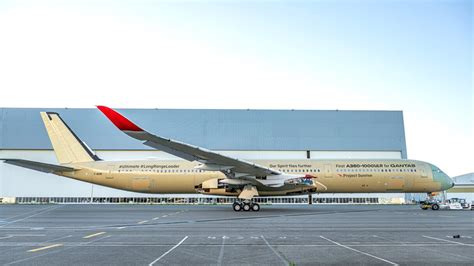
Even as discussions of a new A350 variant swirl, Airbus is concentrating its engineering and production resources on more immediate programs. The most prominent of these is the A350-1000ULR, tailored specifically for Qantas’ Project Sunrise. This aircraft is designed to make ultra-long-haul nonstop flights from Sydney to London and New York, pushing operational endurance beyond 20 hours.
Another near-term priority is the A350F, Airbus’s dedicated freighter version. This model is a strategic push into the air cargo segment, traditionally dominated by Boeing with its 747F and 777F offerings. The A350F has already drawn interest from major cargo operators, including Singapore Airlines and CMA CGM, and is expected to play a vital role in the post-pandemic logistics boom.
Lastly, the single-aisle market is commanding much of Airbus’s attention. Development is already underway for the A320 successor, which will feature next-generation propulsion systems. Faury has stated the company plans to select a new engine for the program by 2027, and internal restructuring is already in progress to support this transition.
Timing and Technological Implications
The earliest any stretched A350 could emerge would be in the early-to-mid 2030s, assuming Airbus overcomes its current production challenges and secures enough demand. Such a timeline would align with market readiness, especially as carriers evaluate future widebody needs amid an aging long-haul fleet.
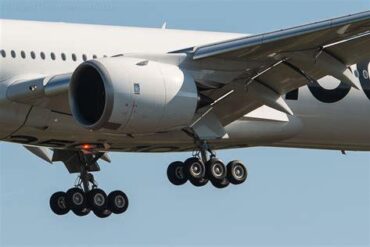
From a technological standpoint, any new variant would likely leverage the A350’s existing carbon fiber fuselage and wing architecture, but with reinforced landing gear, increased MTOW (maximum takeoff weight), and potentially enhanced engines. These modifications would ensure the stretched model maintains the fuel efficiency and range standards expected in a post-A380, post-747 world.
Market Signals and Airline Interest
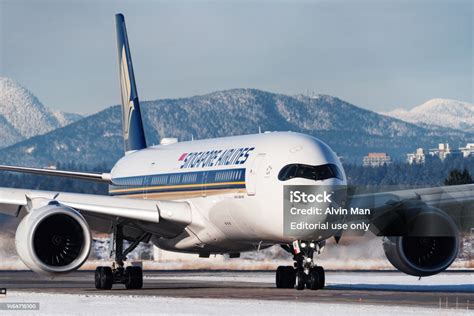
Although no airline has officially requested a stretched A350, industry observers believe there’s latent interest from key Airbus customers such as Singapore Airlines, British Airways, and Cathay Pacific, who may be seeking larger aircraft to serve dense, slot-constrained routes. These carriers, many of whom previously operated the A380 or 747-400, could see value in a high-capacity, twin-engine alternative with modern economics.
Fleet planning cycles in the airline industry span 10–15 years, and orders for 2035–2040 deliveries may soon be on the table. Airbus’s willingness to explore the A350 stretch now could be seen as a positioning strategy to ensure they remain a viable contender in this lucrative future segment.
Conclusion: Strategic Patience Amid Opportunity
For now, Airbus is exercising strategic patience, carefully balancing its product roadmap against industrial realities. While the idea of a stretched A350 remains unconfirmed, its potential to reshape the twin-aisle landscape is clear. As Boeing’s 777X program inches forward and global airlines recalibrate their fleets, Airbus may yet seize the moment to launch a new flagship widebody.
Until then, the aviation world will be watching closely—because when Airbus stretches, it rarely does so without stretching expectations.