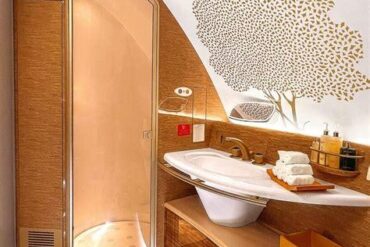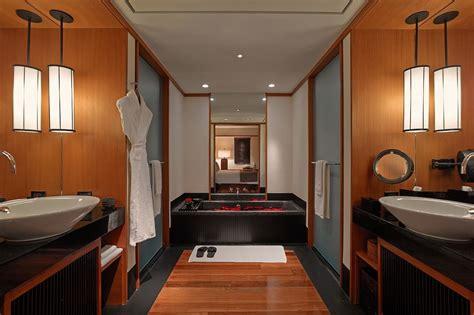
Hotel rooms are sold as temporary sanctuaries—places where travelers can reset, recharge, and reclaim a sense of normalcy while away from home. Yet in recent years, one part of the room has quietly become a source of irritation, disbelief, and even outright anger: the bathroom. Across price points and brands, hotel bathrooms increasingly feel less private, less practical, and oddly hostile to basic human routines. The decline is subtle enough to sneak past marketing photos, but obvious enough to ruin an otherwise comfortable stay.
This is not nostalgia talking. The issue is not that hotel bathrooms used to be palaces of marble and gold fixtures. The problem is far more fundamental. Many modern designs fail at the basics: privacy, usability, and comfort. Somewhere along the way, bathrooms stopped being functional spaces and started behaving like architectural experiments that guests never consented to participate in.
The frustration cuts across traveler types. Business travelers want efficiency and discretion. Families want separation and sound insulation. Friends sharing a room want dignity. Even couples, who are supposedly the target audience for open-plan “spa-inspired” bathrooms, often find themselves wishing for an actual door instead of a translucent panel that glows like a lighthouse at 3 a.m.
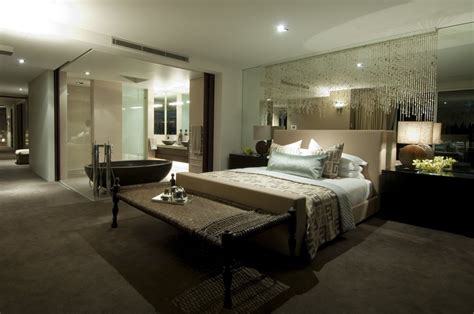
The Disappearing Bathroom Door and the Cost-Cutting Logic Behind It
One of the most controversial trends in hotel design is the slow elimination of proper bathroom doors. In many newer properties, especially in urban and limited-service hotels, the traditional hinged door has been replaced with sliding panels, frosted glass, curtains, or in some cases, nothing at all. The bathroom is no longer a separate room but an extension of the bedroom, whether guests like it or not.
Hotel developers often justify this choice with a familiar trio of explanations: rising construction costs, reduced maintenance, and energy efficiency. Fewer doors mean fewer parts to install, repair, and replace. Simplified layouts are cheaper to build and easier to standardize across hundreds of rooms. From a spreadsheet perspective, the math is clean and persuasive.
From a guest perspective, it is a disaster. Bathrooms are not decorative alcoves; they are private spaces where sound, smell, and sight should be contained. The removal of solid doors turns routine activities into awkward social negotiations, especially when rooms are shared by colleagues, friends, or family members. Even when frosted glass obscures visibility, it does nothing to block noise or light, turning nighttime bathroom visits into an unintentional wake-up call for everyone else in the room.
What makes this trend especially grating is that it often appears alongside other reductions in room functionality. Desks shrink or disappear. Seating becomes symbolic rather than usable. Storage is sacrificed for “clean lines.” The bathroom door is simply the latest casualty in a broader pattern of design decisions that prioritize construction efficiency over lived experience.
Privacy Is Not a Luxury Feature, It Is the Point
Privacy in a hotel bathroom should not be treated as an optional upgrade or a premium amenity. It is the core function of the space. Yet many modern designs behave as if privacy is an outdated concept, replaced by a vague promise of openness and flow.
In well-designed rooms, the bathroom is clearly separated from the sleeping area by a solid door that seals properly. In better designs, the toilet itself is enclosed within its own compartment, adding an extra layer of discretion. This arrangement allows multiple people to use the room without friction, something that matters far more in reality than in a design rendering.
Glass walls and partial dividers are often defended as “European” or “boutique” touches, but this argument collapses under scrutiny. Even in design-forward hotels, functional privacy solutions exist. Frosted glass can work if paired with full-height coverage and effective blinds. Sliding doors can work if they actually seal. What does not work is treating the bathroom as a stage set rather than a utility space.
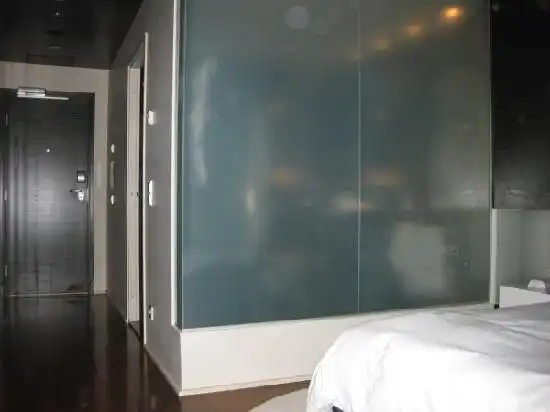
The irony is that many of these designs end up pleasing no one. Guests who value intimacy find them intrusive. Guests who value practicality find them annoying. Guests who value sleep find them disruptive. The result is a bathroom that looks bold in photos but feels hostile in daily use.
Showers That Flood, Confuse, and Punish the User
If the loss of privacy is the most emotionally charged issue, shower design is the most persistently baffling one. A shower has one primary job: contain water while allowing the user to control temperature and pressure comfortably. Yet countless hotel showers fail at this basic task.
The most common offender is the half-glass enclosure. These designs leave one side of the shower open, often paired with a slightly raised floor. In theory, gravity and clever angles are supposed to keep water contained. In practice, water escapes enthusiastically, flooding the bathroom floor and turning towels into makeshift dams.
Equally frustrating are shower controls that seem designed to test patience rather than serve users. Unlabeled knobs, minimalist dials, and touch-sensitive panels may look sleek, but they often require trial-and-error experimentation. When controls are placed inside the shower, guests are forced to step into cold water just to adjust the temperature, an experience that feels less like hospitality and more like a mild hazing ritual.
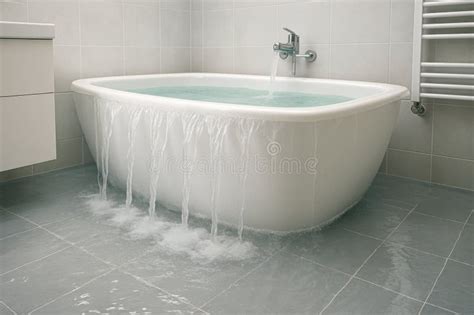
Then there is the enduring plague of shower-tub combinations. These hybrids manage to combine the worst aspects of both formats. They are awkward to step into, uncomfortable to stand in, and rarely deep enough to function as a proper tub. For guests who prefer showers, they feel cramped and unsafe. For guests who prefer baths, they feel like a compromise that never quite works.
A walk-in shower with full enclosure or a genuine soaking tub would solve these issues cleanly. Yet many hotels continue to choose designs that look contemporary while delivering daily irritation.
When Style Becomes the Enemy of Function
Modern hotel bathrooms often lean heavily into visual drama. Bold tiles, sculptural sinks, and dramatic lighting dominate promotional imagery. Unfortunately, these aesthetic choices frequently come at the expense of usability.
A common example is the oversized or artistically shaped sink paired with minimal counter space. Double sinks may look luxurious, but when installed in a compact bathroom, they often leave no room for toiletries, makeup, or even a toiletry bag. Guests end up balancing personal items on towel racks, toilet lids, or the edge of the bathtub, none of which are ideal solutions.
Some sinks are designed with such shallow basins or aggressive water flow that they spray water everywhere, soaking counters and clothing. Faucets may be positioned too high, too far back, or at awkward angles, turning simple handwashing into a splash zone.
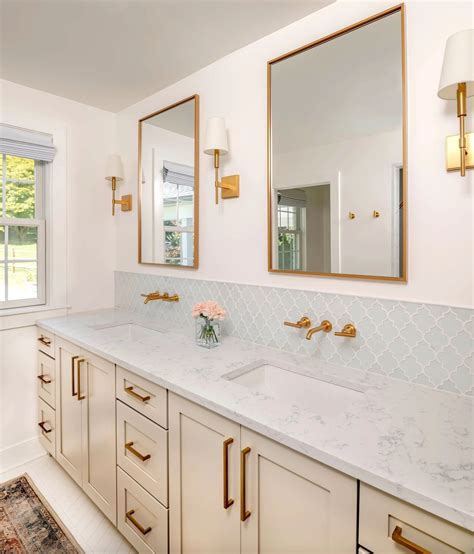
Lighting, too, often prioritizes mood over utility. Dim, indirect lighting may create a spa-like atmosphere, but it makes shaving, applying makeup, or inserting contact lenses unnecessarily difficult. A bathroom should support precision tasks first and ambiance second, not the other way around.
Why These Designs Persist Despite Guest Frustration
The persistence of these issues raises an obvious question: if guests dislike these designs so much, why do hotels keep building them? The answer lies in a mix of incentives and distance.
Developers and brand standards teams often make decisions based on renderings, mock-ups, and short walkthroughs rather than extended stays. A bathroom that photographs well and feels novel for five minutes may reveal its flaws only after repeated use. By then, the building is complete and the design choices are locked in.
There is also a growing disconnect between the people who design hotel rooms and the people who actually sleep in them. Frequent travelers notice patterns quickly. They remember which layouts work and which ones cause friction. Design trends, however, move slowly and often chase novelty rather than refinement.
The result is a cycle where impractical ideas are repeated across properties, not because they are loved, but because they are familiar and easy to replicate.
Rethinking What a Good Hotel Bathroom Should Be
A good hotel bathroom does not need to be extravagant. It needs to be thoughtful. Solid doors. Clear separation. Fully enclosed showers. Intuitive controls. Adequate storage. Bright, functional lighting. These are not radical demands; they are baseline expectations.
When hotels get bathrooms right, they fade into the background, quietly supporting the stay rather than dominating it. When they get bathrooms wrong, they become the most memorable part of the room, and not in a good way.
The evolution of hotel bathrooms reveals a larger truth about hospitality design. Comfort is not created by clever gimmicks or minimalist bravado. It is created by respecting how people actually live, move, and share space. Until that lesson is fully absorbed, the question will linger every time a guest slides open a frosted panel and sighs: are hotel bathrooms getting worse, or are they just forgetting who they are for?