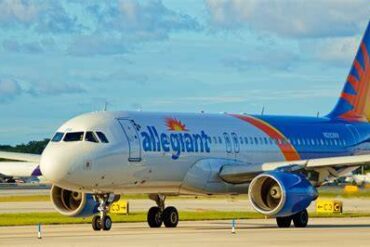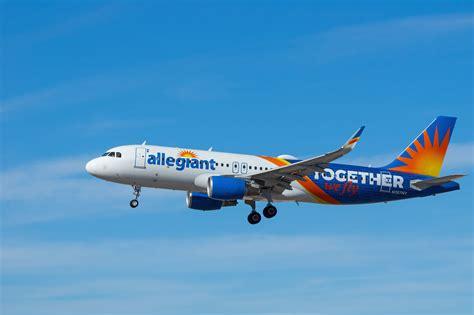
Red-eye flights occupy a strange corner of commercial aviation — equal parts necessity and endurance test. They exist because geography demands them and economics rewards them. For passengers, however, they often feel like time travel without the romance: board exhausted, attempt sleep in a seat designed by medieval minimalists, arrive biologically confused. Against this backdrop, Allegiant Air’s near-total absence from overnight flying stands out as an intentional deviation from industry norms rather than an operational coincidence.
While most U.S. airlines flood the night sky with eastbound departures, Allegiant has historically avoided the practice altogether. That changes — barely — with the launch of a single overnight route. The rarity is the story. In an ecosystem where hundreds of red-eyes depart nightly, operating just one is less a scheduling quirk and more a window into the airline’s structural philosophy.
Understanding why requires zooming in on Allegiant’s network design, airport strategy, and aircraft utilization model — a system optimized less for global connectivity and more for surgical leisure travel efficiency.
From Las Vegas to Orlando: Allegiant’s First Step Into the Night
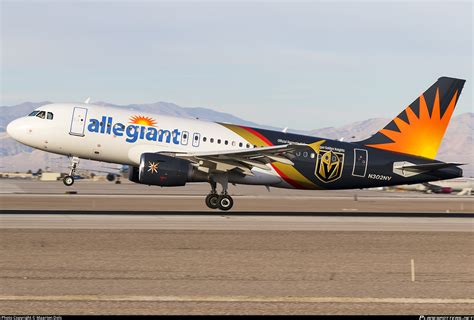
Allegiant’s lone red-eye links two of its most powerful leisure strongholds: Las Vegas and Orlando Sanford International Airport. The route launches March 6, operating once weekly, departing Las Vegas at 11:44 PM and arriving in Florida at 7:12 AM aboard an Airbus A319.
This is not a schedule built for corporate road warriors. It is calibrated for fleet logistics.
Las Vegas — home to Allegiant’s headquarters at Harry Reid International Airport — functions as one of the airline’s largest operational anchors outside Florida. The carrier serves more than 50 destinations from the city and transported over a million passengers through the base last year. Orlando Sanford, meanwhile, is the airline’s single largest base by passenger throughput, exceeding 1.5 million travelers in 2025.
The airport choice itself reveals Allegiant’s contrarian instincts. Rather than operating from the far busier Orlando International Airport, Allegiant remains the only domestic carrier serving Sanford — a smaller, less congested field northeast of the city. Lower fees, faster turnarounds, and operational control outweigh proximity to tourist centers. Cost discipline beats convenience — at least from the airline’s perspective.
A Red-Eye Built for Aircraft Positioning
The overnight flight exists primarily to move metal, not maximize ticket revenue.
After arriving in Florida, the A319 does not immediately return west. Instead, it spends the day operating shorter East Coast and Florida routes before flying back to Las Vegas the following evening. This practice — known as aircraft staging or positioning — allows Allegiant to extract additional utilization from a single airframe without disrupting its daylight leisure schedule.
In other words, the red-eye is a logistical bridge connecting two high-density leisure regions while feeding daytime flying where demand is strongest.
This strategy aligns with Allegiant’s broader business model:
- Focus on point-to-point leisure routes
- Avoid complex hub-and-spoke banking structures
- Maximize aircraft use during peak vacation travel windows
- Minimize operational costs tied to overnight staffing and maintenance
Running large numbers of red-eyes would require different crew rotations, additional maintenance windows, and infrastructure investments that dilute the airline’s low-cost DNA.
How Allegiant Differs From Legacy Carriers
To grasp how unusual Allegiant’s single red-eye really is, consider the scale elsewhere.
On a typical night in the United States, more than 250 red-eye flights depart western airports bound for the East Coast. Legacy carriers dominate this nocturnal migration, using overnight flying to reposition aircraft for lucrative morning business markets.
Delta Air Lines leads the pack with 64 scheduled red-eyes on the analyzed date, closely followed by United Airlines and American Airlines, each operating more than 60.

Delta’s network is especially sprawling. Rather than concentrating departures solely at fortress hubs, it launches overnight flights from 19 different airports — including Hawaiian gateways such as Honolulu, Kona, Lihue, and Maui. That geographic spread reflects a carrier built around connectivity, corporate contracts, and global feed traffic.
Allegiant, by contrast, is engineered for origin-and-destination leisure travelers — people flying from smaller cities directly to vacation hotspots. There is little incentive to run overnight service when your customers are families headed to theme parks rather than executives chasing 9 AM meetings.
The Airlines That Rule the Red-Eye Economy
Red-eye volume reveals competitive priorities as much as passenger demand. Network carriers deploy them to maximize aircraft productivity and secure early-morning arrivals at constrained airports.
The top operators include:
- Delta Air Lines — 64 flights
- United Airlines — 62 flights
- American Airlines — 61 flights
- Southwest Airlines — 22 flights
- Alaska Air Group — 20 flights
Southwest’s presence is particularly notable. The airline only launched red-eye operations in 2025 yet has already scaled to more than 20 overnight routes — a rapid shift for a carrier historically resistant to late-night flying.
Alaska Air Group’s total includes Hawaiian Airlines, boosting its transpacific overnight footprint. Even ultra-low-cost competitors like Spirit Airlines and Breeze Airways maintain small red-eye portfolios — six and two flights respectively — still more than Allegiant’s single route.
The contrast underscores how deliberately Allegiant has stayed out of the overnight market.
Airport Geography: Where Red-Eyes Are Born
Red-eye networks are shaped by time zones as much as demand. Flights departing after sunset on the West Coast can land on the East Coast after 4:00 AM, effectively compressing a transcontinental journey into sleeping hours.
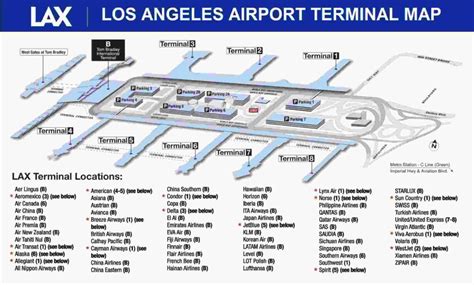
Los Angeles International Airport leads all departure points with 48 red-eye flights on the analyzed evening. It is the gravitational center of overnight aviation — a convergence of airline hubs, long-haul feed, and entertainment industry travel.
Las Vegas ranks second with 37 overnight departures, ahead of even San Francisco. The explanation is cultural as much as logistical. Las Vegas is a city that operates on a reversed circadian rhythm; midnight departures align naturally with visitor behavior.
Other major red-eye origin airports include:
- San Francisco International Airport
- Honolulu International Airport
- Phoenix Sky Harbor International Airport
New York City emerges as the most common destination, with multiple arrivals into JFK and Newark before dawn — perfectly timed for business day starts.
Why Las Vegas Makes Red-Eyes Work
Las Vegas’s high ranking in overnight departures reveals an unusual aviation dynamic. Unlike corporate hubs where demand peaks during daylight business cycles, Vegas traffic is entertainment-driven and time-agnostic.
Visitors routinely leave casinos at 2 AM. Catching a midnight or 1 AM flight does not feel disruptive — it feels efficient. Airlines capitalize on this behavioral elasticity.
That makes Allegiant’s choice to launch its only red-eye from Las Vegas strategically coherent. The city offers:
- High leisure passenger tolerance for late departures
- Strong outbound demand to Florida vacation markets
- Aircraft availability after evening arrival banks
- Lower overnight congestion versus coastal hubs
The route to Orlando Sanford effectively connects two tourism ecosystems that operate outside traditional business travel rhythms.
Passenger Experience vs. Airline Economics
Red-eye flights persist because they solve airline math even when they torment human biology.
From an operational standpoint, overnight flights:
- Increase aircraft daily utilization
- Reduce ground idle time
- Enable early-morning slot access
- Support hub banking structures
From a passenger standpoint, they often deliver:
- Lower fares
- Time savings (no hotel night needed)
- Earlier arrival windows
But the physiological trade-off is real. Cabin humidity, upright seating, engine noise, and circadian disruption degrade sleep quality. Studies in aviation medicine show that even when passengers do sleep onboard, it is fragmented and shallow — closer to napping than restorative rest.
Allegiant’s avoidance of red-eyes can therefore double as a customer comfort differentiator, even if unintentionally. Daytime leisure flying aligns better with vacation psychology: relaxed departure, daylight arrival, immediate hotel check-in.
A Single Route That Explains an Airline
The Las Vegas–Orlando Sanford red-eye is less an expansion and more an operational loophole — a carefully inserted overnight link serving fleet logistics rather than signaling broader strategy change.
It illustrates several defining Allegiant traits:
- Preference for secondary airports
- Leisure-centric scheduling
- Minimal reliance on connecting traffic
- Tight cost control over crew and infrastructure
- Opportunistic, not systemic, overnight flying
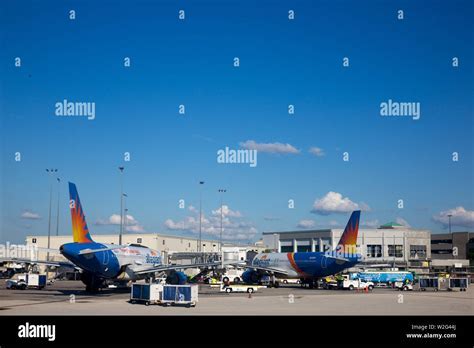
Where legacy carriers build networks that must function 24 hours a day, Allegiant builds networks that function when vacationers are awake.
That distinction matters.
Because in aviation, schedules reveal philosophy. Aircraft are expensive, time zones are unforgiving, and passenger behavior is wildly inconsistent. Every overnight flight represents a negotiation between biology and balance sheets.
Allegiant has simply chosen — almost entirely — to let the night pass without them.
And in an industry obsessed with squeezing productivity from every airborne minute, operating just one red-eye might be the most contrarian scheduling decision in the American sky.