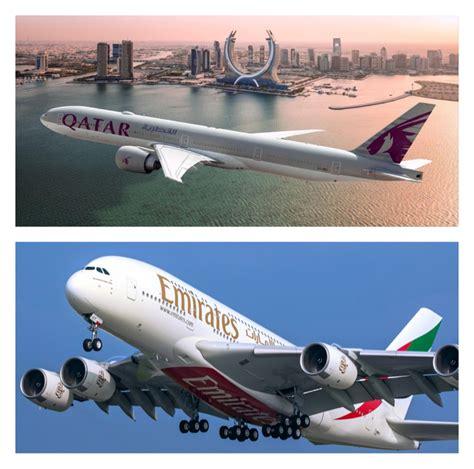
Singapore Airlines has achieved something remarkably rare in modern commercial aviation: the ability to consistently charge substantially higher fares than some of the world’s most respected airlines while maintaining strong demand. In an industry where competition is fierce and consumers can compare prices instantly, sustaining a premium is extraordinarily difficult. Yet on major long-haul routes, particularly between Asia and Europe, Singapore Airlines has built a business model that allows it to command prices that often exceed those of Emirates and Qatar Airways, despite serving many of the same passengers.
Rather than competing through aggressive discounting, the airline has spent decades creating a pricing ecosystem built on convenience, brand trust, service excellence, loyalty economics, and sophisticated revenue management. The result is a playbook that transforms higher prices from a potential weakness into a strategic advantage.
The Singapore–Frankfurt Route Reveals Extraordinary Pricing Power
The route between Singapore and Frankfurt offers one of the clearest examples of Singapore Airlines’ pricing strategy in action. As one of the busiest premium travel corridors linking Europe and Asia, the market attracts intense competition from global network carriers.
Travelers flying between the two cities can choose Singapore Airlines’ nonstop service or opt for connecting flights through Middle Eastern hubs such as Dubai or Doha. Conventional airline economics would suggest that such competition should place downward pressure on fares and reduce the ability of any carrier to charge significantly more than rivals.
Yet Singapore Airlines consistently defies this expectation.
A teaching case published by Singapore Management University highlighted fare observations showing Singapore Airlines commanding business-class premiums of approximately 105% over Emirates and 88% over Qatar Airways on the Singapore–Frankfurt market. While these figures represent a specific analytical snapshot rather than permanent market averages, they demonstrate the remarkable pricing leverage the airline possesses.
Business-class fares on the route typically fluctuate depending on seasonality, booking windows, demand patterns, and inventory availability. Despite these variables, Singapore Airlines frequently occupies the highest end of the pricing spectrum. More importantly, customers continue purchasing those tickets.
This phenomenon raises a critical question: what exactly allows Singapore Airlines to maintain such pricing power when world-class alternatives exist?
The answer lies in a carefully engineered combination of operational and psychological advantages that competitors struggle to replicate simultaneously.
The Nonstop Advantage Creates Immediate Economic Value
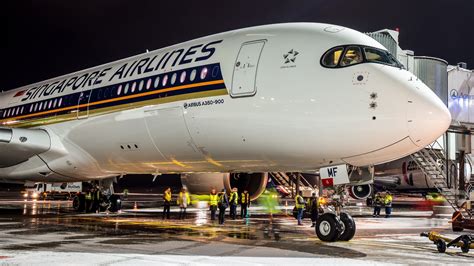
One of the strongest pillars supporting Singapore Airlines’ premium pricing strategy is also one of the simplest: it offers the fastest journey.
On the Singapore–Frankfurt route, Singapore Airlines operates nonstop flights. Emirates and Qatar Airways generally require passengers to transit through their respective hubs in Dubai and Doha before continuing to Germany.
At first glance, this may appear to be a relatively minor distinction. In reality, it has enormous economic implications.
For leisure travelers, saving money may justify spending several additional hours traveling. For corporate travelers, however, time carries measurable financial value. Every extra hour spent waiting in an airport lounge, navigating security checkpoints, or managing connections represents lost productivity.
A business executive traveling to Frankfurt for negotiations may value arriving rested and on schedule far more than saving a few hundred dollars on airfare. Missing a meeting, experiencing delays, or arriving fatigued can create costs that far exceed any ticket savings.
This dynamic creates what aviation economists call a yield advantage.
Passengers consistently demonstrate a willingness to pay more for nonstop flights because convenience has tangible value. Singapore Airlines effectively monetizes that value by offering the shortest and most predictable travel experience available.
The airline’s pricing premium therefore begins long before passengers board the aircraft. It starts with the schedule itself.
Building a Brand That Justifies Higher Fares
Most airlines attempt to compete through hardware.
They introduce newer seats, larger entertainment screens, upgraded lounges, or more modern aircraft. While these investments can improve customer satisfaction, they rarely create lasting competitive advantages because competitors can purchase similar equipment.
Singapore Airlines took a different path.
For decades, the carrier invested heavily in brand development, consistency, and service excellence. These assets cannot simply be purchased from aircraft manufacturers.
The airline cultivated a reputation associated with reliability, sophistication, professionalism, and premium travel experiences. Over time, this reputation became one of the company’s most valuable assets.
In luxury industries, strong brands create pricing power because customers perceive reduced risk when purchasing premium products. Airlines are no different.
Passengers booking Singapore Airlines often know exactly what to expect. The experience tends to be predictable, polished, and consistent across the network. That predictability carries significant value, particularly for premium travelers spending thousands of dollars on long-haul journeys.
As a result, many customers do not evaluate Singapore Airlines purely against competitors based on price. They evaluate it based on confidence.
Confidence allows companies to charge more.
Confidence allows customers to justify paying more.
And confidence is precisely what Singapore Airlines has spent decades building.
The Soft Product Moat Competitors Cannot Easily Copy
Aircraft can be purchased.
Cabins can be redesigned.
Seats can be upgraded.
Service culture is far more difficult to replicate.
This reality forms one of Singapore Airlines’ most powerful competitive advantages.
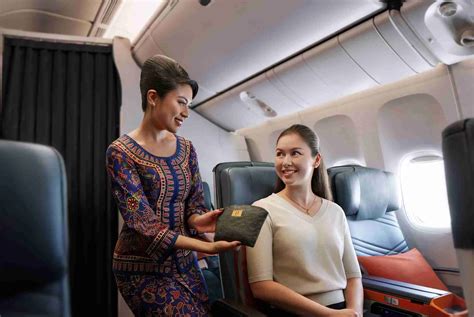
Within aviation circles, the term “soft product” refers to all aspects of the passenger experience beyond the physical seat itself. This includes cabin crew interactions, meal quality, responsiveness, personalization, hospitality standards, and overall service delivery.
Singapore Airlines has transformed its soft product into a strategic moat.
One of the most famous examples is the airline’s Book the Cook program. Premium passengers can pre-select meals from an extensive menu before departure, allowing for greater customization than standard onboard catering.
While this feature alone does not justify significantly higher fares, its cumulative impact matters.
Customers remember personalized experiences.
They remember attentive service.
They remember feeling valued.
These emotional responses influence future purchasing decisions.
The airline further strengthens this advantage through extensive crew training programs and consistently high service standards. Many global airline rankings and passenger surveys repeatedly place Singapore Airlines among the industry’s leaders for cabin crew performance.
Unlike aircraft acquisitions, which can be completed within months, developing a service culture capable of delivering consistent excellence across thousands of employees often requires decades.
That makes the advantage highly durable.
Premium Cabin Design Reinforces the Value Proposition
Although Singapore Airlines relies heavily on service differentiation, its hard product remains highly competitive.
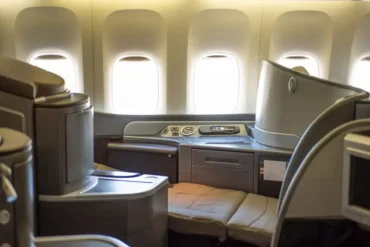
The airline operates some of the widest business-class seats in commercial aviation, particularly on long-haul Airbus A350 and Boeing 777 aircraft. Many of these seats measure approximately 28 inches wide, offering a level of personal space that exceeds numerous competing products.
For premium travelers spending twelve to fourteen hours in the air, comfort becomes an important component of perceived value.
However, what makes Singapore Airlines particularly effective is the integration of physical comfort with exceptional service.
Many airlines excel in one area while falling short in another.
Singapore Airlines aims to perform strongly in both.
This combination creates a premium experience that feels comprehensive rather than fragmented.
Passengers are not simply purchasing transportation. They are purchasing a complete travel environment.
That distinction helps explain why higher fares often appear justified to customers.
KrisFlyer Creates Powerful Switching Costs
One of the least visible yet most influential components of Singapore Airlines’ pricing strategy is its loyalty ecosystem.
Frequent-flyer programs have evolved far beyond simple reward schemes. Today, they function as powerful customer-retention engines capable of influencing purchasing behavior for years.
Singapore Airlines benefits enormously from the strength of KrisFlyer.
The program is widely regarded as one of Asia’s most valuable airline loyalty currencies. Members can earn and redeem miles across the extensive Star Alliance network, providing access to destinations throughout the world.
As travelers accumulate significant mileage balances, switching carriers becomes increasingly difficult.
A customer holding hundreds of thousands of KrisFlyer miles may be reluctant to book with another airline even when lower fares are available.
The reason is simple.
Changing airlines often means sacrificing future rewards, status benefits, lounge privileges, upgrade opportunities, and accumulated loyalty value.
Economists refer to this phenomenon as switching costs.
The higher the switching costs, the greater the pricing flexibility enjoyed by the company.
Singapore Airlines understands this dynamic exceptionally well.
By strengthening KrisFlyer and expanding redemption opportunities, the airline effectively increases customer retention while reducing price sensitivity.
Why Corporate Travelers Matter More Than Leisure Passengers
Not all airline customers contribute equally to profitability.
Corporate travelers represent one of the most valuable customer segments in commercial aviation.
Unlike leisure travelers, who often prioritize finding the lowest available fare, business travelers frequently prioritize convenience, schedule flexibility, reliability, and overall travel quality.
These travelers often operate under company travel budgets rather than personal spending constraints.
Consequently, their purchasing decisions are influenced by factors beyond ticket price.
Singapore Airlines has spent decades cultivating relationships with multinational corporations throughout Asia and beyond. These relationships generate a steady flow of high-yield passengers willing to pay premiums for dependable service.
This customer base significantly strengthens the airline’s pricing position.
Revenue management systems can identify periods of strong corporate demand and adjust pricing accordingly. Routes associated with major business centers often generate disproportionately high yields because passengers demonstrate lower price sensitivity.
The Singapore–Frankfurt corridor exemplifies this dynamic.
By targeting premium corporate demand, Singapore Airlines maximizes revenue without necessarily maximizing passenger volume.
This distinction is crucial.
Airlines do not seek to fill every seat at the lowest price.
They seek to maximize revenue generated by each available seat.
Singapore Airlines excels at precisely this objective.
Revenue Management Turns Data Into Profit
Behind every airline ticket lies a sophisticated pricing engine.
Modern revenue management systems analyze enormous volumes of data, including booking patterns, historical demand, seasonality, competitor behavior, corporate travel trends, and inventory availability.
Singapore Airlines uses these systems to identify where pricing power exists and capture maximum value accordingly.
The airline’s observed directional pricing differences between Singapore-originating and Frankfurt-originating itineraries illustrate this strategy.
Markets with stronger corporate demand often support higher fares because travelers exhibit reduced sensitivity to price changes.
Instead of applying uniform pricing, Singapore Airlines adjusts fares dynamically based on expected customer behavior.
This approach allows the carrier to extract greater value from premium demand while still remaining competitive in price-sensitive segments.
The sophistication of these systems transforms pricing from a reactive activity into a strategic weapon.
The Next Competitive Battle: Matching Qatar Airways’ Cabin Innovation
Despite its strengths, Singapore Airlines cannot rely solely on historical advantages.
Competition continues evolving.
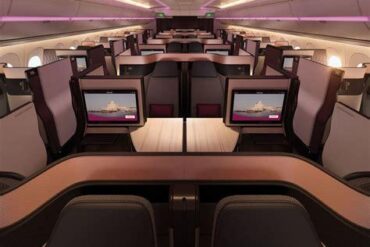
Among premium airlines, Qatar Airways remains one of the carrier’s strongest rivals, particularly due to its highly regarded Qsuite business-class product.
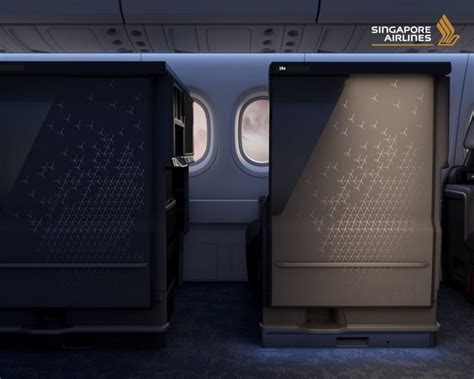
Recognizing the importance of maintaining leadership, Singapore Airlines announced an ambitious cabin modernization program valued at approximately USD 834 million.
The initiative covers 41 Airbus A350-900 aircraft and includes new business-class seats, upgraded premium-economy cabins, refreshed economy-class interiors, and a new first-class offering for ultra-long-haul operations.
Although implementation timelines have shifted because of certification and supply-chain challenges, the investment demonstrates a clear strategic commitment.
Singapore Airlines intends to strengthen the few areas where competitors can still gain advantages.
Rather than waiting for competitive pressure to erode its premium positioning, the airline is proactively reinforcing it.
Why Singapore Airlines Wins Without Competing on Price
The most important lesson from Singapore Airlines’ pricing strategy is that premium pricing rarely depends on a single factor.
The airline does not charge more simply because it offers better seats.
It does not charge more solely because of superior service.
It does not rely exclusively on loyalty programs, corporate contracts, or nonstop flights.
Its success comes from combining all of these elements into a unified value proposition.
Passengers choosing Singapore Airlines often receive a faster journey, a trusted brand, exceptional service, strong loyalty benefits, extensive global connectivity, and consistent operational reliability.
Each advantage reinforces the others.
Together, they create a powerful ecosystem capable of supporting fares that exceed those of Emirates and Qatar Airways on identical routes.
In an industry where many competitors focus primarily on price, Singapore Airlines has chosen a different path. The carrier sells certainty, convenience, consistency, and confidence. Those qualities are difficult to quantify, but millions of travelers assign real value to them every year.
That is the essence of the airline’s pricing playbook—and the reason it can successfully charge more while continuing to fill seats across some of the world’s most competitive long-haul markets.