The modern business class cabin has become one of the most profitable products in commercial aviation, yet few travelers truly understand how airlines decide what those seats should cost. To most passengers, pricing appears random. One traveler pays $2,900 for a lie-flat seat to London while another pays $8,500 for the exact same flight only days later. The difference is rarely accidental. Behind every premium fare is a sophisticated system built around psychology, algorithms, corporate contracts, aircraft hardware, and microscopic inventory management.
Business class is no longer simply about wider seats and better meals. It has evolved into a carefully engineered revenue machine where every detail — from seat privacy to booking velocity — influences the final ticket price. Airlines are no longer selling transportation alone. They are selling exclusivity, flexibility, convenience, productivity, and status, often to passengers willing to pay extraordinary premiums for marginal upgrades.
Understanding how these systems work changes the way travelers look at premium cabins forever. Once the curtain is pulled back, business class pricing stops looking mysterious and starts looking like a high-speed financial marketplace operating at 35,000 feet.
For airlines, business class is not just another cabin. It is the engine that frequently determines whether an international route becomes profitable at all.
The Death of Traditional First Class Created a More Profitable Premium Cabin
For decades, international first class represented the pinnacle of commercial aviation luxury. Airlines competed with private suites, onboard showers, dedicated chefs, and extravagant lounges designed to attract elite travelers. But maintaining a tiny first class cabin became increasingly difficult to justify financially. Those oversized suites consumed enormous amounts of aircraft space while often flying partially empty.
Today, many airlines have discovered a more efficient strategy: transform business class into a luxury product while quietly creating multiple pricing tiers inside the same cabin.
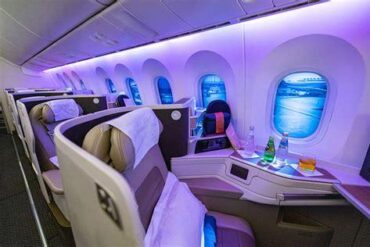
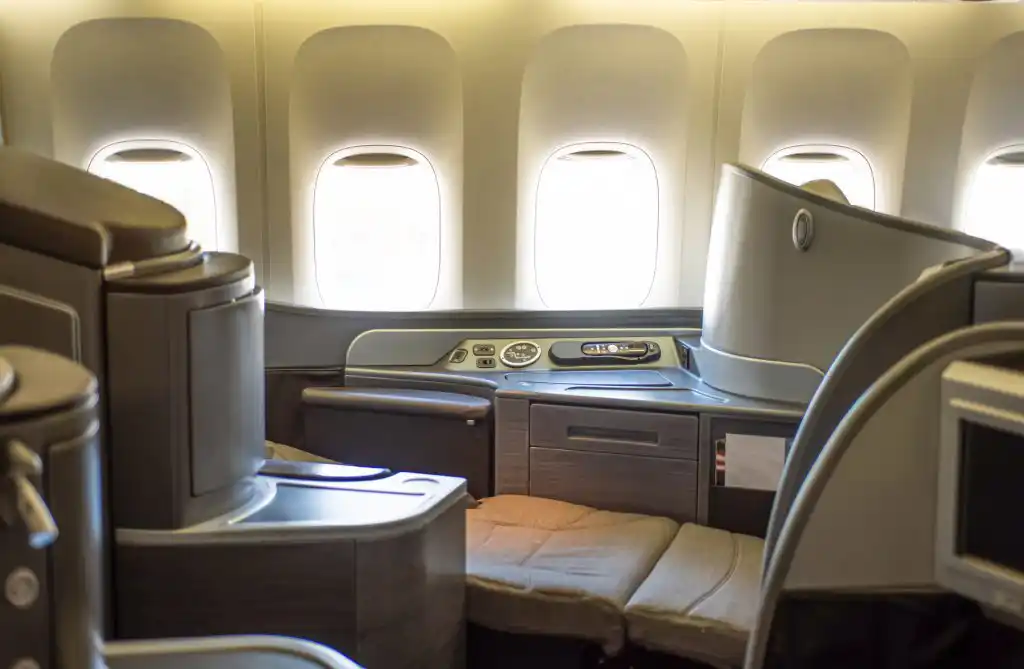
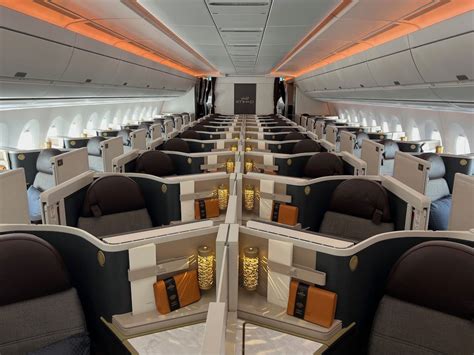
Instead of offering a separate first class section, carriers now sell enhanced business class experiences within standard premium cabins. A passenger sitting in the first row of a business class suite may receive larger footwells, extra privacy, premium bedding, upgraded dining, or exclusive seat designs unavailable elsewhere in the cabin.
This shift dramatically increased airline profitability because it allowed carriers to fit more premium passengers onto the aircraft without sacrificing luxury branding.
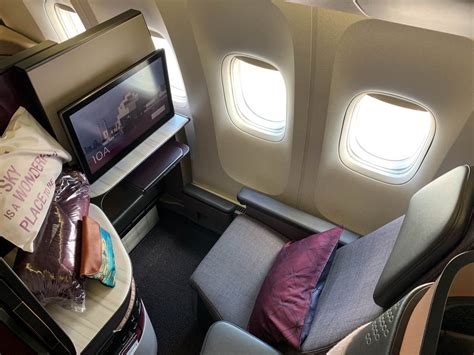
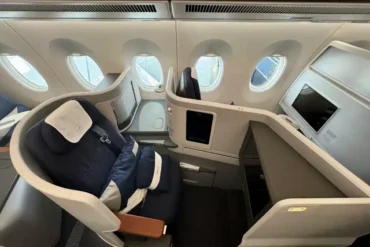
The rise of enclosed suites accelerated this transformation. Products like sliding-door suites fundamentally changed passenger expectations. Travelers who once demanded first class began realizing that modern business class now offered nearly the same sleeping comfort and privacy at a lower price point.
Airlines recognized an opportunity immediately.
Instead of dedicating large portions of aircraft space to ultra-exclusive first class cabins, they could install dense premium business suites and monetize the best seats separately. The result was a layered pricing structure hidden inside a single cabin.
This strategy explains why business class pricing can vary so dramatically even within the same aircraft. A premium bulkhead suite may cost significantly more than another business class seat only a few rows behind it. Airlines know travelers are willing to pay extra for privacy, direct aisle access, quieter cabin zones, or superior sleeping arrangements.
The economics are difficult to ignore. Removing first class seats enables airlines to increase premium seat density while reducing operational complexity. Fewer specialized crew requirements, simpler catering logistics, and more consistent cabin products all contribute to lower operating costs and higher yields.
For passengers, however, this means business class is no longer a standardized product. The seat map itself has become part of the pricing algorithm.
Airlines Charge More Simply Because the Aircraft Is Newer
Passengers often assume business class prices depend mainly on route demand, but aircraft type has become equally important. In modern aviation, newer cabins almost automatically command higher fares.
When airlines invest billions into fleet modernization programs, they expect those upgrades to generate immediate financial returns. Every feature inside a modern business class suite is carefully tied to pricing power.
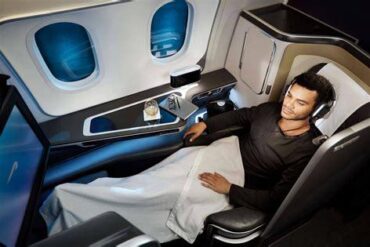
An enclosed suite with sliding doors can raise fares substantially. Direct aisle access justifies another premium. Larger entertainment screens, wireless charging, upgraded bedding, mood lighting, high-speed Wi-Fi, and improved storage solutions all contribute to higher ticket prices.
The aircraft itself becomes a luxury product.
A passenger booking a long-haul flight on a modern widebody jet equipped with newly installed suites will often pay significantly more than someone flying an older aircraft on the same route. Yet many travelers fail to notice how dramatically cabin hardware affects pricing.
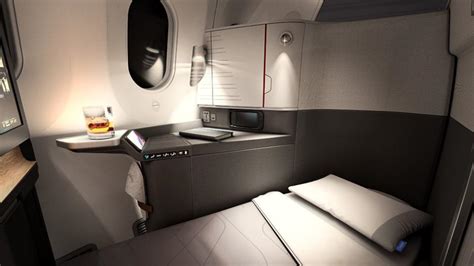
Airlines track this relationship obsessively because premium passengers are extremely sensitive to comfort differences. On overnight flights, sleep quality directly affects customer satisfaction and future booking behavior. A fully flat bed inside a private suite is no longer viewed as a luxury perk. For many corporate travelers, it is considered essential for productivity upon arrival.
This creates enormous pricing leverage.
An airline operating a cutting-edge business class cabin can aggressively raise fares without significantly reducing demand. Travelers booking premium cabins are often less price-sensitive than economy passengers, especially when comfort impacts work schedules or long-haul fatigue.
At the same time, airlines rarely reduce fares when older aircraft replace newer ones on a route. This creates one of the industry’s most frustrating realities for passengers: identical prices can deliver vastly different onboard experiences.
A modern suite-style cabin and an outdated angled-flat seat may technically both qualify as business class, but the actual experience can feel worlds apart.
Revenue managers understand that perception matters almost as much as functionality. Even relatively small design upgrades can produce measurable increases in passenger willingness to pay. A larger privacy divider or improved cabin lighting may sound minor, but these features collectively shape the emotional value attached to premium travel.
The newest business class products are not designed purely for passenger comfort. They are engineered specifically to maximize fare premiums.
Corporate Contracts Quietly Distort Public Business Class Prices
One of the least understood aspects of airline pricing involves the enormous influence of corporate travel agreements. Large companies negotiate private business class rates directly with airlines, often paying dramatically less than the fares visible to the public.
This hidden pricing structure creates a strange illusion in premium travel markets.
A business class ticket publicly listed at $7,000 may actually be selling in large volumes to corporate clients for nearly half that amount. Airlines intentionally maintain high public fares because they strengthen the perceived value of corporate discounts while preserving pricing flexibility for last-minute travelers.
Corporate contracts are enormously valuable because they provide airlines with predictable streams of high-yield passengers year-round.
Instead of relying entirely on unpredictable leisure demand, airlines secure long-term agreements with corporations whose employees frequently travel internationally. These travelers often book close to departure dates, require flexibility, and consistently fill premium cabins.
From the airline’s perspective, such contracts reduce revenue uncertainty significantly.
These agreements frequently include more than discounted fares alone. Corporations may receive benefits such as flexible cancellation policies, guaranteed seat availability, waived change fees, lounge access enhancements, or rebate structures tied to annual travel volume.
The result is a parallel pricing ecosystem invisible to most travelers.
Individual passengers browsing airline websites are effectively shopping in the retail market, while corporations operate in a wholesale environment negotiated privately behind closed doors.
This dynamic explains why business class prices can appear absurdly inflated to leisure travelers. Airlines are not necessarily expecting every seat to sell at public prices. Instead, they use those fares strategically to manage inventory while preserving high-margin opportunities.
Corporate demand also affects seat availability for ordinary passengers. During periods of strong business travel activity, discounted fare buckets disappear quickly because contracted travelers consume large portions of premium inventory before airlines ever release cheaper public fares.
For individual travelers hoping to find discounted business class tickets, this creates a difficult reality. They are competing against multinational companies capable of purchasing thousands of premium seats annually.
Airline pricing systems reward guaranteed volume and long-term relationships far more aggressively than occasional consumer purchases.
Revenue Algorithms Constantly Monitor Passenger Behavior
Modern airline pricing no longer relies primarily on human decisions. Sophisticated revenue management systems now control much of the process automatically, reacting to market conditions in real time with astonishing speed.
These systems continuously analyze booking trends, search activity, historical demand patterns, seasonal fluctuations, competitor pricing, local events, and economic indicators.
The goal is brutally simple: extract the maximum possible revenue from every seat before departure.
If a business class cabin sells faster than expected, algorithms rapidly increase fares. If demand weakens, prices may temporarily soften to stimulate bookings. These adjustments occur constantly, often without human intervention.
Some systems now update pricing every few minutes.
This explains why business class fares can fluctuate dramatically within hours. A traveler searching for flights in the morning may encounter entirely different pricing by the afternoon because the system detected increased demand or changing booking behavior.
Major events amplify this volatility even further.
A sudden technology conference, sporting event, trade exhibition, or political summit can instantly trigger pricing surges on key routes. Revenue algorithms monitor booking velocity closely, meaning unusual spikes in demand automatically generate higher fares almost immediately.
The systems are designed to anticipate urgency before passengers even realize it themselves.
Historical booking data also plays a major role. Airlines know roughly how many premium seats should sell at specific intervals before departure. If a flight underperforms projections months in advance, pricing systems may lower fares temporarily to encourage earlier bookings.
Conversely, strong early demand signals allow airlines to maintain elevated pricing confidently.
The increasing sophistication of these systems has fundamentally changed premium travel pricing. Older revenue management models relied heavily on broad fare categories updated periodically by analysts. Modern systems operate continuously, reacting to digital behavior in real time.
Every online search, abandoned booking, route trend, and market shift contributes data.
Passengers often believe they are timing the market strategically when waiting for better fares. In reality, they are competing against algorithms specifically designed to predict their willingness to pay.
That imbalance heavily favors the airline.
Fare Buckets Create Invisible Auctions Inside the Cabin
Perhaps the most important secret in business class pricing involves fare buckets — hidden inventory categories that determine how much each passenger ultimately pays.
Even though every traveler sits in the same cabin, airlines divide business class into multiple pricing layers identified by alphabetical fare codes.
These buckets operate like invisible auctions unfolding gradually over time.
The cheapest business class inventory is usually released first in highly restricted quantities. Once those seats sell, the system automatically moves remaining inventory into more expensive fare categories.
Two passengers seated side-by-side may therefore have paid radically different amounts for nearly identical tickets.
The fare code itself determines far more than price alone. It also affects ticket flexibility, refund eligibility, mileage accrual, upgrade priority, and change policies.
A deeply discounted fare bucket may prohibit refunds entirely while offering limited frequent flyer benefits. Higher fare buckets provide maximum flexibility for travelers needing last-minute schedule changes.
This structure enables airlines to segment passengers according to urgency and spending tolerance.
Leisure travelers booking months ahead gain access to cheaper fare buckets because airlines want to stimulate early demand. Meanwhile, corporate travelers booking days before departure are pushed into premium categories designed specifically for higher-paying customers.
Scarcity is central to the strategy.
When booking websites display warnings such as “only two seats left at this price,” they are often referencing the remaining inventory within a specific fare bucket rather than the actual number of seats left on the aircraft.
Once those cheaper buckets disappear, the system automatically recalculates pricing using higher inventory tiers.
The process creates powerful psychological pressure while maximizing revenue efficiency simultaneously.
Modern airlines have made this system even more granular. Some carriers now deploy micro-buckets separated by extremely small price differences, allowing algorithms to test exactly how much passengers are willing to spend.
Instead of broad pricing jumps, systems now optimize revenue dollar by dollar.
This explains why business class pricing can feel unpredictable and strangely inconsistent. The cabin itself is not being sold as a single product. It is being divided into dozens of microscopic inventory categories constantly reshaped by algorithms, demand forecasts, and booking behavior.
Passengers are not simply buying seats anymore.
They are participating in one of the most sophisticated dynamic pricing systems in global commerce — whether they realize it or not.