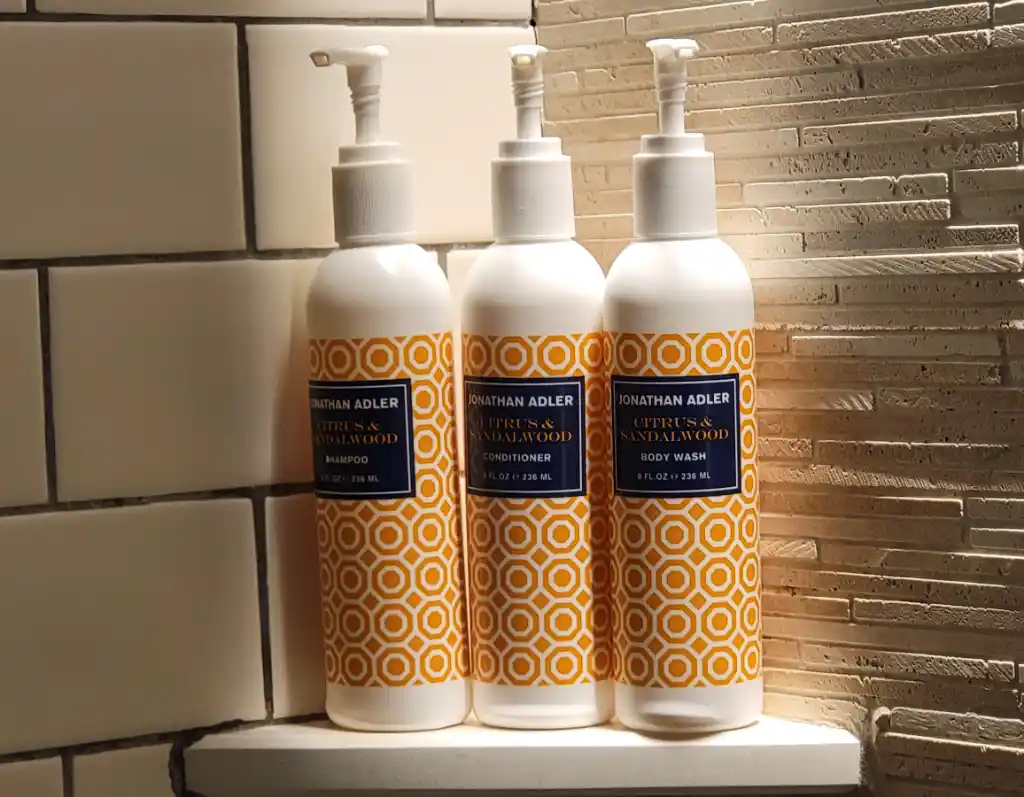
Hotel bathrooms have quietly become a new front line in the debate over transparency, branding, and guest trust. What looks like a small detail—the logo on a shampoo bottle—has turned into a revealing symbol of how some hotels balance cost control against the promises they make to guests. As refillable toiletry dispensers replace single-use bottles across the industry, a troubling question keeps surfacing: are some hotels advertising premium brands while dispensing something else entirely?
The shift to refillable containers was framed as a win for sustainability and efficiency, and in many ways it is. Plastic waste has dropped, supply chains are simpler, and housekeeping operations are faster. Guests, meanwhile, have adjusted. What has not adjusted nearly as smoothly is the relationship between what hotels claim to offer and what guests actually receive once they turn on the shower.
For major hotel groups, branded toiletries are not cosmetic extras. They are part of the product architecture, carefully chosen to reinforce brand identity, justify higher nightly rates, and signal quality at a glance. When that signal becomes unreliable, the implications ripple far beyond conditioner and body wash.
The Promise of Branded Toiletries as a Luxury Signal
Hotel toiletry partnerships exist for a reason. Luxury and lifestyle brands such as Jonathan Adler, Le Labo, or Byredo lend immediate credibility to a property’s positioning. In return, toiletry brands gain exposure to a captive audience that is already primed to associate comfort with indulgence. This arrangement is marketed heavily, appearing in room descriptions, amenities pages, and brand standards documentation.
For guests, the promise is simple. If a hotel says it offers a specific branded amenity, that is what should be in the bottle. The container is not just packaging; it is a representation of an agreement between hotel, supplier, and guest. Once that representation becomes unreliable, the trust embedded in the entire stay weakens.
The problem is that refillable systems obscure verification. With single-use bottles, mismatches were immediately obvious. With wall-mounted or countertop dispensers, guests have no practical way of knowing what product is inside unless labeling or scent gives it away.
When the Bottle Lies but the Website Doesn’t Change
One of the most cited recent examples involves a Hyatt-affiliated lifestyle property that publicly promotes Jonathan Adler branded bath amenities while reportedly filling those containers with far cheaper alternatives. Photographic evidence showed clearly branded bottles paired with bulk products from unrelated suppliers. When the discrepancy became public, the solution was not to restore the promised product, but to remove identifying labels from the bottles.
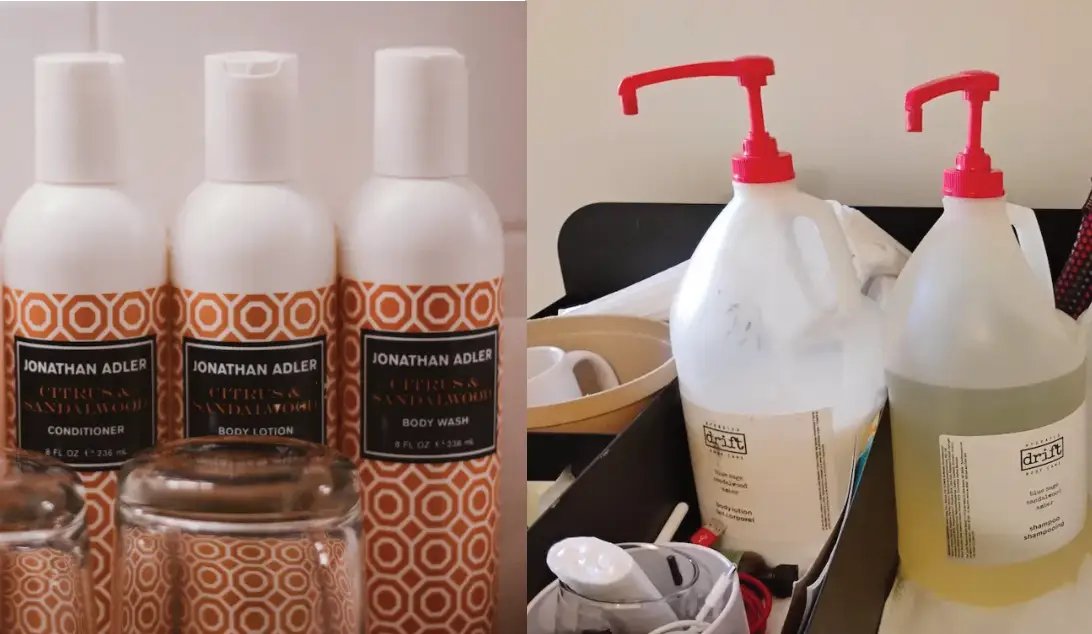
That decision matters more than it seems. The hotel continued to advertise the premium brand online, while physically removing clues that would allow guests to detect the substitution. This is not a misunderstanding or a supply hiccup. It is a deliberate alignment problem between marketing and reality.
The longer such practices continue, the harder they are to dismiss as isolated incidents. They point to a structural temptation: refillable containers make brand substitution easier, harder to detect, and cheaper to sustain over time.
Why This Practice Appears to Be Spreading
Cost pressure in hospitality is relentless. Labor, utilities, and maintenance expenses continue to rise, while guests resist higher rates unless value is clearly visible. Toiletries, once a marginal line item, have become an attractive place to cut corners quietly.
Bulk, unbranded, or lower-tier products can cost a fraction of what premium partners charge. When poured into a branded container, the savings are immediate and largely invisible. Housekeeping staff may not even be aware of the discrepancy, following internal procedures without insight into branding agreements.
Observant travelers have begun noticing a pattern: housekeeping carts stocked with unmarked containers, dispensers without consistent labeling, and scents that do not match advertised brands. None of this proves misconduct on its own, but the accumulation of such signals suggests the issue is not rare.
Does It Really Matter to Guests?
Some argue this controversy is overblown. After all, guests still receive soap, shampoo, and conditioner. Few people choose a hotel solely for bath products. Yet this argument misunderstands how trust works in hospitality.
Hotels sell assurance. When a property claims a feature—whether it is a brand of toiletries, aircraft-style bedding, or curated minibar selections—it becomes part of the implied contract of the stay. Substituting a cheaper product while maintaining premium marketing is not a neutral decision. It is a misrepresentation, however small it may appear.
The airline analogy resonates because it captures the emotional core of the issue. Pouring a budget sparkling wine into a luxury champagne bottle would provoke outrage, even if most passengers could not identify the difference blindfolded. The offense lies not in taste, but in deception.

Brand Partners Are Quiet Victims Too
This practice does not only affect guests. Toiletry brands invest heavily in these partnerships, counting on authentic exposure to drive retail sales and long-term brand loyalty. When a hotel substitutes another product, it effectively trades on the brand’s reputation without delivering the brand’s experience.
Over time, this erodes the value of such partnerships. Brands may respond by tightening audits, increasing prices to offset risk, or withdrawing from hotel collaborations altogether. The result would be fewer genuinely premium offerings and more generic experiences across the industry.
The Long-Term Cost of Short-Term Savings
The most ironic aspect of this trend is that it undermines what hotels are trying to protect. Savings gained through quiet substitution are minimal compared to the reputational damage that follows public exposure. Once guests suspect that advertised details cannot be trusted, skepticism spreads to other claims, from room size to service quality.
Transparency is the simpler path. Hotels that choose unbranded or budget-friendly toiletries can say so honestly. Many guests will accept it without complaint. What guests struggle to forgive is being told one thing and given another.
In an era where travelers document everything, from minibar prices to mattress tags, the bathroom is no longer a blind spot. It is a mirror, reflecting how seriously a hotel takes its own promises.