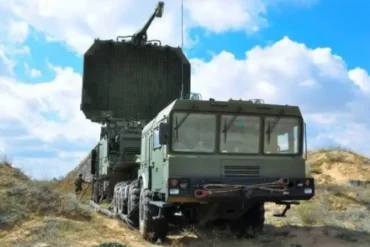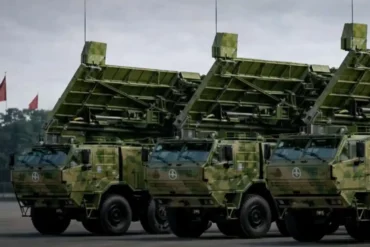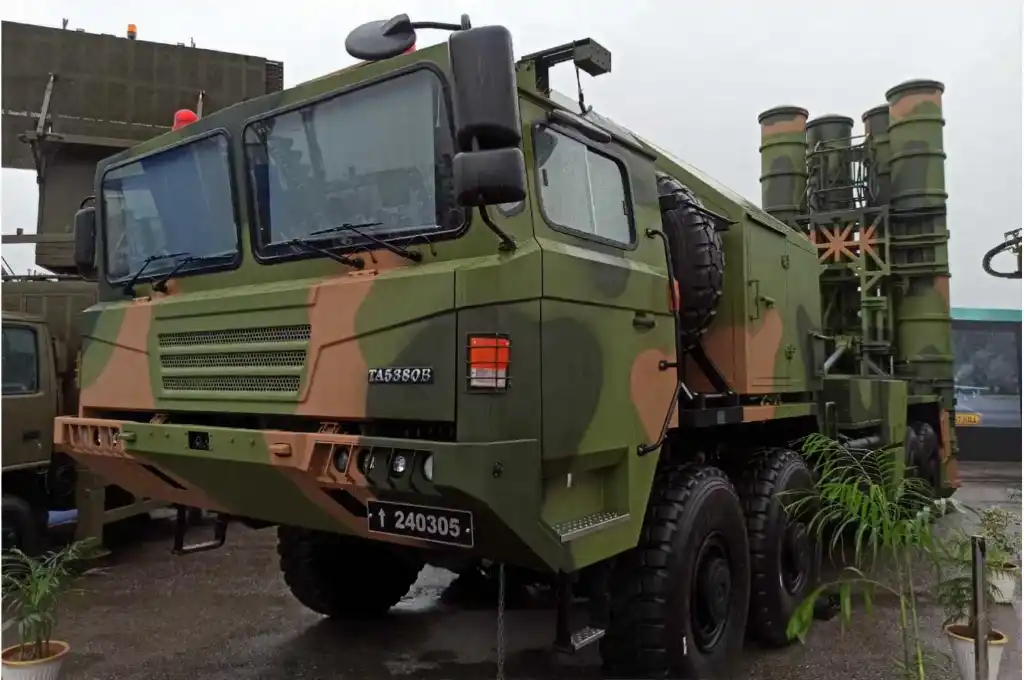
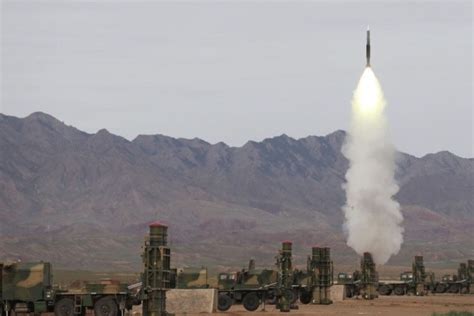
China’s HQ-9BE long-range surface-to-air missile system has now entered operational service with the Pakistan Air Force (PAF), marking one of the most consequential upgrades to Pakistan’s integrated air defense architecture in recent years. Though not officially acknowledged by Pakistani authorities, credible defense sources confirm that the system is fully active and positioned to counter evolving aerial threats across South Asia.
The arrival of the HQ-9BE, a cutting-edge export variant of China’s indigenous HQ-9 platform, represents a decisive step forward in Pakistan’s efforts to modernize its air defense capabilities. Modeled on a fusion of Russian S-300 and American Patriot missile system technologies, the HQ-9BE incorporates extensive Chinese refinements that extend its engagement range and bolster its resilience against electronic warfare.
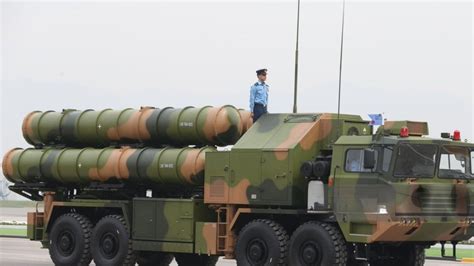
HQ-9BE: Technical Advancements and Capabilities
The HQ-9BE distinguishes itself with substantial upgrades over its predecessor systems. Its maximum interception range of up to 260 kilometers places it among the most capable long-range surface-to-air missile platforms currently fielded in the region. This allows Pakistan to project a wide defensive envelope that can deter or engage targets deep inside contested airspace.
The HQ-9BE’s advanced radar systems, featuring phased-array tracking, enable simultaneous monitoring of multiple aerial threats. Its seeker system likely employs active radar homing, granting it greater accuracy even in electronically jammed environments. Furthermore, the system’s electronic counter-countermeasures (ECCM) allow it to resist sophisticated jamming attempts, a critical capability in modern warfare where electronic dominance is a central factor.
Operationally, the system is designed to engage a wide spectrum of threats, including:
- Airborne early warning and control (AEW&C) aircraft
- Strategic bombers
- Surveillance drones
- Stand-off strike platforms
- Fighter jets at high or low altitudes
These enhancements position the HQ-9BE as a cornerstone of Pakistan’s long-range strategic defense, complementing the HQ-16FE and LY-80 systems that already provide medium and short-range coverage.
Integration Into Pakistan’s Multi-Layered Defense
Pakistan’s air defense network is rapidly evolving into a multi-tiered shield, where the HQ-9BE represents the strategic long-range layer. Its deployment allows the country to detect, track, and neutralize high-value targets far beyond its national borders, particularly in airspaces that were previously more accessible to adversaries.
Positioning the HQ-9BE near Islamabad and Rawalpindi significantly increases the survivability of Pakistan’s command centers and air bases. The system creates a deterrence umbrella that makes preemptive strikes by hostile forces riskier and costlier. This capability extends to protecting Pakistan’s own air force assets by denying adversaries the option of conducting deep penetration missions with relative impunity.
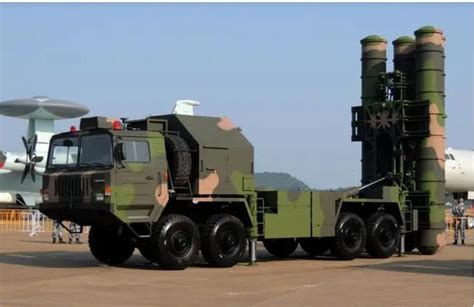
Implications for India’s Air Strategy
The operationalization of the HQ-9BE forces the Indian Air Force (IAF) to reassess its planning along the western front. Aircraft such as the Su-30MKI and AWACS platforms, which form the backbone of India’s surveillance and long-range strike strategies, are now more vulnerable within Pakistani airspace. Their standard operating procedures, including flight paths and mission profiles, may need to be restructured to avoid falling within the missile’s 260-kilometer kill zone.
Moreover, the HQ-9BE increases interception probabilities against Indian drones and cruise missiles, particularly those intended for deep penetration or precision strikes. In practical terms, India will be compelled to allocate additional resources toward electronic warfare, suppression of enemy air defenses (SEAD), and countermeasures. This not only complicates mission planning but also raises operational costs and risks.
Strategic China-Pakistan Defense Alignment
The introduction of the HQ-9BE also underscores a deepening defense partnership between Pakistan and China. Unlike older systems, the HQ-9BE is fully compatible with modern command-and-control integration frameworks, meaning it can be synchronized with other radar and missile units across the country. This integration enables Pakistan to conduct simultaneous multi-axis engagements, enhancing its ability to respond to complex aerial assaults.
The system’s presence confirms China’s role as Pakistan’s foremost defense supplier, one willing to provide strategic-level technologies that Russia and Western nations are unlikely to share. This cooperation strengthens the China-Pakistan axis in the region while posing new strategic dilemmas for India and its partners.
Shifting the Balance of Power in South Asia
The HQ-9BE alters the delicate balance of air superiority in South Asia, where India traditionally enjoyed dominance due to its larger fleet and more advanced combat aircraft. Pakistan’s acquisition of such a long-range and sophisticated system sends a clear signal: it intends to deny uncontested airspace to any adversary and maintain a credible deterrence posture.
For India, this complicates potential cross-border operations and pressures its air force to innovate or expand its arsenal to neutralize the new threat. For Pakistan, the system not only enhances defense but also provides psychological and strategic leverage, reinforcing deterrence without the need for immediate escalation.
Conclusion: A New Era of Contested Airspace
With the HQ-9BE now fully operational, Pakistan has significantly upgraded its defensive shield, complicating adversary planning and reshaping regional dynamics. The system ensures that any attempt at establishing air superiority over Pakistani territory will carry substantially higher risks, forcing potential adversaries into a more contested and uncertain combat environment.
This development, while strengthening Pakistan’s defensive posture, also escalates the regional arms competition, with India likely to seek countermeasures or accelerated procurement of advanced air defense suppression technologies. As South Asia enters a new era of contested skies, the HQ-9BE stands at the heart of Pakistan’s strategic calculus, redefining how the next air conflict in the region could unfold.