Introduction to F-22 Countermeasures
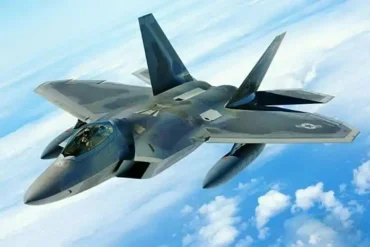
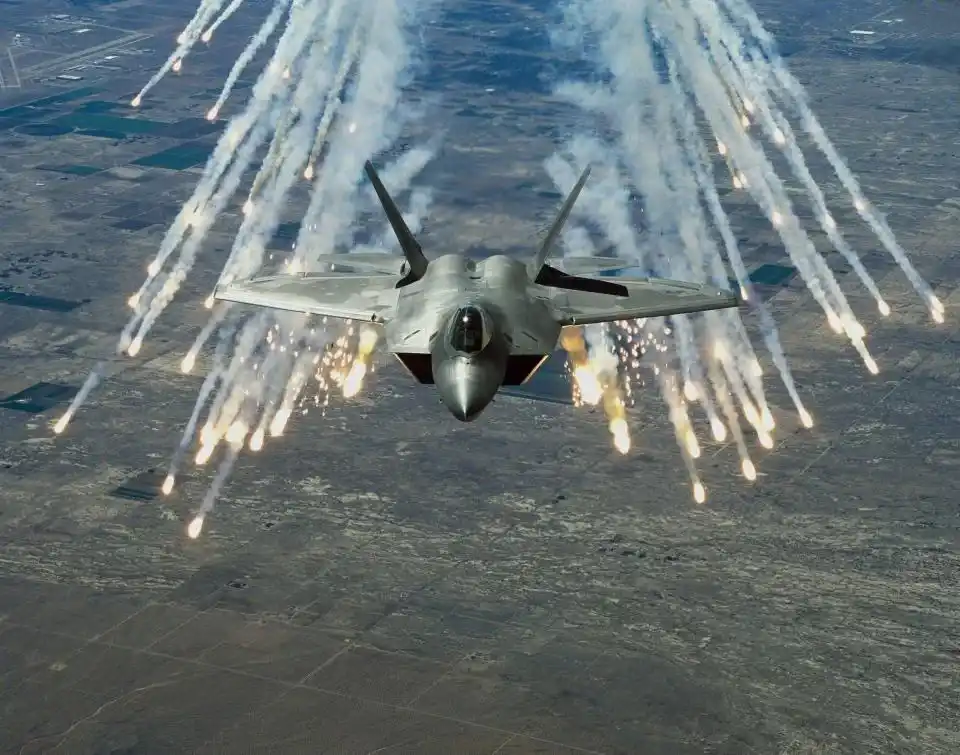
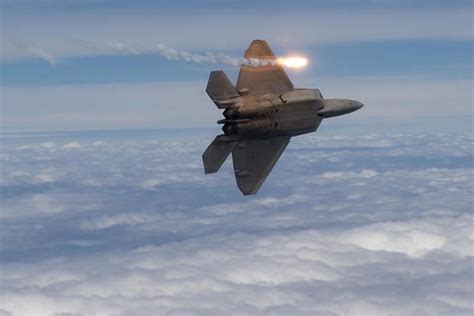
The F-22 Raptor, a fifth-generation stealth fighter, is among the most advanced combat aircraft in the world. Designed for air superiority, ground attack, and electronic warfare, the F-22 incorporates a sophisticated countermeasure system to evade threats, including infrared-guided missiles. One of its primary defense mechanisms is its flare deployment system, which deceives incoming missiles by generating high-intensity heat signatures.
Despite the classified nature of many of its capabilities, research and expert analysis provide insights into the F-22’s flare system, its deployment mechanisms, and its effectiveness in combat scenarios.
Purpose of Flares in Aerial Combat
The F-22’s flares are designed to counteract infrared-guided missiles (heat-seekers). These missiles track the heat emissions of an aircraft’s engines. Once launched, flares create hot-burning decoys, misleading enemy missiles away from the F-22.
The main flare types used in the F-22 Raptor are:
- MJU-7/B
- MJU-53/B
These flares are made from magnesium or other pyrotechnic materials, igniting upon deployment to simulate an aircraft’s thermal signature.
F-22’s Flare Dispenser System
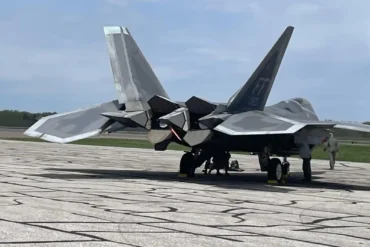
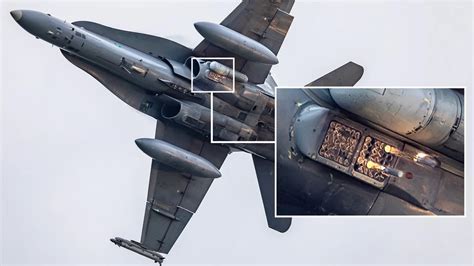
The F-22 Raptor is equipped with two AN/ALE-52 countermeasure dispensers. These are located beneath the fuselage, behind the main weapons bay. The dispensers are covered by retractable doors, ensuring the aircraft retains its low radar cross-section when not deploying countermeasures.
Key Features of the AN/ALE-52 Dispenser System:
- Two dispensers, strategically placed to optimize flare deployment.
- Six launch tubes per dispenser, for a total of 12 launch tubes.
- Stealth-preserving fairing doors, preventing unnecessary radar reflections.
- Automatic or manual activation, integrated with the F-22’s electronic warfare suite.
Flare Capacity: How Many Does the F-22 Carry?
The exact number of flares an F-22 Raptor carries remains classified, but estimates suggest:
- Minimum capacity: 12 flares (one per launch tube)
- Likely range: 12 to 36 flares
- Speculative claims: Up to 60 flares
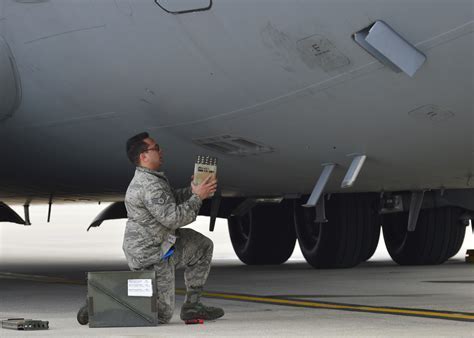
Some aviation sources and pilot discussions indicate that the F-22 might carry “magazines” of flares, with each magazine holding multiple flares. If each magazine contains six flares per tube, the total could reach 36 flares. However, some unverified sources suggest even higher numbers, up to 120—a figure widely disputed in aerospace forums.
Cost of F-22 Flares
The financial aspect of maintaining an advanced countermeasure system is significant. The unit costs for flares are:
- MJU-7/B: $57 per flare
- MJU-53/B: $75 per flare
A full loadout of 30 MJU-53/B flares would cost approximately $2,250. Given the high rate of expenditure during combat or training, the overall operational cost of flare deployment is a crucial factor for budgeting within the U.S. Air Force.
Flare Deployment in Combat and Training
The F-22’s flare deployment is integrated into its advanced electronic warfare system, including:
- ALR-94 radar warning receiver
- AN/ALQ-94 electronic countermeasure suite
- Automatic threat detection and response
When a missile is detected, flares can be automatically deployed based on the threat’s trajectory and infrared signature. Pilots can also manually deploy flares if necessary.
Operational Examples:
- May 2023 Gulf of Mexico Training: F-22 Raptors deployed flares in live exercises to simulate engagement against infrared-guided missiles.
- Combat Sorties Over Syria: Reports suggest F-22s have used flares in real-world combat scenarios to counter potential threats from adversarial forces.
Comparison with Other Fighter Aircraft
To understand the F-22’s flare capacity, it is useful to compare it with other modern fighter jets:
| Aircraft Model | Flare Dispenser Type | Estimated Flare Capacity |
|---|---|---|
| F-22 Raptor | AN/ALE-52 | 12-36 (estimated) |
| F-15 Eagle | AN/ALE-47 | 30-60 (varies by config) |
| F-16 Fighting Falcon | AN/ALE-47 | 24-30 |
| A-10 Thunderbolt II | AN/ALE-47 | 30-60 |
The F-22’s estimated flare count aligns with the F-16 and F-15 rather than high-capacity aircraft like the A-10. However, due to its stealth-focused design, the F-22’s countermeasure system must be more efficient and precise than traditional fighters.
Challenges in Determining the Exact Number of Flares
The classified status of the F-22’s systems makes it difficult to determine the exact number of flares carried. While multiple sources provide estimates, official documentation remains deliberately vague. Key reasons for this secrecy include:
- Operational Security (OPSEC): Disclosing exact numbers could help adversaries develop counter-strategies.
- Variable Configurations: Different mission loadouts could change the number of carried flares.
- Stealth Considerations: Additional flare storage could impact the aircraft’s radar cross-section.
Conclusion
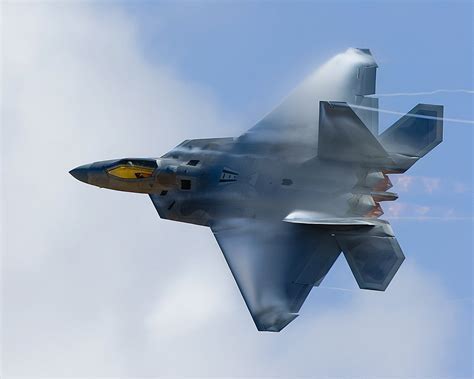
The F-22 Raptor’s flare system is a crucial part of its defensive countermeasures, offering protection against infrared-guided threats. Despite the uncertainty surrounding its exact flare capacity, available data suggests it carries between 12 and 36 flares via two AN/ALE-52 dispensers. With highly integrated electronic warfare systems, the F-22 ensures optimal threat detection and response, preserving its dominance in aerial combat.
FAQ: F-22 Raptor Flares
1. How many flares does the F-22 Raptor carry?
The exact number is classified, but estimates suggest the F-22 carries between 12 and 36 flares, depending on loadout and mission requirements.
2. What types of flares does the F-22 use?
The F-22 deploys MJU-7/B and MJU-53/B flares, which are designed to counter infrared-guided missiles by creating decoy heat signatures.
3. Can the F-22 deploy flares automatically?
Yes. The F-22’s electronic warfare system allows for both automatic and manual flare deployment, ensuring protection against threats in real time.