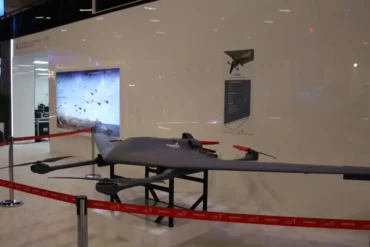
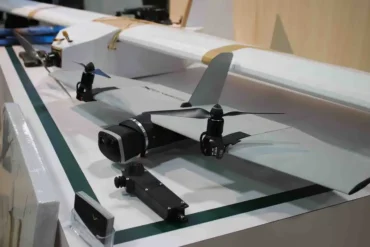
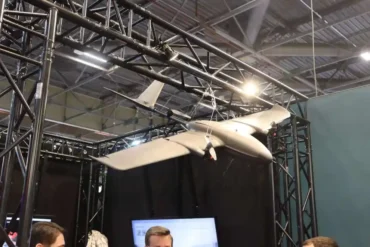
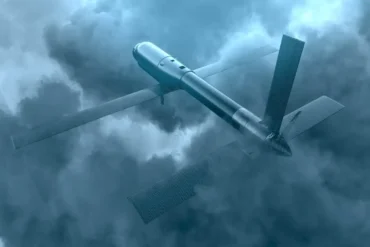
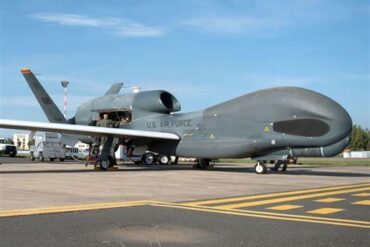
The U.S. Army’s aviation community has begun a pivotal transition as soldiers at Fort Rucker initiated hands-on operations with the VXE30 Stalker Unmanned Aircraft System on November 18, 2025. This moment marks more than the introduction of a new drone; it represents a decisive shift toward a battlefield model where low-signature aircraft, long-endurance surveillance, and modular lethality form the backbone of future reconnaissance formations. The decision to begin training ahead of formal fielding signals the urgency behind enhancing unmanned capabilities across combat aviation units.
As soldiers stepped into early training cycles—conducting flight rehearsals, mission planning, and maintenance instruction—the Army began weaving the VXE30 into a layered reconnaissance ecosystem designed for dispersed, highly mobile operations. This training reflects a deliberate push to accelerate unmanned readiness before full integration into brigades in 2026.
VXE30 Stalker Emerges From Battlefield Lessons and Operational Demands
The VXE30 Stalker did not emerge from theoretical requirements or distant future scenarios. Its selection followed a close review of recent conflicts where survivability hinged on reduced acoustic signatures, extended endurance, flexible launch requirements, and fast deployment from confined terrain. Traditional runway-dependent systems often proved too cumbersome; the Stalker’s vertical takeoff and landing capability fills that gap by enabling operations from forest clearings, urban courtyards, or improvised remote hide sites.
Fort Rucker and Fort Huachuca are positioned as the first installations to introduce the system formally, ensuring that instructors refine tactics, techniques, and procedures before wider distribution to aviation brigades. The early exposure allows operators to adapt quickly as the Army embraces more decentralized unmanned operations.
Group 3 Performance, Group 2 Footprint: A Logistics Advantage
The Department of War classifies unmanned aircraft into five groups based on altitude, weight, and speed. While the VXE30 performs like a Group 3 UAS, it weighs only 49 pounds (22 kilograms)—light enough for transport in a standard SUV or military utility truck. This compact footprint dramatically lowers the logistical burden on aviation brigades. Two soldiers can assemble and launch it in ten minutes, a crucial advantage in high-intensity, rapidly changing operations.
This balance of capability and portability deepens the Army’s commitment to creating resilient reconnaissance networks that can survive electronic warfare, kinetic threats, and contested airspace. Logistics is no longer an afterthought; it has become a strategic differentiator.
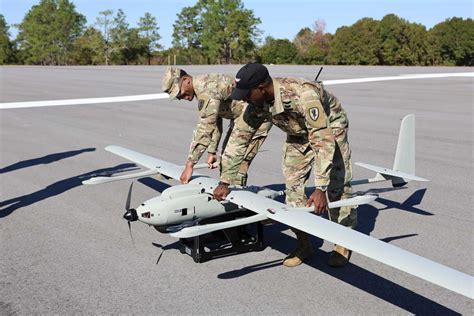
Propulsion Flexibility and Stealth-Oriented Engineering
A defining trait of the VXE30 Stalker lies in its propulsion versatility. Operators can run the aircraft using a propane fuel cell or a rechargeable battery, allowing mission planners to tailor endurance and logistical needs based on terrain and threat environment. When powered by its fuel cell, the drone exceeds 8 hours of endurance—more than 480 minutes of uninterrupted surveillance.
A communication range of 100 miles (160 kilometers) allows aviation units to project persistent intelligence far beyond front-line maneuver areas. Even more vital is the aircraft’s near-inaudible acoustic signature. In conflicts where adversaries employ sound-tracking sensors to detect drones, silence becomes as crucial as altitude or speed.
Modular Architecture and Enhanced Precision Engagement Options
The Stalker’s modular open systems architecture positions it as a future-proof reconnaissance asset. Instructors such as Maj. Rachel Martin emphasize how its adaptability enables rapid integration of new sensor payloads—electro-optical cameras, infrared modules, navigation alternatives, and mission-specific targeting kits.
The UAS is also compatible with the Common Lethality Integration Kit, allowing operators to select and deploy warheads at the unit level. These include modern precision-effect munitions and legacy payloads such as 81 mm mortar-based effects, giving commanders flexible options for shaping the battlefield.
Strengthening Future Vertical Lift and Reconnaissance Strategy
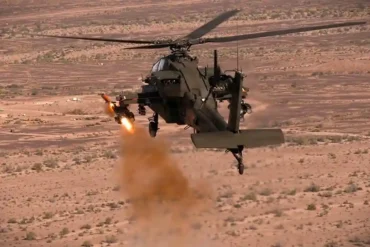
The arrival of the VXE30 reflects a key shift in how the Army structures its aviation forces. Instead of centralized UAS detachments, brigades will soon embed unmanned systems directly within combat aviation units. This shift shortens sensor-to-shooter timelines, enhances real-time targeting, and supports manned-unmanned teaming—an essential pillar of the Future Vertical Lift vision.
Manned helicopters will increasingly rely on drones like the Stalker to scout ahead, assess threats, monitor routes, and provide rapid battle damage assessment. The goal is not drone replacement but drone augmentation: extending the eyes and ears of aviation formations operating in contested environments.
Training Pipeline Expands Through December and Into 2026
Training at Fort Rucker will continue through December as aviators integrate the VXE30 into leadership courses and advanced UAS curricula. Soldiers will learn mission planning, VTOL procedures, ISR employment, and multi-echelon integration. Once proficiency standards are met, brigades across the Army will begin receiving the system throughout 2026.
These educational steps are essential to ensuring that the Army not only fields the VXE30 but maximizes its potential across diverse operational domains.
Strategic Impact: Endurance, Survivability, and Expeditionary Reach
Introducing the VXE30 Stalker is part of a broader modernization roadmap designed to confront emerging threats and operate effectively in dispersed, contested theaters. Its long endurance, low acoustic profile, small logistics footprint, and rapid assembly time all support the Pentagon’s push toward flexible, forward-positioned reconnaissance assets.
The Stalker strengthens the Army’s ability to sustain long-range intelligence missions, deliver precision effects, and remain resilient under electronic attack. It is not just a drone but a force multiplier that reshapes how aviation brigades collect, analyze, and respond to battlefield information.
As training accelerates and fielding expands, the VXE30 is set to become one of the most influential reconnaissance tools shaping the Army’s next generation of aviation operations.