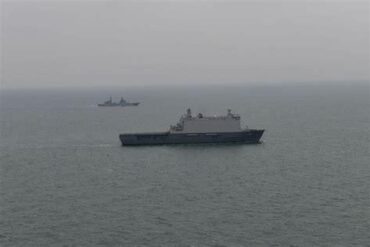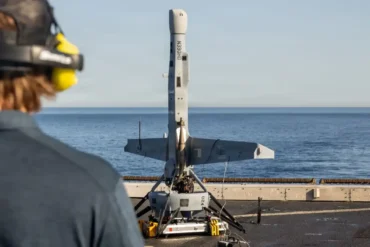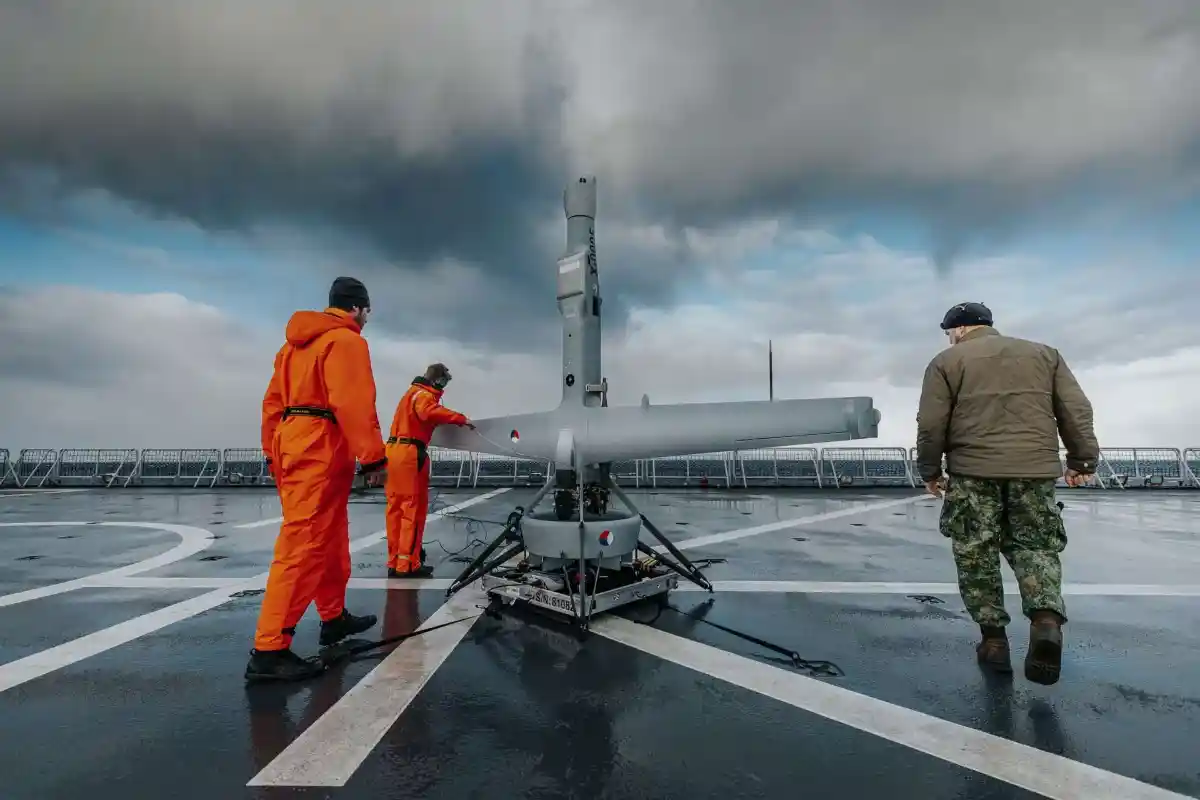
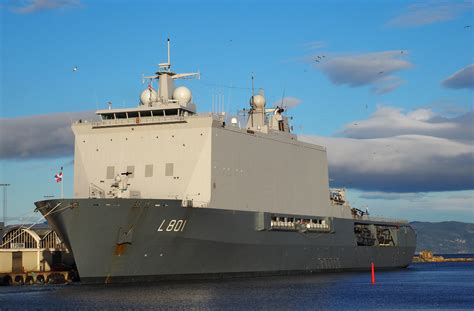
The Royal Netherlands Navy has taken a decisive step into the future of maritime intelligence by deploying the V-BAT shipborne unmanned aerial system during a NATO exercise for the first time. Conducted aboard the amphibious transport ship HNLMS Johan de Witt during Exercise Cold Response off the coast of Norway, the operation marks a turning point in how European naval forces approach persistent surveillance, situational awareness, and decision superiority in contested maritime environments.
This deployment is not merely a technical milestone; it represents a strategic shift toward distributed intelligence, surveillance, and reconnaissance (ISR) capabilities that can operate seamlessly across NATO fleets. By introducing a compact yet highly capable drone into operational service, the Dutch Navy is effectively expanding its surveillance horizon without increasing risk to personnel or relying solely on traditional aviation assets.
The significance of this move lies in its timing. As geopolitical tensions intensify across the North Sea, Baltic, and Arctic regions, NATO members are under increasing pressure to enhance maritime domain awareness. The V-BAT’s integration demonstrates how modular, rapidly deployable technologies can fill critical capability gaps in real-world operational timelines.
V-BAT Drone Capabilities Redefine Shipborne ISR Operations
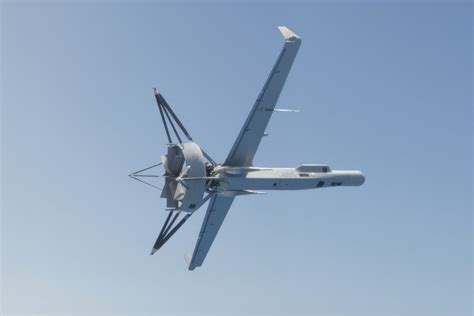
At the heart of this deployment is the Shield AI V-BAT, a uniquely engineered unmanned aircraft that combines vertical takeoff and landing (VTOL) functionality with the endurance of a fixed-wing platform. Unlike traditional drones that require runways or complex launch systems, the V-BAT operates within a compact footprint, making it ideal for naval vessels with limited deck space.
With a wingspan of 3.8 meters, a maximum takeoff weight of 73 kilograms, and a payload capacity of 18.1 kilograms, the system is optimized for flexibility rather than brute force. Its ability to remain airborne for over 10 hours while carrying advanced radar and electro-optical sensors transforms it into a persistent eye in the sky, capable of tracking surface contacts far beyond the horizon.
What makes the V-BAT particularly valuable is its ducted-fan propulsion system, which allows it to transition smoothly from vertical ascent to forward flight. This hybrid capability ensures that naval operators can deploy the drone quickly, even in challenging sea states or confined operational zones.
Equally important is what the V-BAT is not: it is unarmed. Its role is purely informational, emphasizing data collection, reconnaissance, and real-time intelligence dissemination rather than kinetic engagement. This distinction underscores a broader doctrinal shift in modern naval warfare, where information dominance often outweighs firepower.
Cold Response Validates Real-World Maritime Deployment
Exercise Cold Response provided a demanding environment to test the V-BAT’s operational viability. Conducted in the harsh climatic conditions of the Norwegian Sea, the exercise forced engineers and operators to confront one of the most persistent challenges in naval aviation: ship-specific airflow turbulence.
Every vessel generates unique aerodynamic conditions over its flight deck, influenced by hull design, superstructure, and wind patterns. For the V-BAT to function reliably across the Dutch fleet, it was essential to validate launch and recovery envelopes for each ship class.
The results were promising. Dutch defense officials confirmed that the drone successfully transmitted live imagery in real time, enabling commanders to make faster and more informed decisions. This capability is especially critical in high-threat environments, where delays in intelligence can translate into operational vulnerability.
A Strategic Solution to a Critical Capability Gap
The Dutch Ministry of Defence has been unusually candid about the motivation behind the V-BAT acquisition. The navy identified a clear operational shortfall: the lack of a dedicated unmanned ISR platform capable of supporting maritime security missions without imposing heavy logistical demands.
Traditional maritime patrol aircraft and shipborne helicopters, while powerful, come with significant constraints. They require larger decks, extensive maintenance, and trained crews, limiting their availability for routine surveillance tasks. The V-BAT addresses these limitations by offering a lightweight, low-footprint alternative that can be deployed quickly and operated by a two-person team.
This efficiency is particularly valuable for a navy tasked with covering diverse operational theaters, from the Baltic Sea to expeditionary missions abroad. By integrating the V-BAT, the Netherlands gains the ability to maintain continuous surveillance coverage without overstretching its manned aviation assets.
Rapid Procurement Reflects Urgency in NATO Readiness
The speed at which the V-BAT program moved from concept to deployment is as noteworthy as the technology itself. Faced with tight NATO commitments, the Dutch Command of Naval Forces bypassed traditional procurement timelines by leveraging a NATO acquisition framework that enabled direct purchasing.
In an era where defense contracts often take years to finalize, the V-BAT deal was executed with remarkable efficiency—even reportedly being signed via email to accelerate delivery. This unconventional approach highlights the growing urgency among NATO members to adapt quickly to evolving security threats.
From an initial announcement of eight systems in mid-2025 to reports of twelve drones in service by early 2026, the program demonstrates how streamlined procurement processes can deliver operational capability at speed.
Enhancing NATO Maritime Surveillance and Security
The deployment of the V-BAT aligns closely with NATO’s evolving maritime strategy, which prioritizes enhanced situational awareness and integrated surveillance networks. As threats to critical undersea infrastructure—including communication cables carrying trillions in daily data—continue to rise, the need for persistent monitoring has become non-negotiable.
By extending a ship’s sensor reach far beyond the horizon, the V-BAT enables earlier detection of small vessels, suspicious movements, and potential threats. This capability is particularly relevant in regions like the Baltic Sea, where recent incidents have underscored the vulnerability of undersea assets.
Moreover, the drone’s ability to operate in GNSS-denied and electronically contested environments gives it a significant edge. In modern conflict scenarios, where jamming and cyber interference are common, maintaining reliable ISR capabilities can determine the outcome of operations.
AI-Driven Autonomy and Resilience in Contested Environments
One of the defining features of the V-BAT system is its integration of AI-enabled autonomy, allowing it to operate with reduced reliance on continuous human control. This is not merely a convenience—it is a necessity in environments where communication links may be disrupted or degraded.
The drone’s autonomous capabilities enable it to navigate, collect data, and adapt to changing conditions even when traditional control channels are compromised. This resilience enhances survivability and ensures that critical intelligence continues to flow, regardless of adversarial interference.
Such capabilities reflect a broader trend in military technology, where autonomous systems are increasingly central to operational effectiveness. For NATO forces, this means building a network of assets that can function independently yet contribute to a unified intelligence picture.
A New Model for European Naval Innovation
The Netherlands’ adoption of the V-BAT offers valuable lessons for other European navies. By prioritizing modularity, interoperability, and rapid deployment, the program sets a precedent for how medium-sized forces can achieve high-impact capability upgrades without massive investments.
The drone’s prior use by the U.S. Marine Corps and organizations like Frontex further reinforces its credibility, providing assurance that it can perform in both military and security roles. Its deployment in exercises and real-world scenarios, including references to operational resilience in conflict zones, underscores its versatility.
While a fleet of twelve drones may seem modest, the impact lies in how they are used. Integrated across multiple vessels, the V-BAT creates a distributed surveillance network that enhances the effectiveness of the entire fleet.
Transforming Maritime Operations Through Persistent ISR
Ultimately, the introduction of the V-BAT represents more than a technological upgrade—it signals a transformation in naval doctrine. By embedding persistent, shipborne ISR capabilities into everyday operations, the Dutch Navy is reducing the gap between detection and decision-making.
Commanders now have access to continuous, real-time intelligence, enabling faster responses to emerging threats and more effective coordination with allied forces. This shift toward information-centric warfare reflects the realities of modern conflict, where awareness and agility are often more decisive than raw firepower.
As NATO continues to adapt to an increasingly complex security environment, the Dutch Navy’s deployment of the V-BAT stands as a compelling example of how innovation, speed, and strategic clarity can redefine maritime operations for the 21st century.