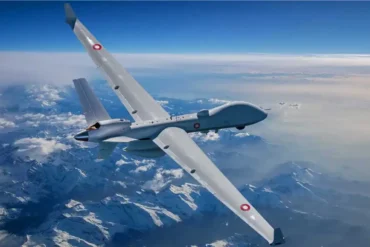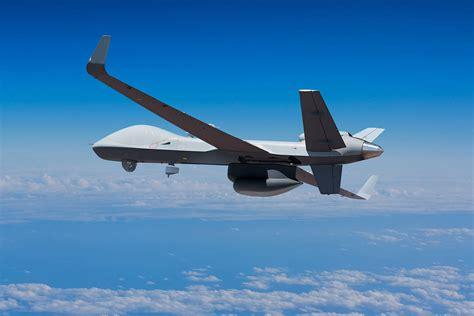
Germany has taken a decisive step toward reshaping its maritime security posture by ordering MQ-9B SkyGuardian remotely piloted aircraft for long-endurance surveillance and submarine-hunting support. The acquisition reflects a broader reassessment inside Berlin of how to protect sea lanes, underwater infrastructure, and alliance interests across the Baltic Sea and the wider North Atlantic at a time when maritime ambiguity has become a defining feature of European security.
The decision is rooted in a strategic reality that has steadily hardened since 2022. Undersea cables, pipelines, and energy links have emerged as vulnerable pressure points, while naval activity near NATO waters has become more complex, less transparent, and increasingly difficult to attribute. German defense planners now frame persistent awareness at sea not as a luxury, but as a prerequisite for deterrence, crisis management, and credible alliance contributions.
By selecting the MQ-9B SkyGuardian from U.S. manufacturer General Atomics, Germany is prioritizing endurance, sensor reach, and networked operations over sheer platform numbers. Eight aircraft may sound modest on paper, yet their ability to remain airborne for more than a day fundamentally alters how long German naval aviation can maintain an unbroken picture over critical maritime zones.
Strategic Context: Why Maritime Persistence Matters Now
Germany’s maritime environment is no longer confined to traditional surface threats. The Baltic Sea has become a dense arena of commercial shipping, military traffic, and sensitive infrastructure, all compressed into narrow waters where warning times are short and attribution is difficult. Further west, the North Atlantic retains its role as a strategic transit zone for allied reinforcement, undersea communications, and deterrence patrols.
German officials increasingly emphasize “knowing what happens at sea” as a strategic function in itself. In this context, long-endurance unmanned aircraft offer a capability that manned platforms cannot economically replicate: continuous presence. A drone that can loiter for forty hours can watch patterns, not just events, and that distinction matters when hostile activity is designed to remain below the threshold of open confrontation.
The MQ-9B SkyGuardian as a Maritime System
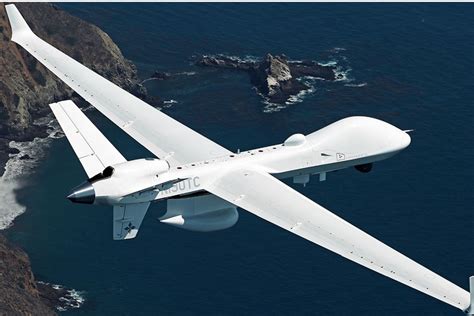
The MQ-9B SkyGuardian is not simply a land-based intelligence drone adapted for ocean patrols. It is marketed as a purpose-built, certifiable system designed to operate routinely in controlled airspace while carrying a diverse maritime sensor suite. With a wingspan optimized for efficiency, a turboprop engine tuned for endurance, and operations above 40,000 feet, the aircraft trades speed for persistent situational awareness.
General Atomics highlights a payload architecture that allows the MQ-9B to host surface-search radar, electro-optical and infrared sensors, and electronic surveillance equipment simultaneously. For Germany, the most consequential feature is its ability to deploy sonobuoys, extending the aircraft’s reach below the surface and allowing it to support anti-submarine warfare without directly engaging targets.
Integrating Airborne Drones Into Naval Operations
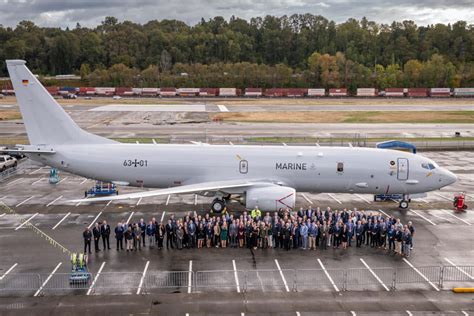
Germany’s naval aviation concept pairs the MQ-9B with the P-8A Poseidon, a fast, heavily equipped manned patrol aircraft. The logic is deliberate. The drone provides continuous coverage, builds a maritime picture, and maintains track continuity. When a situation demands rapid response, the P-8A can surge to the area with weapons, additional sensors, and command authority.
This layered approach restores a classic maritime surveillance model in modern form. Instead of relying solely on sporadic patrol flights, Germany can now maintain a standing watch over choke points, shipping lanes, and infrastructure corridors. The MQ-9B becomes a quiet force multiplier, keeping the operational picture alive before, during, and after manned sorties.
Submarine Awareness in Shallow and Contested Waters
Anti-submarine warfare in the Baltic presents unique challenges. Shallow depths, variable salinity, and heavy commercial traffic complicate acoustic detection. In such an environment, persistence is often more valuable than raw sensor power. The MQ-9B’s ability to remain on station allows it to observe surface behavior that may signal underwater activity, then deploy sonobuoys to refine the acoustic picture.
Rather than replacing traditional ASW assets, the drone acts as an enabler. Data collected by the MQ-9B can cue helicopters, frigates, or Poseidon aircraft, reducing search areas and conserving scarce resources. In a crisis, that efficiency can translate directly into faster decision-making and reduced escalation risk.
Baltic Security and the Shadow War Below the Surface
The timing of Germany’s order is inseparable from recent incidents involving undersea infrastructure. Since the start of the war in Ukraine, multiple cables and pipelines in the Baltic region have been damaged under circumstances that remain contested or opaque. Each incident has reinforced NATO’s concern that the seabed has become a domain of strategic competition.
For Berlin, investing in MQ-9B drones is a way to address this challenge without dramatic escalation. Persistent surveillance creates deterrence through transparency, making it harder for hostile actors to operate unseen. At the same time, it provides evidence and attribution options if incidents occur, strengthening political responses and alliance cohesion.
NATO Interoperability and Shared Awareness
Germany has been explicit that data collected by its MQ-9B fleet will not exist in isolation. The aircraft are intended to feed information into joint and allied networks, supporting NATO’s broader maritime picture. This emphasis on interoperability reflects lessons learned from multinational operations, where sensor gaps and data silos have often limited effectiveness.
The MQ-9B’s design aligns with NATO airworthiness standards and airspace integration requirements, allowing it to operate routinely rather than exceptionally. In practical terms, this means drones can patrol busy air corridors over the North Sea and Baltic approaches without imposing undue restrictions on civilian traffic, a critical factor for sustained operations in peacetime competition.
Industrial and Political Dimensions of the Acquisition
Germany’s choice of a U.S.-built system underscores a pragmatic approach to capability development. Rather than pursuing a bespoke national solution, Berlin is leveraging an established platform already in service or on order with several allies. This reduces risk, accelerates training, and ensures access to a growing ecosystem of upgrades and operational experience.
The Bundeswehr has openly stated its intention to draw on partner lessons as it prepares for MQ-9B operations. Countries such as the United Kingdom and Belgium provide valuable reference points, particularly in areas like crew training, data management, and integration with maritime command structures. For Germany, this represents a shift toward capability-first procurement, shaped by operational urgency rather than industrial symbolism.
Preparing for Operations at Nordholz
Naval Air Wing 3 Graf Zeppelin in Nordholz is slated to become the operational hub for Germany’s MQ-9B fleet. Before the first aircraft arrives in 2028, significant groundwork is required. Ground control stations, secure data links, maintenance facilities, and trained crews must all be in place to ensure the drones deliver their promised value from day one.
Perhaps the most complex task lies in information management. Persistent surveillance generates vast amounts of data, and the ability to fuse, analyze, and distribute that information will determine whether the MQ-9B becomes merely a sensor or a true operational node within Germany’s naval architecture.
A Subtle but Significant Shift in German Defense Posture
Germany’s MQ-9B order does not represent a dramatic expansion of military power, but it signals a clear evolution in mindset. By investing in endurance and awareness, Berlin is acknowledging that future maritime security challenges will often unfold slowly, ambiguously, and below the threshold of open conflict.
In such an environment, the ability to watch patiently, share information seamlessly, and respond proportionally is as important as firepower. The SkyGuardian drones offer Germany a tool suited to that reality, enhancing its contribution to NATO while strengthening national resilience against gray-zone threats.
As the Baltic and North Atlantic continue to absorb strategic attention, Germany’s embrace of persistent unmanned surveillance suggests a recognition that the contest at sea will be decided as much by who sees first and understands best as by who reacts fastest.