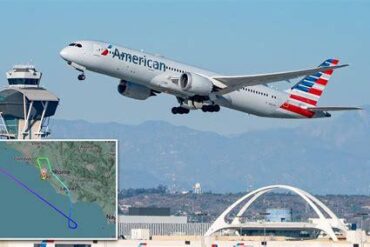
American Airlines is preparing to make a long-awaited return to Florida’s Naples Airport (APF), marking the carrier’s first scheduled passenger service to the airport in approximately a quarter of a century. The planned route, expected to launch on December 2, will reportedly connect Naples with Charlotte Douglas International Airport (CLT), one of American’s largest connecting hubs. While the restoration of service is significant on its own, attention across the aviation industry has quickly shifted toward a more unusual obstacle: the airport’s strict aircraft weight restrictions.
For travelers in Southwest Florida, the proposed service represents a major improvement in connectivity. Instead of driving to larger airports such as Fort Myers or Miami, passengers could once again board a scheduled American Airlines flight directly from Naples. However, making that vision a reality depends not only on passenger demand but also on selecting an aircraft capable of operating within one of the airport’s most challenging infrastructure limitations.
After more than two decades without scheduled American Airlines flights, Naples Airport is once again positioning itself for commercial aviation. The airline previously served the airport with flights to Miami before discontinuing the route in 2001, ending an era when Naples enjoyed a broader network of regional air service. Since then, changing airline strategies, larger aircraft, and the expansion of nearby airports gradually shifted scheduled operations away from the city.
The latest proposal reflects a very different strategy. Rather than restoring flights to Miami, American reportedly plans to operate the route through Charlotte, one of its largest domestic hubs. Charlotte Douglas International Airport now handles roughly 1,400 daily aircraft movements, providing passengers with seamless one-stop access to destinations throughout North America, the Caribbean, Europe, and beyond.
Unlike many regional airports that already accommodate frequent airline operations, Naples Airport functions primarily as a general aviation facility. Business jets, private aircraft, and seasonal visitors dominate daily activity, making APF one of Southwest Florida’s busiest aviation airports despite its limited commercial service.
Airport statistics indicate that Naples records more than 113,000 aircraft operations annually while serving hundreds of based aircraft. Its infrastructure, however, was never designed around larger commercial airliners. Instead, operational policies have evolved to support business aviation while minimizing environmental and community impacts, particularly noise.
One of the airport’s defining operational constraints is its published maximum aircraft operating weight of approximately 75,000 pounds (34,019 kilograms). This limitation has historically complicated airline expansion because many modern regional aircraft exceed that threshold at their maximum certified takeoff weight.
That restriction has become the central question surrounding American Airlines’ proposed return.
Initial industry reports suggested the airline could deploy the Bombardier CRJ900 on the Charlotte route. While the aircraft remains a common fixture across American’s regional network, its certified maximum takeoff weight reaches approximately 84,500 pounds (38,328 kilograms), well above Naples Airport’s published operating limit.
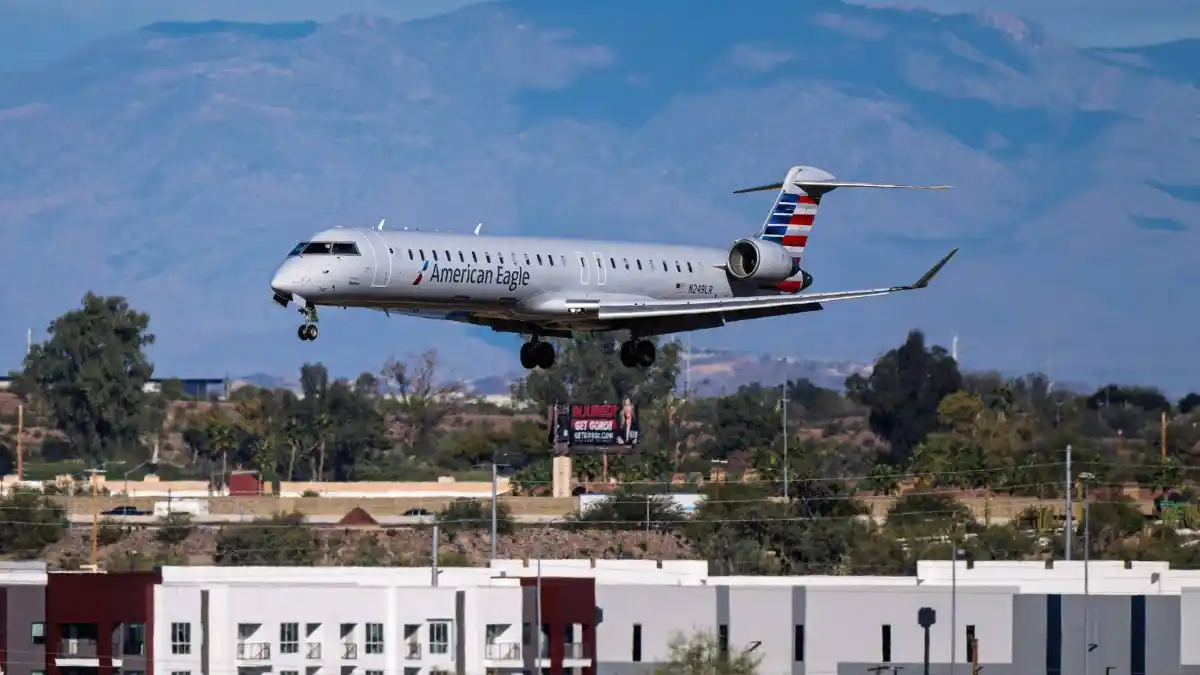
As a result, aviation analysts believe American may instead utilize the smaller Bombardier CRJ700. Reports indicate that filings associated with the proposed service reference PSA Airlines operating the CRJ700, whose operational flexibility makes it easier to remain within the airport’s weight limitations under appropriate loading conditions.
The aircraft selection is particularly noteworthy because American Airlines has increasingly favored the Embraer E175 for regional operations whenever possible. The E175 has developed an excellent reputation among passengers thanks to its spacious cabin design, wider seats, generous shoulder room, and two-by-two seating arrangement that eliminates middle seats entirely.
Its distinctive double-bubble fuselage also allows substantially larger overhead storage bins capable of accommodating standard carry-on roller bags, a feature frequently praised by travelers. Unfortunately, airport infrastructure rather than passenger preference may ultimately determine which aircraft appears on the Naples schedule.
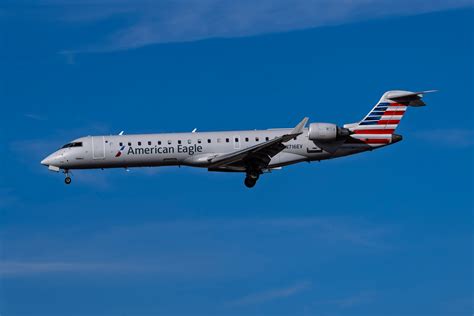
Although some travelers may view the CRJ700 as less comfortable than the Embraer alternative, the aircraft could provide the operational balance necessary for American Airlines to successfully launch scheduled service without exceeding airport limitations.
The Charlotte route itself also presents an intriguing commercial opportunity. There is currently no scheduled nonstop service connecting Naples and Charlotte, leaving American with the chance to establish the market without direct competition. While the absence of historical route performance data introduces some uncertainty, it also allows the airline to capture demand from passengers seeking convenient access to American’s extensive hub network.
Beyond infrastructure, community considerations continue to shape airport operations. Naples Airport maintains a voluntary overnight curfew between 10:00 PM and 7:00 AM as part of longstanding efforts to reduce aircraft noise in nearby residential neighborhoods. Airport officials report that approximately 98.5 percent of aircraft operations comply with the voluntary restriction, highlighting the effectiveness of local noise management policies.
Despite those operational limitations, public support for restoring scheduled airline service appears remarkably strong. Survey results released by the airport found that more than 80 percent of respondents favor bringing commercial flights back to Naples. Furthermore, roughly three-quarters indicated they would likely use the airport if scheduled airline service became available.
Those findings suggest meaningful local demand exists, particularly among residents who currently travel considerable distances to access larger commercial airports. A nonstop link to Charlotte would significantly shorten ground travel while opening connections across American Airlines’ global network through a single hub.
If the reported plans proceed as expected, American Airlines’ return will represent far more than the restoration of a discontinued route. It will demonstrate how airlines can adapt fleet planning to accommodate unique airport constraints while expanding access to underserved communities. Success may also encourage additional carriers to evaluate similar opportunities at airports traditionally viewed as unsuitable for scheduled commercial service.
Whether the inaugural flight departs aboard a CRJ700 or another aircraft ultimately approved for the operation, American Airlines’ return after 25 years would mark one of the most important developments in Naples Airport’s modern commercial aviation history, reconnecting the city to a major airline network while illustrating how infrastructure limitations continue to shape airline strategy.