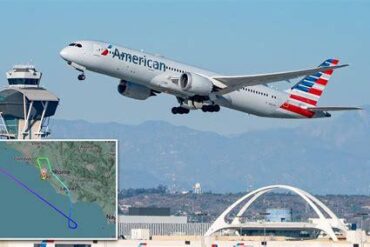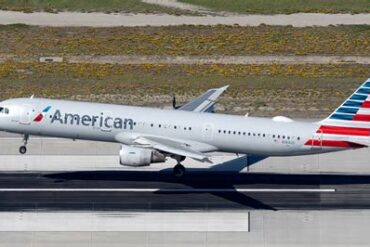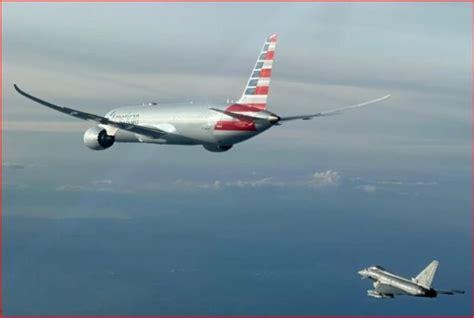
American Airlines Flight 780, originally scheduled to land in Naples, Italy, took an unforeseen detour on July 8, 2025, landing instead in Rome due to an aircraft compatibility issue that caught both passengers and ground staff off guard. The plane, a Boeing 787-9 Dreamliner, proved too large to safely land at Naples International Airport, triggering a sudden change in flight path and forcing all passengers to endure a lengthy overland journey to reach their intended destination.
The Philadelphia Departure: A Flight Destined for Southern Italy
Flight 780 departed Philadelphia International Airport at 7:42 p.m. local time, operating on schedule and under clear skies. The aircraft, one of American Airlines’ newer Boeing 787-9s, was slated to complete the transatlantic journey with a planned touchdown in Naples at approximately 10:00 a.m. local time the next day. For hours, the flight appeared to be progressing routinely, as the wide-body aircraft soared across the Atlantic and approached the Italian coastline.
However, tracking data began to raise eyebrows when the flight’s trajectory abruptly changed. Just as the plane began its descent, it veered sharply northward, away from its designated arrival city. Moments later, the aircraft rerouted to Leonardo da Vinci–Fiumicino Airport in Rome, bypassing Naples entirely.
The Aircraft Too Big to Land: Size Matters in Airport Compatibility
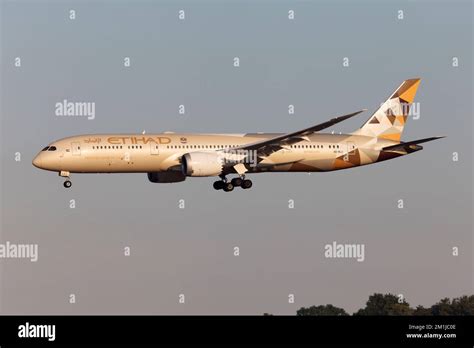
The deviation was not due to storms, congestion, or technical failure. Rather, the issue lay in the aircraft’s physical dimensions. American Airlines had assigned a Boeing 787-9 to this route—an aircraft approximately 206 feet in length, or 20 feet longer than the 787-8 that usually services the Philadelphia-Naples route. While Naples International Airport is capable of accommodating wide-body aircraft, the additional size of the 787-9 posed insurmountable logistical challenges on the ground.
These challenges likely included limited runway margins, restricted taxiway clearance, and tight apron space. Though Naples has received long-haul flights before, airport conditions—whether from scheduled maintenance, gate constraints, or apron occupancy—appear to have rendered it temporarily incompatible with the larger Dreamliner model.
What remains unclear is whether the assignment of the larger aircraft was planned in advance and overlooked during logistical coordination, or whether the 787-9 was swapped in as a last-minute substitution without comprehensive vetting of airport handling capacity.
Grounded in Rome: The Unexpected Scenic Route to Naples
Once the aircraft touched down in Rome, American Airlines staff informed passengers of the reason for the diversion and swiftly arranged an alternative: a chartered bus convoy to complete the final leg of the journey. Covering approximately 143 miles (230 kilometers), the road transfer between Rome and Naples took around three hours, not including time for baggage handling and boarding procedures.
Though the shift from a premium long-haul flight cabin to the limited comforts of a charter bus was jarring for many, the airline succeeded in transporting all passengers to Naples on the same day, mitigating what could have been a major disruption. Still, for passengers with tight connections, local tours, or pre-booked transit in Naples, the delay led to considerable frustration.

Passengers React: Confusion, Inconvenience, and a Dash of Humor
Reactions from those on board ranged from annoyance to amusement. Some travelers voiced irritation at missing out on scheduled commitments, while others took a more relaxed stance, seeing the detour as an unexpected chance to see the Italian countryside. Social media posts reflected both disbelief and humor, with several users joking that they had signed up for a flight, not a scenic road trip.
Despite the unusual conclusion to the journey, most passengers commended American Airlines’ ground staff in Rome for swift communication and efficient logistics. There were no reports of mishandled baggage, missed buses, or extended layovers, a silver lining in an otherwise poorly planned flight operation.
Operational Oversight or Systemic Miscommunication?
The incident has ignited debate within aviation circles about how aircraft swaps are managed across international networks. Swapping aircraft types is a common practice driven by maintenance needs, passenger volume, or fleet availability. However, such decisions demand tight coordination with destination airports to ensure compatibility.
In this case, the use of a larger 787-9 instead of the standard 787-8 may have stemmed from either a last-minute equipment substitution or a failure in cross-checking airport capabilities. American Airlines has not disclosed whether the change was strategic, necessary, or accidental—but aviation analysts note that such oversights are rare, particularly on established international routes.
This situation underscores the importance of aircraft-airport compatibility assessments, particularly for long-haul services flying into older or regional airports that might not fully support the newest wide-body jets.
Will Future Flights to Naples Be Adjusted?
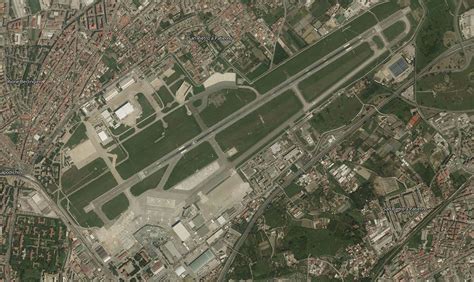
At the time of writing, American Airlines has not confirmed whether it will revert to using the smaller 787-8 on future flights to Naples or seek adjustments at Naples International Airport to accommodate larger aircraft. Aviation insiders speculate that unless Naples undergoes infrastructure upgrades or modifies operational protocols, future 787-9 flights may be restricted or rerouted preemptively.
Given that transatlantic services are increasing in volume and aircraft like the 787-9 are becoming standard on international routes, Naples could risk missing out on future direct services unless ground handling capabilities are updated. This event could serve as a wake-up call for smaller European airports to audit their compatibility with evolving airline fleets.
The Journey Becomes a Story: An Inconvenient Adventure
Despite the clear disruption, some passengers reflected fondly on the experience. Swapping runways for rural highways, they passed rolling vineyards, ancient aqueducts, and olive groves—a far more scenic arrival than the tarmac and terminals of Naples’ busy airport. For others, it was an anecdote that combined modern air travel with a throwback road trip, encapsulating the unpredictable nature of global journeys.
While the aircraft landed without incident, the diversion serves as a powerful reminder that aviation logistics hinge on minute but critical variables. In a global industry reliant on seamless operations, a mismatch in aircraft size versus airport capability can cause hours of disruption and draw scrutiny from both customers and regulatory bodies.
A Lesson for Airlines and Airports Alike
For American Airlines, the incident spotlights a critical operational blind spot. For airports like Naples, it serves as a cautionary tale about maintaining the flexibility to handle modern, long-range aircraft. In both cases, a higher level of coordination is necessary to ensure that such mismatches do not occur again.
In today’s hyper-connected aviation world, even a minor oversight can impact hundreds of passengers, shift schedules, and create waves on social media. What seemed like a routine transatlantic flight ended up as a three-part travel saga: by air, then land, and finally by memory—leaving everyone onboard with a story that combined modern efficiency with a detour into the unpredictable.
Ultimately, American Airlines Flight 780’s diversion is more than a headline. It’s a case study in operational risk, fleet management, and the fragile synchronization of international travel infrastructure.