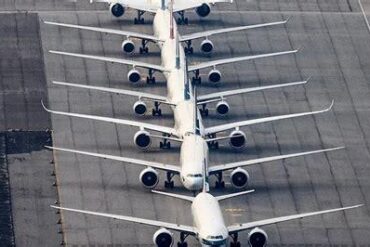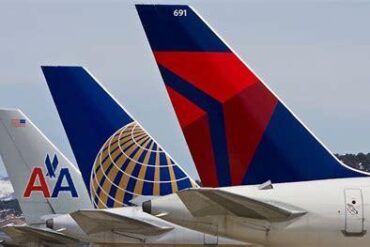
A week of widespread travel disruption unfolded across the global aviation network as United Airlines, Southwest, Delta, Qantas, American Airlines, and Alaska Airlines were simultaneously hit by a cluster of critical technical failures. These glitches, cascading from outdated infrastructure and operational bottlenecks, forced airlines to ground planes, delay hundreds of departures, and strand thousands of travelers across key international and domestic airports. It was a system-wide collapse that revealed the dangerous fragility of the airline industry’s digital backbone.
United Airlines Leads the Unintended Charge Into Chaos
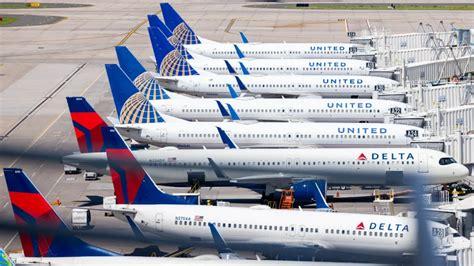
The crisis began with United Airlines suffering a severe operational meltdown at its central command near Chicago O’Hare International Airport. The airline’s IT systems encountered a core glitch, initiating a nationwide ground stop that halted all United departures for over an hour. Though the airline moved quickly to transition operations to a backup center, the damage was swift and brutal. Within hours, 48 United flights were canceled and over 1,100 delayed, paralyzing hubs from Newark to Los Angeles.
Even after the ground stop lifted, ripple effects continued. An additional 10 cancellations and 77 delays marred United’s recovery. Interestingly, United Express, its regional subsidiary, was spared due to its independent scheduling systems, highlighting discrepancies in IT resilience across divisions.
Southwest and Delta Entrapped in Operational Turbulence
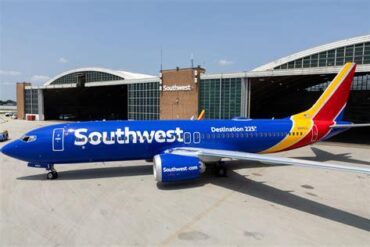
The chaos didn’t stop with United. Southwest Airlines quickly found itself ensnared in its own technological breakdown, with its flight scheduling system faltering nationwide. Hubs like Dallas Love Field and Denver International Airport saw long lines and frustrated passengers, many of whom waited hours for updates that never came. Southwest’s real-time rebooking and crew dispatch systems failed to synchronize, leading to cascading cancellations and major scheduling chaos.
Simultaneously, Delta Air Lines battled a failure in its IT network, crippling communications with ground teams and air traffic controllers. The outage grounded hundreds of flights, particularly at core airports such as Atlanta Hartsfield-Jackson and Minneapolis-St. Paul. Though Delta restored its systems by late afternoon, residual delays echoed into the following day, intensifying pressure on an already stressed holiday travel season.
Qantas and American Airlines Battle Their Own Demons
As the technical maelstrom grew, international carrier Qantas Airways was swept into the fray. Its booking and check-in system collapsed, particularly impacting long-haul travelers departing from the U.S. to Australia. Without access to accurate flight information or boarding passes, many passengers were stranded in terminals, unable to proceed through security or immigration. This digital blackout not only delayed flights but eroded trust among global travelers expecting seamless, transpacific service.
Back home, American Airlines had already experienced a devastating outage mere days prior, affecting major domestic hubs like Miami International, Charlotte Douglas, and Dallas Fort Worth. A system-wide communications failure left planes idle at gates and left flight crews unable to receive new routing information. With flight cancellations stacking into the hundreds, travelers vented their frustration at poorly informed ground staff and automated response systems that failed to adapt.
Alaska Airlines: A Tech Collapse in the Pacific Northwest
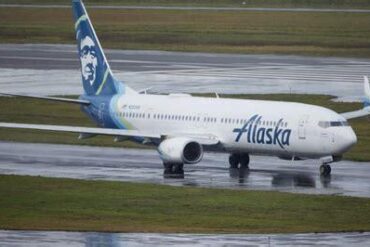
The avalanche continued with Alaska Airlines, which experienced a full-scale IT failure that grounded nearly its entire mainline fleet. Seattle-Tacoma International Airport and San Francisco International bore the brunt of the outage. Despite Alaska’s rapid communication with passengers and offers of rebooking support, the airline could not escape the resulting disruption. Even after partial recovery, residual effects plagued the network into the following day, a reminder that the operational trauma from a few hours of downtime could stretch into days.
Airports Buckle Under Mounting Pressure
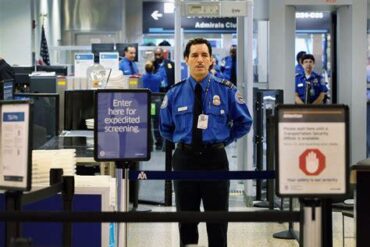
As airlines faltered, airports became the epicenter of passenger frustration and logistical chaos. Customer service desks were overwhelmed. Baggage handling systems overloaded. Security checkpoints bottlenecked as rescheduled flights clustered into narrow time slots. At Newark Liberty, LAX, and Dallas Fort Worth, thousands of travelers sat on terminal floors awaiting rebooking, while social media swelled with images of crowd-snarled gates and unmanned check-in counters.
International travel suffered similarly. Flights from the U.S. to Europe and Asia were delayed due to aircraft being out of position. Crews timed out, passengers missed connections, and the global ripple effects became impossible to contain.
The Exposed Truth: Outdated and Fragile Airline Infrastructure
This unprecedented event has unmasked the airline industry’s critical dependency on aging IT systems and the absence of robust disaster recovery plans. The backbone of airline logistics—scheduling, gate assignments, flight routing, and crew dispatch—is deeply interwoven with software systems that, in many cases, were built decades ago and patched over the years.
The failings were not solely airline-specific. The Federal Aviation Administration (FAA), already operating under a strained budget and chronic staffing shortages, struggled to assist in mitigating the crisis. The agency’s limited capacity to manage real-time coordination during large-scale technical collapses became glaringly evident.
Passengers Pay the Price for Institutional Complacency
For travelers, the failures became personal. Flights delayed by hours with no clear reason. Airport hotels fully booked. Families separated. Vacations ruined. Many passengers were notified of cancellations via automated texts with no support follow-up, while others received conflicting messages from apps and on-the-ground personnel.
Airlines issued generic apologies and travel waivers, but the compensation could not recover lost time. Elderly passengers, young families, and business travelers were left to navigate the labyrinth of rebookings, often through automated customer service systems incapable of managing emergencies.
The experience raised larger questions: What is the value of customer loyalty programs when elite frequent flyers face the same delays as economy travelers? What use is a mobile boarding pass if the system can’t authenticate it?
The Broader Fallout Across the Travel Ecosystem
Beyond the terminals, the crisis created supply chain reverberations. Ride-share demand spiked. Airport hotels were overrun. Airline lounges operated at capacity with limited staff. Ground crews were overworked and under-briefed. Tourism destinations, from Honolulu to Orlando, reported surges in no-shows and booking cancellations.
In financial markets, analysts noted a temporary dip in airline stock valuations, with investor confidence shaken by the sheer scale and simultaneity of the tech failures. For an industry already fighting to recover from pandemic-era instability, the timing couldn’t have been worse.
A Moment of Reckoning for Airline Operations
This crisis signals more than a series of isolated glitches. It reflects an industry-wide vulnerability and the urgent need for investment in modern, cloud-based systems, enhanced real-time data sharing, and rigorous failover protocols. Airlines can no longer rely on outdated mainframes and legacy software architectures.
Moreover, they must rethink how they communicate with passengers. Proactive messaging, transparency in crisis updates, and AI-driven customer support tools are essential if the industry hopes to restore trust. Automation alone will not fix broken infrastructure.
The FAA, meanwhile, must accelerate efforts to digitize its air traffic systems and expand contingency resources. Airline alliances may also need to create shared emergency response networks to handle future cross-carrier collapses more effectively.
Looking Ahead: Will Airlines Learn from This Crisis?
While operations across most affected airlines have slowly returned to normal, the psychological and logistical scars remain. Travelers are wary. Loyalty is shaken. And the industry faces a crisis of confidence.
This breakdown wasn’t caused by weather or terrorism, but by digital neglect—and that fact alone should spark immediate change. Airlines now face a choice: invest in future-proofing their systems or risk repeating a catastrophe that, next time, could be even worse.
If this nightmare of July 2025 has taught the industry anything, it’s this: resilience isn’t optional. It’s now the cost of doing business in a world where every second of delay echoes across the globe.