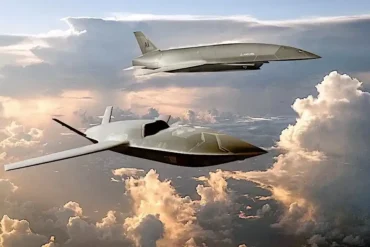
America has ended an experimental drone battalion in Europe after less than a year of operations, marking an unusual turn in the U.S. Army’s rapidly expanding effort to integrate unmanned aircraft into modern combat formations. The decision does not signal a retreat from military drones. Instead, it appears to reflect an effort to absorb lessons from an ambitious experiment before deciding how such capabilities should be organized permanently.
The roughly 600-soldier battalion was established in November 2025 as Army forces in Europe were directed to examine specialized drone formations and study technologies influenced by battlefield experience in Ukraine. The experiment focused on developing new operational concepts while exploring how autonomous and remotely controlled aircraft could be incorporated into conventional military units.
The soldiers came from the 173rd Airborne Brigade, a formation that had already invested heavily in small unmanned aircraft. In May 2025, troops established an FPV drone laboratory for developing attack drones, while other projects investigated artificial intelligence and unmanned aircraft designed to operate despite electronic interference. These efforts gave the experimental battalion practical experience with technologies increasingly important in contested airspace.
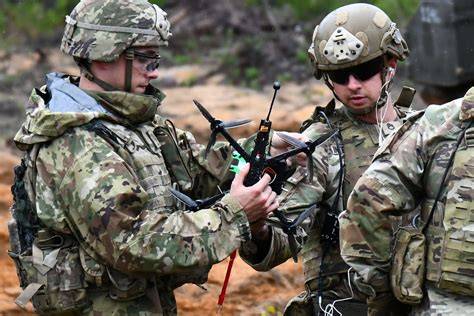
The battalion’s current mission is expected to conclude following Exercise Saber Junction, a major multinational training event scheduled to continue through August and September 2026. Afterward, the soldiers are expected to return to their traditional airborne infantry responsibilities rather than continue operating as a dedicated drone formation. The Army has not publicly explained why the experiment is ending or confirmed whether another unit will replace it.
That uncertainty is important because the Army appears to view the battalion’s experience as an experiment rather than a failed investment. Findings gathered during the unit’s operational period, including information from Saber Junction, are expected to be transferred to Army planners. Those lessons could influence future force design, drone tactics, training and organizational structures even though the battalion itself disappears.
The Army Is Still Expanding Drone Development
Evidence elsewhere in the service shows that the appetite for unmanned technology remains strong. In July 2026, a battery-powered Group 1 drone reportedly flew approximately 300 miles in less than nine hours, establishing an endurance record. The aircraft used two brushless motors assembled by an Army depot in Pennsylvania and a commercially supplied battery.
The project was part of the Army’s Game of Drones initiative, which emphasizes speed and unconventional manufacturing. Remarkably, the aircraft was designed in less than ten minutes and constructed inside a mobile manufacturing facility using commercial 3D printers. Such projects demonstrate how the military is exploring inexpensive, rapidly produced systems alongside traditional procurement programs.
The Pentagon is also extending experimentation beyond aircraft. GroundBreaker 1, planned for October 2026, will demonstrate unmanned ground vehicles in realistic operating environments. Potential missions include transporting wounded personnel and moving supplies, suggesting that autonomy is increasingly being considered across multiple layers of military logistics.
Ultimately, the closure of this experimental battalion says more about how the U.S. Army is refining its drone strategy than about abandoning drones. Modern warfare has shown that technology, organization and tactics must evolve together. The battalion may be disappearing, but the lessons it produced could become part of the Army’s next generation of unmanned warfare.