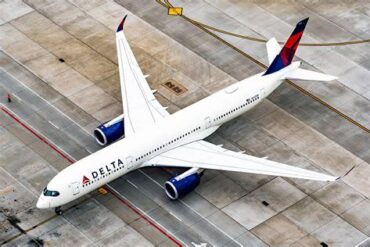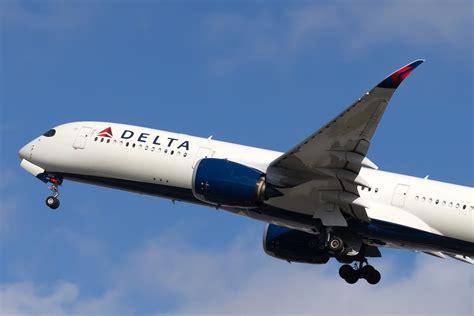
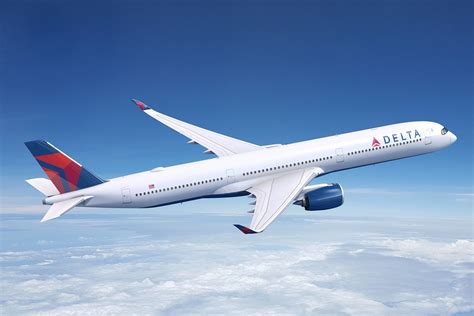
Delta Air Lines is preparing for a transformative decade in long-haul aviation, anchored by the Airbus A350 family. With the retirement of aging widebodies and a decisive pivot toward more fuel-efficient, passenger-friendly aircraft, Delta’s commitment to expanding its A350 fleet is both strategic and ambitious. By the close of this decade, Delta is set to operate a total of 64 Airbus A350 aircraft, comprising both the -900 and -1000 variants—positioning the airline among the global leaders in next-generation widebody utilization.
The Strategic Importance of the Airbus A350 in Delta’s Long-Haul Vision
Delta’s choice to introduce the Airbus A350 into its long-haul fleet was rooted in necessity and opportunity. As legacy aircraft like the Boeing 747 and older 767 models approached retirement, the airline faced a crucial crossroad. It needed aircraft that would not only match but exceed the performance and efficiency of their predecessors.
Enter the Airbus A350-900, an aircraft known for its long range, reduced fuel burn, and enhanced passenger experience. The A350’s composite-heavy construction, aerodynamic profile, and Rolls-Royce Trent XWB engines offer approximately 25% fuel savings over older widebodies, which translates into lower operating costs and a smaller carbon footprint—a win-win for Delta’s bottom line and its sustainability targets.
Equally important is the aircraft’s capability to serve ultra-long-haul routes with high reliability. From Atlanta to Seoul, Seattle to Taipei, or Los Angeles to Sydney, the A350 gives Delta the reach and flexibility to compete aggressively in global markets.
Fleet Composition: Airbus A350-900 and A350-1000
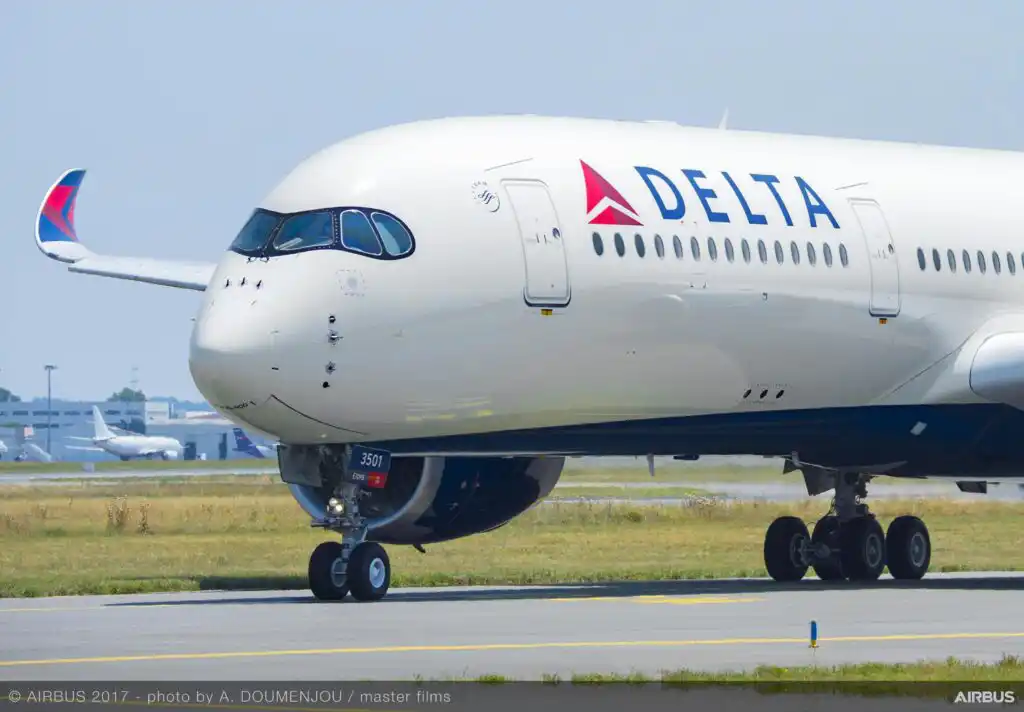
As of December 2025, Delta Air Lines operates 38 Airbus A350-900s, with 6 additional -900s on order. In a bold move to increase capacity and elevate international operations, Delta has also placed an order for 20 Airbus A350-1000s, scheduled to begin delivery in 2026.
This expansion brings Delta’s total A350 fleet to 64 aircraft by 2030, structured as follows:
- 38 A350-900s in service
- 6 A350-900s on order
- 20 A350-1000s on order
The introduction of the A350-1000 marks a significant milestone for the airline. This aircraft will become Delta’s largest and most capable widebody, offering higher seating capacity, expanded cargo space, and greater range. While configuration details are yet to be confirmed, the A350-1000 is expected to reinforce Delta’s presence on high-demand premium-heavy routes, particularly across the Atlantic and Pacific.
Why the A350-900 Became Delta’s Long-Haul Workhorse
Delta’s initial foray into the Airbus A350 program began in 2017, when it became the first U.S. airline to operate the A350-900. Over the years, the aircraft has proven indispensable for long-haul operations, largely due to its versatility and passenger-focused features.
The A350-900 in Delta’s fleet comes in three different configurations, tailored for varying route profiles:
- Version 1: 275 seats – 40 Delta One Suites, 40 Premium Select, 36 Comfort+, 159 Main Cabin
- Version 2: 306 seats – 32 Delta One Suites, 48 Premium Select, 36 Comfort+, 190 Main Cabin
- Version 3: 339 seats – 40 Delta One Suites, 63 Comfort+, 246 Main Cabin
Each layout supports Delta’s strategic segmentation: business travelers are drawn to the Delta One Suite, while Premium Select captures the emerging upper-middle segment, and Comfort+ and Main Cabin cater to economy-focused flyers.
A Premium Experience at Every Altitude
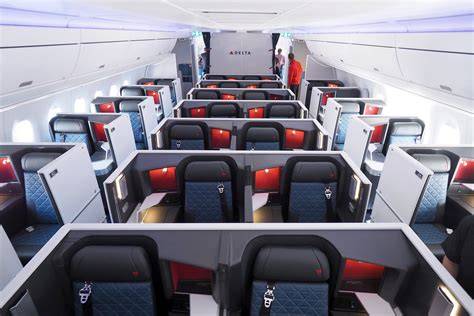
Delta’s A350-900s exemplify the airline’s shift toward a premium-oriented long-haul experience. The Delta One Suite, with full privacy doors, lie-flat beds, premium bedding, and high-definition entertainment, sets the standard in transoceanic business class travel. Positioned in a 1-2-1 layout, it ensures direct aisle access for every passenger.
Behind Delta One is Premium Select, a cabin that blends affordability with elevated comfort. Passengers enjoy wider seats, more recline, footrests, and an enhanced meal service. The product hits a sweet spot for long-haul travelers unwilling to pay for business class but seeking more than economy can offer.
The Comfort+ cabin—featuring 36 seats with extra legroom and priority boarding—is favored by frequent flyers, while the Main Cabin benefits from A350-specific innovations: improved air circulation, larger windows, and quieter cabins. These enhancements help reduce jet lag and increase overall passenger satisfaction on long-haul journeys.
The A350-1000: Delta’s Future Flagship Aircraft
The Airbus A350-1000 represents the next evolution in Delta’s international growth. With 20 units on order, the first delivery expected in 2026, and a clear vision from the airline’s leadership, the -1000 will soon become a cornerstone of Delta’s premium strategy.
According to CEO Ed Bastian, “The A350-1000 will be the largest, most capable aircraft in Delta’s fleet and is an important step forward for our international expansion. The aircraft complements our fleet and offers an elevated customer experience, with more premium seats and best-in-class amenities.”
The A350-1000 features a longer fuselage than the -900, allowing for an increase in seating by approximately 40-60 passengers, depending on configuration. Despite its size, it maintains impressive range and efficiency, making it suitable for high-density intercontinental markets where Delta aims to maximize revenue per seat while maintaining operational consistency.
A Global Leader Among A350 Operators
With its planned fleet of 64 Airbus A350s, Delta Air Lines is set to become one of the top five A350 operators globally, joining the ranks of industry giants like Singapore Airlines, Qatar Airways, and Cathay Pacific.
| Rank | Airline | A350-900 | A350-1000 | Total |
|---|---|---|---|---|
| 1 | Singapore Airlines | 58 | 0 | 65 |
| 2 | Qatar Airways | 34 | 24 | 58 |
| 3 | Cathay Pacific | 30 | 18 | 48 |
| 4 | Air France | 38 | 0 | 38 |
| 5 | Delta Air Lines | 44 | 20 | 64 |
Delta’s membership in SkyTeam further strengthens its long-haul strategy, enabling optimized network planning and joint ventures across key global corridors. The A350’s interoperability and shared cockpit systems across variants mean reduced training and maintenance costs, enhancing the airline’s long-term efficiency.
The Technical Marvel of the Airbus A350
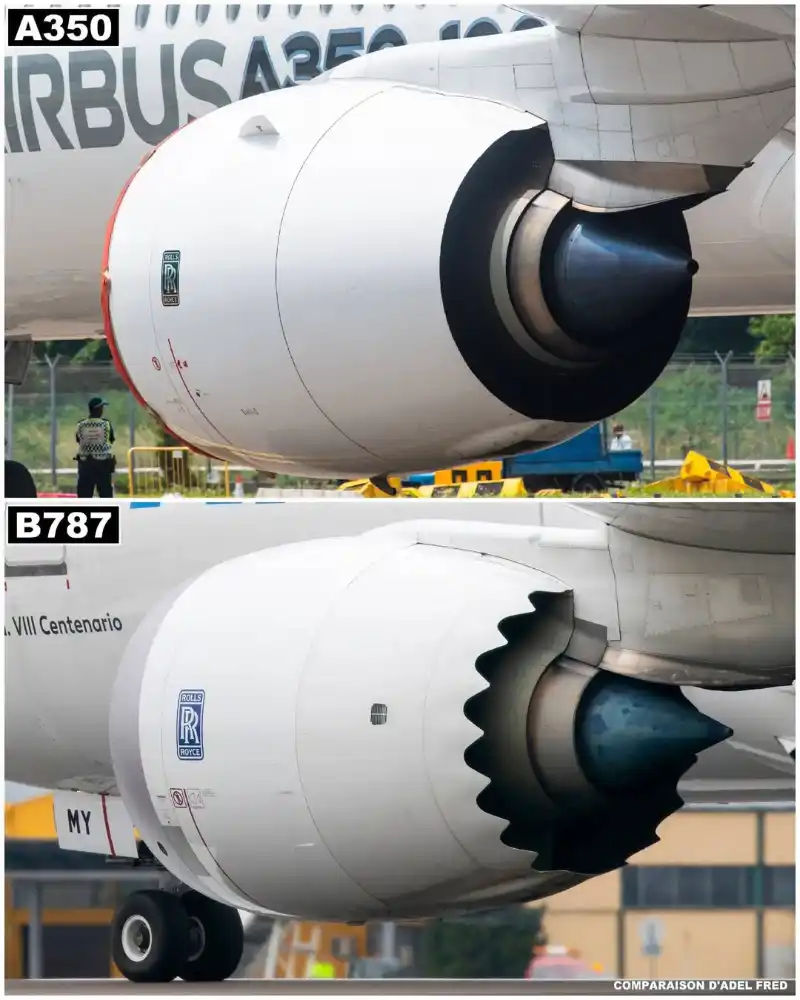
Beyond operational metrics, the Airbus A350’s design is a technological leap forward. Over 50% of the aircraft’s structure is built from carbon-fiber-reinforced plastic, reducing weight and boosting fuel efficiency. Its aerodynamic wings flex in-flight to reduce drag, while the Rolls-Royce Trent XWB engines are among the most efficient powerplants in commercial service.
The A350-900’s range of up to 8,100 nautical miles and the A350-1000’s near-identical capabilities open nearly every global route to nonstop service, including routes previously dependent on fuel stops or less efficient aircraft. These innovations underscore why Delta continues to double down on its A350 investment.
A Look Ahead: Delta’s A350 Roadmap to 2030
As Delta moves toward 2030, its A350 strategy is emblematic of a broader transformation. The airline is shedding legacy aircraft, standardizing its international fleet, and leaning into the A350’s long-term value. It’s a move that reflects growing competition, environmental pressures, and evolving passenger expectations.
With a combined fleet of 64 Airbus A350 aircraft by decade’s end, Delta Air Lines will not only expand its intercontinental reach but also position itself as a leader in sustainable, premium long-haul travel. The A350’s unmatched balance of performance and passenger experience ensures that Delta is ready to meet the future of global aviation—head on, and at cruising altitude.