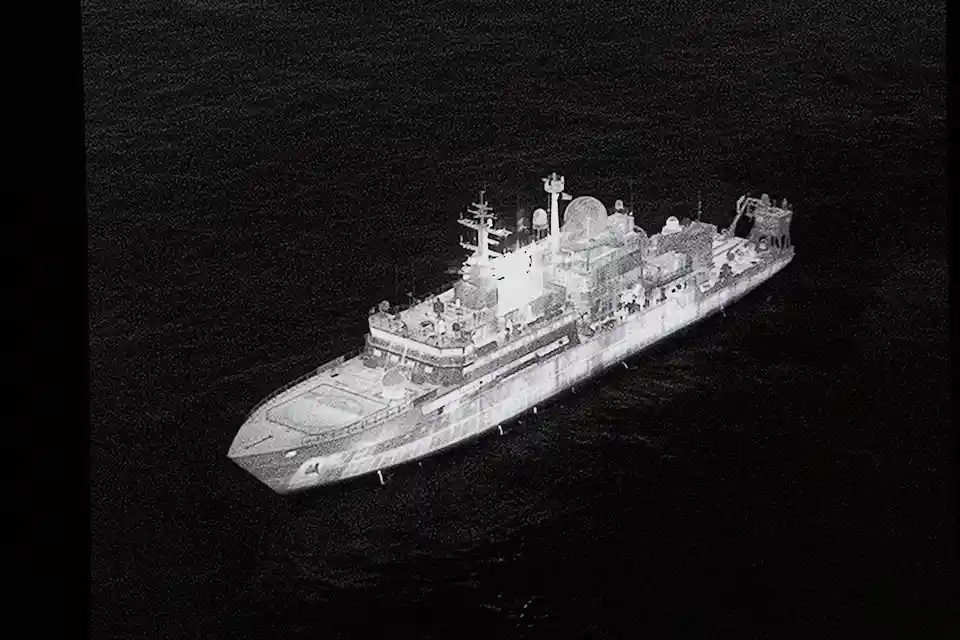
Tensions between the United Kingdom and Russia escalated sharply this week after the Russian intelligence-gathering vessel Yantar reportedly directed laser systems at Royal Air Force (RAF) pilots monitoring its movements near British territorial waters. In a bold and high-stakes public address, UK Defence Secretary John Healey declared that “military options are ready” should the Yantar’s activities intensify or threaten national security.
The Yantar, a vessel equipped with advanced underwater surveillance and cable-mapping capabilities, has been loitering near the northern coast of Scotland — dangerously close to key British undersea communication infrastructure. The Ministry of Defence (MoD) confirmed that the ship’s positioning has raised alarms within NATO and across the UK’s military leadership, particularly following hostile laser incidents that imperiled RAF personnel.
Yantar’s Menacing Presence Off Scotland’s Coastline
First launched by Russia in 2015, the Yantar has long been suspected of conducting clandestine operations, including tapping and mapping NATO submarine communication cables. Its capabilities are not limited to passive reconnaissance — it is fitted with deep-sea submersibles and sophisticated sensors capable of potentially sabotaging critical underwater infrastructure.
According to Healey, the Yantar is “currently operating at the edge of British waters, north of Scotland,” placing it within proximity of sensitive undersea cables that form the backbone of the UK’s internet, defense, and economic systems. These cables transmit terabytes of encrypted and unencrypted data — making them a high-value target for cyber-intelligence and disruptive operations.
The Defence Secretary’s tone shifted notably after confirming that RAF pilots, tasked with surveillance missions over the North Atlantic, had lasers directed at them by the Russian ship. “This is deeply dangerous,” Healey said during a press briefing at 10 Downing Street. “It is the first time we’ve had this action from Yantar directed against the British RAF. We take it extremely seriously.”
UK’s Escalating Military Posture and Revised Engagement Protocols
In response to the laser provocation, Healey revealed that the Royal Navy’s rules of engagement have been formally updated, allowing British forces to “follow more closely, monitor more closely” the movements of Russian vessels in extended UK waters. This procedural shift suggests a move toward greater tactical agility — and potentially, greater confrontation.
While specific details of the revised rules remain classified, multiple defense analysts interpret the shift as a signal to both Moscow and NATO that the UK will no longer treat Russian incursions as routine. Rather, these acts are now considered clear provocations, especially when they endanger lives and violate international norms of engagement.
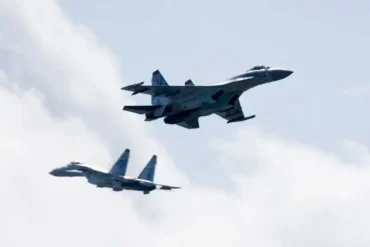
Healey emphasized that “military options are ready” — a sharp departure from previously passive strategies. Such options could range from closer maritime escort by Royal Navy destroyers, to deploying electronic warfare countermeasures or even intercept maneuvers by RAF Typhoon fighters, should aggression escalate further.
Russian Embassy Responds: Dismisses Threat Allegations
The Russian embassy in London responded with predictable defiance. In a written statement, it rejected what it labeled as “endless accusations”, claiming that “our country’s actions do not affect the interests of the United Kingdom and are not aimed at undermining its security.”
Furthermore, the embassy denied any intent to interfere with British undersea infrastructure, stating, “We are not interested in British underwater communications.” Moscow urged London to “refrain from destructive steps that exacerbate the crisis phenomena on the European continent,” suggesting that the UK’s assertive rhetoric may inflame an already fragile geopolitical landscape shaped by the ongoing war in Ukraine and NATO’s bolstered eastern flank.

A Pattern of Provocation Since Ukraine Invasion
The standoff with Yantar reflects a broader pattern of heightened Russian naval activity in the North Atlantic since its full-scale invasion of Ukraine in 2022. British and NATO forces have since increased air and maritime patrols, identifying a surge in submarine and intelligence vessel deployments by the Russian Navy.
Yantar’s appearance near UK waters is not unprecedented, but the use of active laser systems marks a significant escalation. Such technology can potentially blind pilots, damage sensitive avionics, or disrupt surveillance optics — posing grave risks not only to individual missions but to overall military readiness.
British defense planners have long feared that Russian vessels like Yantar might be conducting pre-positioning activities — mapping cable routes, probing response times, and preparing for potential sabotage operations in the event of open conflict. This latest incident appears to confirm those fears.
Strategic Implications and the Message to NATO Allies
The UK’s direct and unambiguous warning serves not only as a deterrent to Moscow but also as a signal to NATO allies of its willingness to take decisive action when its airspace, waters, or personnel are endangered. With laser use crossing a tacit red line, British officials appear more willing than ever to implement “proportional and preemptive countermeasures”.
This hardening of posture could also influence NATO’s maritime doctrine, potentially catalyzing a new framework for rules of engagement with hybrid threats in contested international waters.
As the standoff unfolds, global attention remains fixed on whether Yantar will retreat, escalate, or linger — and how the UK’s military apparatus, emboldened by updated rules of engagement, will respond. One thing is certain: the era of soft deterrence in the Atlantic has passed. The UK’s message to Moscow is now unmistakably clear — “We are watching, we are ready, and we will act if provoked.”