China has launched its 2026 military training cycle with a sweeping display of joint force integration, deploying its most advanced weaponry in realistic, multi-domain combat exercises that underscore Beijing’s strategic priorities amid intensifying geopolitical rivalry and technological competition.
Massive Joint Drills Initiated Across PLA Forces
On January 1, 2026, China’s People’s Liberation Army (PLA) commenced nationwide combat drills involving its Air Force, Navy, Rocket Force, Ground Forces, and auxiliary units such as the People’s Armed Police and Joint Logistics Support Force. Far from ceremonial or symbolic, the exercises unfolded as full-scale operational simulations designed to test battlefield transitions from peacetime to wartime, and evaluate real-time joint command-and-control capabilities.
According to China Central Television (CCTV) and state-linked sources like the Global Times, the PLA aimed to validate complex maneuvers integrating stealth fighters, hypersonic glide missiles, large naval combatants, and robotic ground systems into a single, synchronized warfighting framework. This aligns with China’s recent shift toward “intelligentized warfare,” wherein AI-enhanced unmanned systems and seamless inter-service coordination define operational supremacy.
J-20 Stealth Fighters Lead Aerial Combat Operations
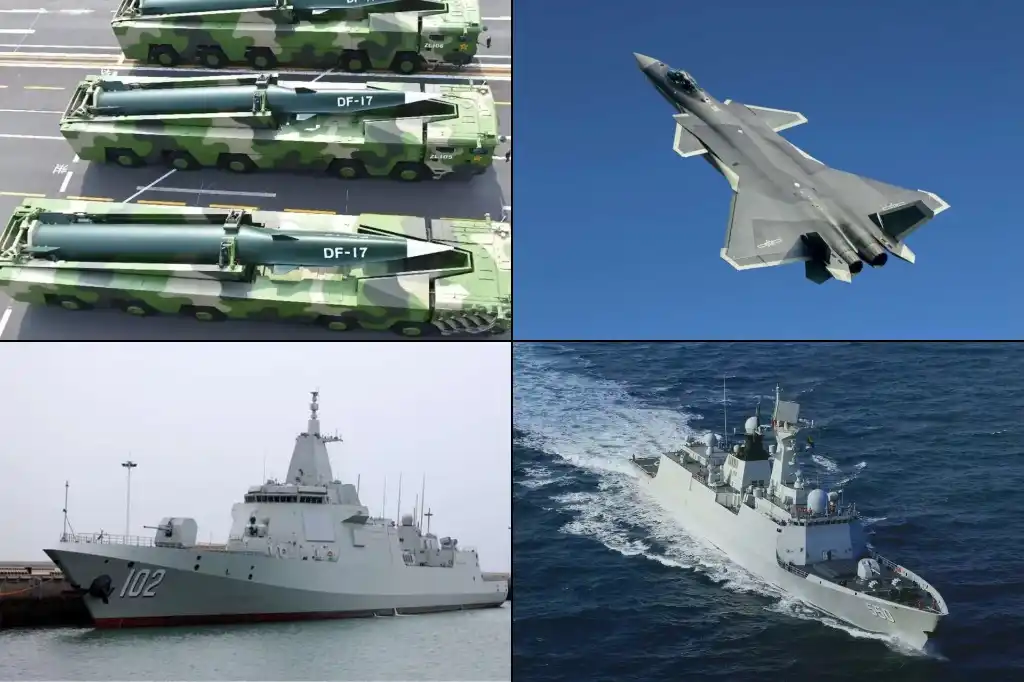
The drills prominently featured J-20 fifth-generation stealth fighters, China’s most advanced air-superiority platform. Deployed from forward bases on day one, these aircraft engaged in beyond-visual-range dogfighting, nighttime refueling, and overseas deployment simulations. With an operational range of over 6,000 kilometers, powered by twin WS-10B engines, the J-20 is engineered to challenge U.S. and allied aircraft across the Indo-Pacific.
Unlike earlier PLA air exercises, the 2026 drills emphasized system-wide coordination: J-20s operated not as standalone assets, but as nodes in a networked kill chain, working in tandem with ground radar, missile units, and drone swarms. Their participation in joint maneuvers confirms the J-20’s integration into routine combat formations, not just elite strategic units.
DF-17 Hypersonic Missiles Simulate Operational Launches
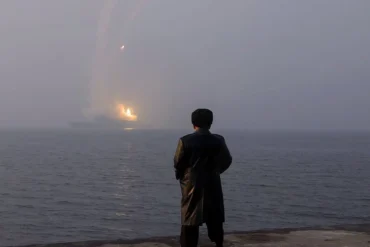
A critical highlight was the PLA Rocket Force’s deployment of the DF-17 hypersonic missile, viewed as a game-changer in global missile warfare. Video footage aired by CCTV showed launch-ready DF-17 units conducting simulated launches from field locations—clear evidence that the system is now operationally embedded within routine combat readiness training.
The DF-17 carries a DF-ZF hypersonic glide vehicle capable of maneuvering unpredictably at speeds exceeding Mach 5. With a reach of up to 2,500 kilometers, it is designed to evade conventional missile defenses, threatening high-value targets like aircraft carriers, forward bases, and command nodes throughout the First and Second Island Chains.
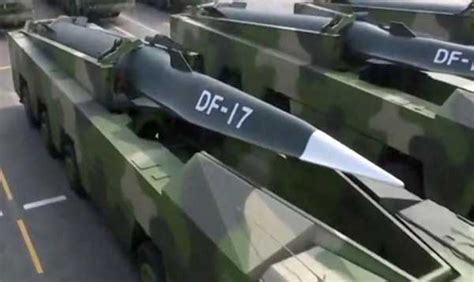
Analysts have noted that incorporating the DF-17 into system-wide drills—rather than simply showcasing it in parades—signals a shift in posture. The missile is no longer experimental or strategic-only; it is now tactically operational, reinforcing China’s evolving doctrine of rapid, precision deep strikes.
Unmanned Systems Shape Ground Combat Tactics
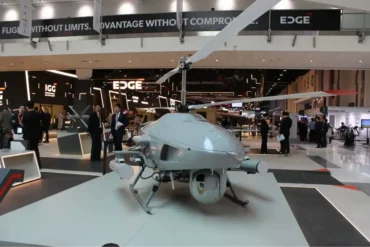
On land, units from the PLA’s 79th Group Army led urban seizure scenarios supported by a fleet of unmanned aerial and quadruped ground systems. The integrated drone combat system utilized in the drills includes:
- Reconnaissance UAVs for real-time surveillance
- Loitering munitions controlled via first-person-view
- Smoke-screening drones for obscuring movement
- Precision bomb-dropping platforms for tactical strike support
These systems allowed for seamless small-unit integration, enabling infantry units to engage in complex operations with robotic support, enhancing survivability and lethality.
Such capabilities reflect the PLA’s broader strategy of unmanned manned teaming (UMT), where human and machine assets operate in tandem. This not only boosts battlefield endurance but reduces troop exposure in high-risk scenarios such as urban warfare and contested landings.
Naval Firepower Demonstrated with Type 055 and Type 054A Ships
China’s naval forces launched from Qingdao Naval Base with a multi-ship detachment led by the Type 055 destroyer Nanchang, accompanied by the Type 052D destroyer Xining and Type 054A frigate Weifang. The Type 055, boasting over 128 vertical launch cells, is the PLA Navy’s premier surface combatant, capable of executing anti-ship, anti-air, anti-submarine, and land-attack missions.
CCTV’s coverage revealed that exercises included:
- Live-fire exercises against coastal and surface targets
- Decoy-based evasive firing
- Anti-frogman defenses
- Power-loss simulations and hull breach navigation drills
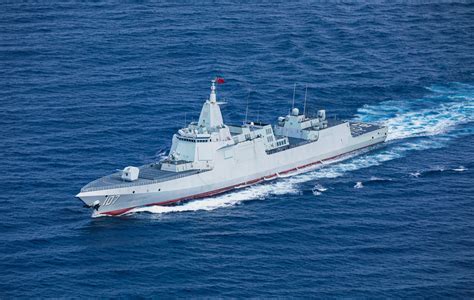
Such training is not just tactical but strategic—preparing the PLAN for blue-water operations where survivability, interoperability, and multi-day engagements are essential. It also suggests the navy’s growing confidence in carrier battle group operations, where the Type 055 acts as a defensive and offensive hub.
Strategic Signaling Beyond the Battlefield
The launch of these drills follows large-scale exercises near Taiwan in December 2025, reinforcing the perception that Beijing is maintaining constant operational pressure in its near seas. The visible deployment of long-range strike capabilities and networked aerial assets adds psychological and diplomatic weight to China’s presence in contested regions, including the South China Sea and East China Sea.
Furthermore, conducting full-spectrum drills on the first working day of 2026 conveys strategic messaging both domestically and internationally. It highlights the PLA’s ability to rapidly transition into wartime posture and synchronizes with China’s broader push for a “world-class military” by 2035.
Technological and Doctrinal Evolution
More than a show of strength, the 2026 drills mark a doctrinal shift in Chinese military planning. The integration of:
- Fifth-generation fighters
- Hypersonic glide vehicles
- Advanced surface combatants
- Intelligentized unmanned systems
…into a unified, combat-ready structure demonstrates the maturity of China’s joint operations doctrine. No longer limited by service silos, the PLA is moving toward a data-centric, AI-augmented force structure prepared for multi-domain conflict.
This mirrors trends in Western militaries, particularly the U.S. Joint All-Domain Command and Control (JADC2) initiative. However, China’s emphasis on operational secrecy, centralized control, and homegrown industrial support gives its approach a uniquely centralized-modernist character.
Conclusion: A New Phase of Chinese Combat Preparedness
China’s 2026 military drills are more than routine exercises—they are a strategic rehearsal for real-world contingencies. By integrating cutting-edge systems such as the J-20 stealth fighter, DF-17 hypersonic missile, and Type 055 destroyer into fully joint, scenario-driven operations, the PLA is showcasing both technical prowess and operational readiness.
For defense analysts and policymakers in the West, these developments demand attention—not just for their hardware sophistication, but for the systems-level coherence they represent. China is no longer simply acquiring advanced weapons; it is weaving them into a complex, agile force that can operate across domains with speed, coordination, and intent.
In the broader context of Indo-Pacific security, these drills serve as a stark reminder: the military balance is shifting, and China’s armed forces are not just modernizing—they are preparing to fight and win under 21st-century conditions.