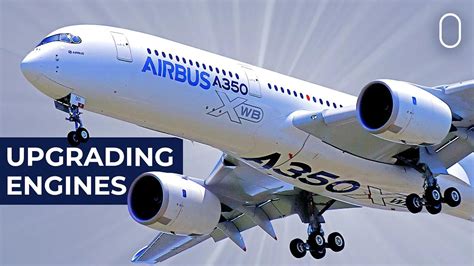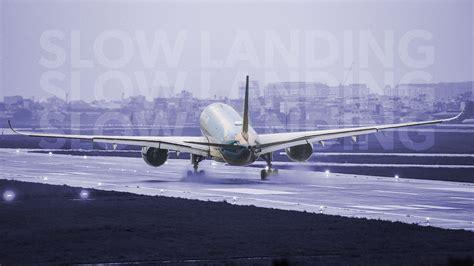
The Airbus A350 stands apart among modern widebody aircraft not just for its long-range capability and fuel efficiency, but for a more subtle, yet equally impactful quality: its exceptionally low landing speed. This feature enables operations at shorter runways, increases payload flexibility, and enhances overall safety—making it a cornerstone of next-generation commercial aviation.
Lightweight Composites: The Foundation of Low-Speed Handling
A primary reason behind the A350’s slow landing speed is its construction. Unlike older aircraft built with aluminum alloys, the A350 employs carbon-fiber reinforced polymer (CFRP) for over 50% of its airframe. This shift to composites has drastically reduced the aircraft’s weight.
The reduced mass contributes to lower stall speeds, which directly influence the approach and landing velocity. With less momentum to arrest during touchdown, the aircraft can safely operate at slower speeds without compromising control or stability.
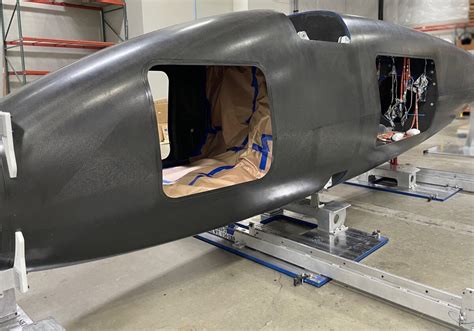
Beyond weight savings, CFRP materials also allow for design enhancements that conventional metals do not. The A350’s fuselage, wing covers, and landing gear structure all utilize this advanced material, helping minimize structural drag and enhancing resilience during landing impact.
Aerodynamically Perfected Wings: Precision and Lift in Harmony
Arguably the most revolutionary component of the A350 is its wing design. Engineered under the directive of “Shaping Efficiency,” Airbus focused on creating a high-lift, low-drag wing structure that adapts to every phase of flight.
The flexible composite wing boasts a wingspan of 64.75 meters and is embedded with advanced features:
- Adaptive Drooped Hinge Flaps (ADHF) that increase lift during final approach
- Leading Edge Droop Nose Devices (DNDs) that modify airflow to delay stall
- Seven spoilers per wing to finely control descent and braking dynamics
These aerodynamic systems synergize to enhance lift at lower speeds, making the approach profile smooth, controlled, and energy-efficient. The structure’s ability to flex under dynamic conditions ensures optimal shape throughout the descent, reducing the risk of instability.
Precision Engine Thrust: Power When It’s Needed, Silence When It’s Not
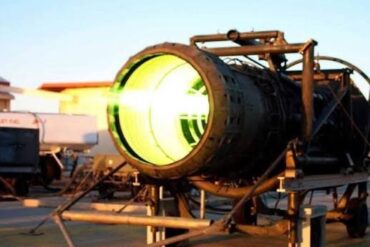
The A350’s Rolls-Royce Trent XWB engines are not just about high thrust—they also deliver exceptional responsiveness at low power settings. This is especially useful during the approach phase when engines must balance the aircraft’s descent rate and counteract drag.
The -900 variant uses XWB-84 engines, while the -1000 employs more powerful XWB-97 units. Both versions benefit from:
- Quick thrust modulation for adjusting glide slope
- Low fuel burn at reduced throttle settings
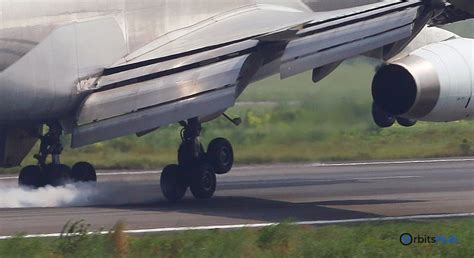
- Integrated reverse thrusters that minimize rollout distance
Combined with the aircraft’s aerodynamic brakes and lightweight structure, these engines reduce the reliance on extended runway lengths. This means the A350 can safely touch down at airports previously unsuitable for large widebodies.
Landing Speed by the Numbers
On average, the Airbus A350 lands at approximately 140 knots (259 km/h). This is considered exceptionally low for a widebody aircraft of its class, especially considering its size and range.
To understand this in context:
- Boeing 777-300ER typically lands at 155–160 knots
- A330-300 lands around 145–150 knots
The A350’s lower approach speed is not only safer—allowing for gentler touchdowns and reducing wear on landing gear—but also economically advantageous. It enables carriers to land at smaller regional airports or in challenging environments such as hot-and-high conditions, which degrade performance for other jets.
Operational Benefits: Flexibility Meets Profitability
This slow landing capability translates into real-world value for airlines. Carriers like Cathay Pacific, Qatar Airways, and Singapore Airlines have exploited the A350’s performance envelope to expand routes and reduce operational risk.
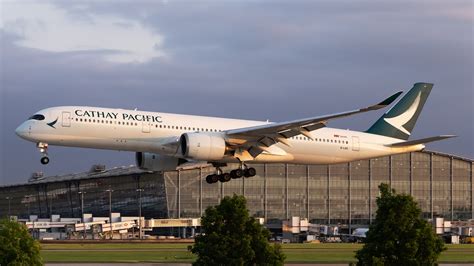
Key advantages include:
- Shorter runway access: Opens operations to high-altitude or smaller urban airports
- Increased payload potential: Reduced landing speeds enable higher cargo weights safely
- Enhanced safety margins: Lower kinetic energy on touchdown lowers risk of overrun or gear stress
- Fuel savings: Slow, stable descent paths reduce unnecessary throttle usage
For example, Singapore Airlines uses the A350-900ULR variant for its ultra-long-haul New York–Singapore route. The same aerodynamic traits that allow it to land slowly also contribute to its remarkable 9,500-mile range.
Crash Survivability: Composites and Low-Speed Impact
In 2025, a tragic incident at Tokyo Haneda Airport tested the A350’s structural integrity when a Japan Airlines A350-900 collided with a smaller patrol aircraft. While the smaller plane’s crew tragically perished, all 379 passengers aboard the A350 survived.
Investigators credited this outcome to the fire-resistant and impact-absorbing nature of the aircraft’s composite materials. The lower landing speed may also have contributed to the reduced severity of the initial impact forces.

Unified Wing Design Across Variants
Another notable engineering feat is Airbus’ decision to maintain a unified wing design for both the A350-900 and A350-1000 variants. Despite the -1000 being longer and heavier, the wing’s design—backed by its adaptive control surfaces and reinforced composite structure—remains unchanged.
This strategic move simplifies manufacturing and maintenance while ensuring that both variants retain the same low-speed characteristics, an uncommon achievement in large aircraft families.
Data Snapshot: A350-900 vs. A350-1000
| Feature | A350-900 | A350-1000 |
|---|---|---|
| Typical Capacity | 332–352 | 375–400 |
| Max Takeoff Weight | 283 tons | 322 tons |
| Max Landing Weight | 207 tons | 236 tons |
| Range | 8,500 NM | 9,000 NM |
| Engine | Trent XWB-84 | Trent XWB-97 |
| Entry Into Service | 2015 | 2018 |
Despite differences in size and power, both aircraft maintain a 140-knot average landing speed, thanks to the consistency in aerodynamic and materials engineering.
A Future-Oriented Aircraft
With the upcoming A350F freighter variant set for debut in 2027, Airbus continues to extend the A350’s core technologies to cargo operations. Using the -1000 platform and maintaining the same aerodynamic philosophy, the freighter will offer cargo carriers the same benefits of slow, stable landings, improved route flexibility, and reduced operating costs.
As aviation adapts to global economic shifts, environmental regulations, and evolving route demands, the Airbus A350’s slow landing speed has proven to be more than just a technical curiosity—it is a strategic advantage.
Conclusion: A Harmonious Convergence of Design and Performance
The Airbus A350’s slow landing speed is the result of an intricate balance between composite innovation, adaptive aerodynamics, and engine responsiveness. These engineering achievements allow the aircraft to perform safely and efficiently in diverse operational environments—be it high-altitude airports, short runways, or ultra-long-haul sectors.
In an era where fuel efficiency, operational flexibility, and passenger safety are paramount, the A350’s low-speed landing capability underscores its status as a pinnacle of modern aerospace engineering. It redefines what’s possible for large commercial jets and sets a new benchmark for the industry.