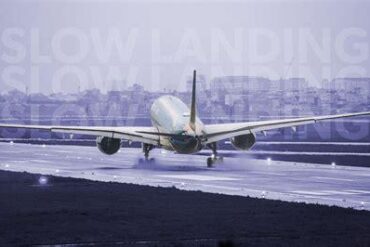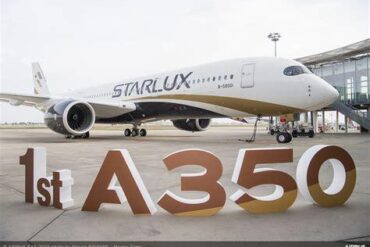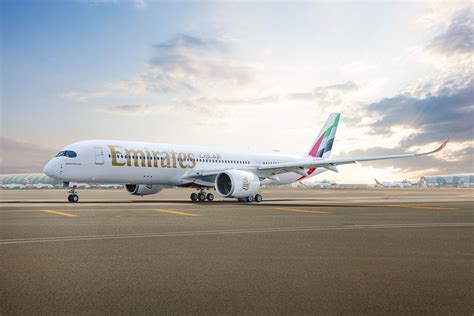
The Airbus A350 was designed to do something that sounds almost contradictory in commercial aviation: carry hundreds of passengers across oceans while touching down with the calmness and precision of a much smaller aircraft. Despite being one of the world’s largest twin-engine widebodies, the A350 approaches the runway at remarkably low speeds, often around 140 knots, giving pilots a level of control and stability that has become one of the aircraft’s defining strengths.
That slow landing speed is not an accident of modern engineering. It is the result of a deeply integrated design philosophy involving advanced aerodynamics, lightweight composite construction, highly adaptive wings, and sophisticated flight control systems. Airbus engineered the A350 to maximize lift while minimizing drag and weight, allowing the aircraft to remain controllable and efficient even at slower speeds during approach.
For airlines, that capability is far more than a technical curiosity. Slow landing performance translates into operational flexibility, shorter runway requirements, smoother touchdowns, improved safety margins, and lower wear on brakes and tires. In an era where airlines demand efficiency from every kilogram of fuel and every meter of runway, the A350’s low-speed handling has become one of its greatest competitive advantages.
The aircraft’s performance has impressed carriers from Qatar Airways and Singapore Airlines to Cathay Pacific and Japan Airlines, especially on demanding long-haul sectors where landing characteristics matter enormously after 15 or even 19 hours in the air.
The A350 may cruise near the speed of sound at Mach 0.85 over the Atlantic or Pacific, but when it returns to earth, it behaves with surprising gentleness.
Why Landing Speed Matters More Than Most Passengers Realize
Most airline passengers rarely think about landing speed unless a touchdown feels unusually hard or dramatic. Yet approach speed is one of the most important elements in aircraft performance and safety.
A slower landing speed reduces the amount of kinetic energy the aircraft carries as it approaches the runway. Lower energy means shorter stopping distances, less stress on braking systems, reduced tire wear, and improved handling in poor weather conditions. Pilots gain more time to react during crosswinds, gusts, or unstable approaches.
For a massive long-haul aircraft like the A350, this is particularly impressive. The aircraft can weigh well over 200 tons during landing, yet it still manages approach speeds comparable to or lower than many older and smaller widebody jets.
The difference becomes especially important at airports with operational challenges. Hot climates reduce air density, high-altitude airports create thinner air, and shorter runways leave less room for error. Aircraft that can maintain stable lift at slower speeds gain a significant operational advantage in these environments.
This is one reason airlines value the A350 so highly. It gives route planners more flexibility and allows carriers to operate efficiently into destinations that might otherwise impose payload restrictions or operational compromises.
The Giant Wing That Makes The Magic Possible
The heart of the A350’s slow-speed capability is its wing design.
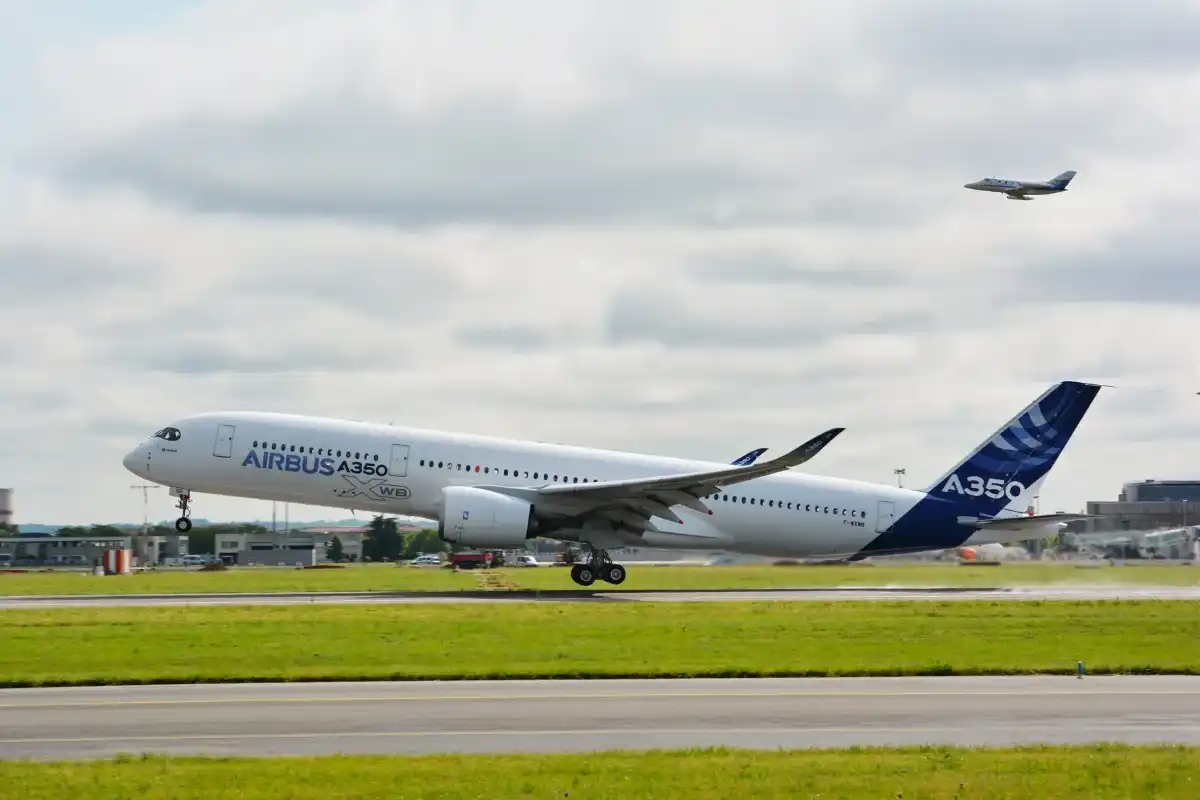
Airbus gave the A350 one of the most advanced wings ever installed on a commercial airliner. Stretching more than 64 meters across, the wing was engineered to operate efficiently across an enormous range of conditions, from ultra-long-haul cruise flight to slow, stable final approaches.
Unlike older aluminum wings, the A350’s carbon-fiber composite wing can flex dramatically during flight. This flexibility is intentional. The wing continuously adapts to changing aerodynamic loads, subtly twisting and reshaping itself depending on speed, altitude, turbulence, and aircraft weight.
That adaptive behavior allows the wing to maintain optimal aerodynamic efficiency across multiple flight phases.
During landing, the A350 transforms its wing into a high-lift machine. Multiple devices deploy simultaneously:
- Leading-edge slats extend forward
- The droop nose device reshapes airflow over the wing
- Adaptive drooped hinge flaps expand rearward
- Spoilers assist with lift management and stability
Together, these systems dramatically increase lift generation at low speeds.
This means the aircraft can stay airborne safely and controllably while moving much slower than would otherwise be possible for an aircraft of its size. Pilots consistently praise the aircraft for feeling stable and predictable during approach, even in difficult conditions.
Composite Construction Reduced Weight Dramatically
The A350 represents one of Airbus’ most ambitious uses of carbon-fiber reinforced polymer composites. Roughly 53% of the aircraft structure uses composite materials, including major portions of the fuselage and wing.
Weight matters enormously in aviation because every extra kilogram increases required lift and raises stall speed. Heavier aircraft must fly faster to remain airborne safely during approach.
By aggressively reducing structural weight, Airbus lowered the aircraft’s minimum controllable speeds without compromising strength.
The benefits extend beyond simple mass reduction. Composite materials also enabled Airbus engineers to create smoother aerodynamic surfaces with fewer structural compromises than traditional aluminum construction.
The wing skins, landing gear support structures, fuselage panels, and critical load-bearing sections all benefit from the strength-to-weight ratio of carbon fiber. The resulting aircraft is not only lighter but also more aerodynamically refined.
This engineering approach helped Airbus reduce weight by approximately 1.2 metric tons compared to more conventional designs. While that figure may sound modest for a widebody aircraft, even relatively small weight reductions can produce major aerodynamic and operational improvements.
The lower weight also contributes to another characteristic passengers frequently notice: the A350’s unusually smooth landing feel.
Because the aircraft maintains strong lift at slower speeds, touchdowns often feel less abrupt than older long-haul jets that must approach faster and descend more aggressively.
The Flight Control System Constantly Optimizes The Aircraft
The A350’s advanced fly-by-wire flight control system plays a critical role in its slow-speed handling.
Modern Airbus aircraft rely heavily on computers to interpret pilot inputs and optimize aircraft behavior. In the A350, this technology reached a new level of refinement.
The flight control computers continuously monitor aerodynamic conditions, aircraft attitude, wing loading, wind conditions, and pilot commands. The system automatically adjusts control surfaces to maintain stability and efficiency throughout the landing phase.
This allows the aircraft to remain exceptionally composed during approach.
Pilots often describe the A350 as highly forgiving during landing because the aircraft smooths out many aerodynamic disturbances automatically. Gusty crosswinds, turbulence, and variable descent conditions become easier to manage.
The system also protects against stalls by preventing the aircraft from exceeding safe aerodynamic limits.
This matters enormously when operating a jet capable of carrying between 350 and 480 passengers depending on configuration. Maintaining stable low-speed behavior in a giant widebody requires immense computational sophistication behind the scenes.
The A350’s computers constantly optimize that balance in real time.
How Engine Design Helps The A350 Land Smoothly
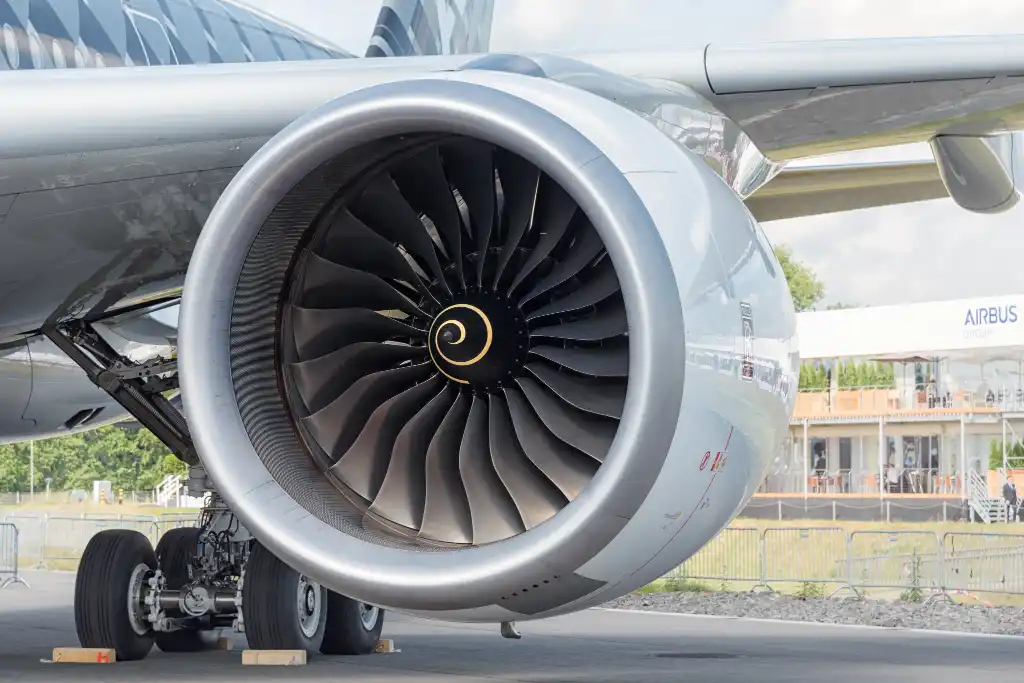
The Rolls-Royce Trent XWB engines are among the most efficient large turbofan engines ever developed, but their contribution to landing performance extends beyond fuel savings.
The engines produce highly responsive thrust control during approach, allowing pilots to make precise adjustments as the aircraft descends toward the runway.
The A350-900 uses the Trent XWB-84, while the larger A350-1000 operates with the more powerful Trent XWB-97. Despite their enormous power output, both engines integrate closely with the aircraft’s aerodynamic systems to maintain stable low-speed handling.
Once the aircraft touches down, reverse thrust systems help shorten stopping distance significantly.
This capability improves performance at airports with shorter runways and increases safety margins during wet or contaminated runway conditions. Airlines can also carry heavier payloads into airports where runway length would otherwise limit operations.
For carriers operating global networks, these advantages directly affect profitability.
A widebody that can land efficiently in more places while carrying more cargo and passengers becomes extraordinarily valuable.
Why The A350 Excels On Ultra-Long-Haul Routes
The same aerodynamic efficiency that allows slow landing speeds also contributes to the A350’s extraordinary range.
Aircraft wings must balance conflicting demands. They need to generate enough lift for slow approaches while remaining efficient at high cruising speeds for thousands of miles.
The A350 achieves both.
Its wing design minimizes drag during cruise while maintaining exceptional lift characteristics at low speeds. That balance helped make ultra-long-haul operations economically viable for airlines like Singapore Airlines.
The airline’s specialized A350-900ULR variant operates some of the longest flights on Earth, including nonstop services between Singapore and New York lasting nearly 19 hours.
Long-haul flights create unique operational challenges because aircraft weight changes dramatically during flight as fuel burns away. Landing characteristics must remain stable whether the aircraft arrives relatively light or still carries substantial fuel reserves.
The A350 handles these changing conditions remarkably well.
Its adaptive wing structure and advanced flight controls continuously compensate for varying load factors, allowing pilots to maintain consistent handling characteristics throughout the aircraft’s operational envelope.
That consistency is one reason pilots and airlines trust the aircraft on some of the world’s most demanding routes.
Passenger Comfort Is A Hidden Benefit Of Slow Landings
Passengers may not understand the aerodynamic science behind the A350, but they often notice the results.
The aircraft has developed a reputation for unusually smooth arrivals. Slower approach speeds reduce abrupt sink rates and soften touchdown forces, contributing to a more comfortable landing experience.
The composite fuselage also dampens vibration more effectively than older metal structures. Combined with quieter engines and lower cabin altitude, the aircraft feels noticeably calmer during descent and landing.
This refinement has become part of the A350’s market appeal.
For premium airlines competing aggressively in long-haul travel, passenger comfort matters enormously. Business-class travelers flying between London, Doha, Singapore, Tokyo, or New York increasingly notice the difference between older aircraft designs and newer-generation jets like the A350.
The landing experience becomes part of the product.
Why The A350 Became One Of Airbus’ Greatest Successes
The A350 arrived during a critical period in the aviation industry.
Airlines wanted lower fuel burn, longer range, better economics, and improved passenger comfort. At the same time, operational flexibility became increasingly important as carriers expanded into new international markets.
Airbus responded with an aircraft that combined all of those qualities into a highly refined platform.
The slow landing speed became one visible demonstration of a much broader engineering philosophy centered on efficiency and aerodynamic optimization. Every part of the aircraft — from the flexible wings and lightweight composites to the intelligent flight controls and efficient engines — works together as an integrated system.
That systems-level approach helped the A350 establish itself as one of the most capable long-haul aircraft of the modern era.
Its ability to descend from 35,000 feet after crossing oceans and touch down with remarkable gentleness is not merely impressive engineering. It reflects how far commercial aviation design has evolved.
For passengers, it feels smooth and quiet.
For pilots, it feels stable and predictable.
For airlines, it feels profitable.
And for Airbus, the A350’s slow landing speed became one of the clearest signs that the company successfully built one of the most aerodynamically sophisticated airliners ever created.