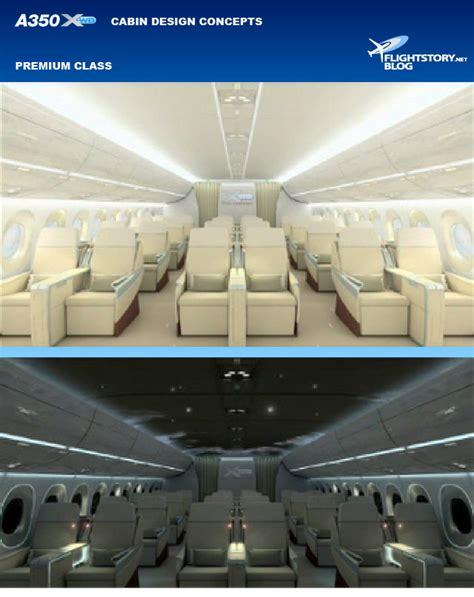
The Airbus A350 is not just another widebody aircraft—it is a meticulously engineered response to decades of passenger discomfort on long-haul flights. While much of the attention goes to fuel efficiency and range, the real revolution happens inside the cabin, where subtle yet powerful innovations quietly transform the flying experience. These aren’t flashy gimmicks. They are deeply integrated design decisions that reshape how the human body reacts to flight.
What makes the A350 exceptional is how these features work together. Noise reduction, air quality, lighting, pressure, and spatial design are not isolated upgrades—they form a unified ecosystem designed to minimize fatigue and maximize comfort. Beneath the calm, modern aesthetic lies a sophisticated blend of material science, human physiology, and aerospace engineering.
By understanding these five hidden cabin features, it becomes clear why passengers often step off an A350 feeling noticeably less exhausted than on older aircraft.
1. Ultra-Quiet Cabin Powered by Composite Engineering
The first thing many passengers notice—though they may not immediately identify it—is the remarkable quietness inside the A350 cabin. This is not accidental; it is the result of a fundamental shift in how aircraft are built.
Traditional aircraft rely heavily on aluminum fuselages, which transmit vibration and noise far more easily. The A350, however, uses carbon fiber-reinforced plastic (CFRP) for over half of its structure. This material doesn’t just reduce weight—it actively dampens sound waves and structural vibrations.
The effect is dramatic. Cabin noise levels are reduced by up to 53% compared to older widebody aircraft, particularly legacy jets like early Boeing 777 variants. Conversations feel more natural, engine hum fades into the background, and the overall atmosphere becomes calmer.
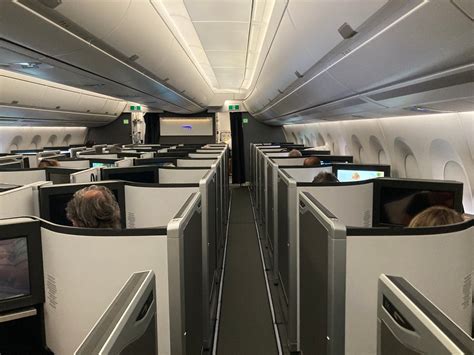
But the silence doesn’t stop at the fuselage. Airbus refined every potential noise entry point. Doors, galleys, and seams—areas where sound typically leaks—feature advanced acoustic sealing systems. Even the engines contribute: the Rolls-Royce Trent XWB engines use high-bypass ratios and acoustic liners to minimize external noise before it even reaches the cabin.
The result is not just a quieter flight—it’s a less mentally fatiguing environment, where your brain doesn’t have to constantly filter out background noise.
2. Lower Cabin Altitude for Reduced Fatigue
One of the most underestimated stressors during flight is cabin pressure. At cruising altitude, the air outside is too thin to breathe, so cabins are pressurized to simulate a lower altitude. Historically, this has been around 8,000 feet, which subtly deprives the body of oxygen and moisture.
The A350 changes the game by lowering this to around 6,000 feet, with some configurations pushing even closer to 5,000 feet. That difference might sound minor, but physiologically, it is significant.
At a lower cabin altitude, passengers experience:
- Higher blood oxygen levels
- Reduced dehydration
- Less dizziness and fatigue
- Lower risk of headaches and jet lag symptoms
This improvement is only possible because the CFRP fuselage is stronger and more fatigue-resistant than aluminum, allowing it to withstand higher internal pressure without structural stress.
The impact becomes especially noticeable on ultra-long-haul flights. Instead of arriving drained and disoriented, passengers often report feeling surprisingly functional upon landing—a subtle but powerful shift in long-distance travel.
3. Circadian Rhythm Lighting That Works With Your Body
Lighting on older aircraft was blunt and functional: bright when needed, dim when not. The A350 introduces something far more sophisticated—LED mood lighting designed to align with human circadian rhythms.
Rather than simply turning lights on or off, the system transitions through carefully calibrated color temperatures and intensities throughout the flight. These changes are designed to guide your body’s internal clock, helping you adapt to a new time zone even before landing.
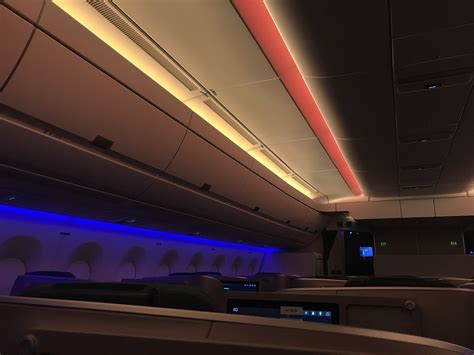
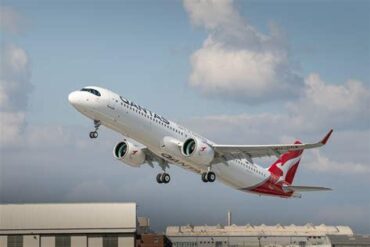
Airlines like Qantas have taken this even further, working with scientific researchers to develop lighting programs based on biological responses to specific wavelengths of light. The result is a series of lighting “scenes,” each with a purpose:
- Blue-enriched light to promote alertness during active phases
- Warm amber tones to signal winding down and encourage sleep
- Gradual sunrise simulations to wake passengers gently
This is not just aesthetic—it directly influences melatonin production, the hormone that regulates sleep. By subtly manipulating light exposure, the A350 helps reduce the disorienting effects of crossing multiple time zones.
It’s the difference between forcing your body to adjust after landing and starting the adjustment mid-flight.
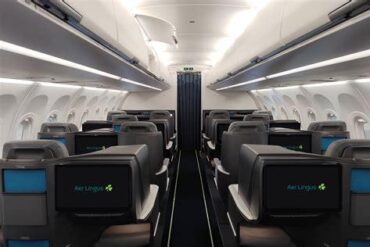
4. A More Spacious Cabin That Feels Less Confining
Aircraft cabins have long suffered from a design flaw that passengers feel but rarely articulate: curved sidewalls that intrude into personal space. On older jets, this creates a subtle sense of compression, especially for window-seat passengers.
The A350 addresses this with a clever structural redesign. Its sidewalls are far more vertical, creating a cabin that feels closer to a rectangular space than a tube. This seemingly small change has a big psychological effect—it makes the cabin feel open, balanced, and less claustrophobic.
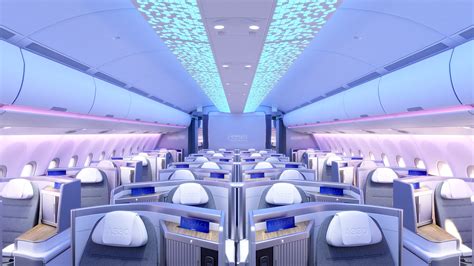
The benefits extend beyond perception:
- The cabin height reaches approximately 8 feet (2.4 meters) at the center
- Passengers can stand and move more naturally
- Overhead bins are larger without encroaching on headroom
This added volume also improves air circulation and lighting distribution, reinforcing other comfort features. Even in high-density seating configurations, the cabin avoids the cramped feeling common on older widebodies.
It’s a rare case where engineering and psychology align—the space doesn’t just measure larger, it feels larger.
5. Constant Air Renewal for a Fresher, Healthier Cabin
Few aspects of flying are as universally disliked as stale cabin air. The A350 tackles this with a highly adaptive air management system that continuously refreshes the cabin environment.
Air inside the cabin is completely renewed every two to three minutes, a rate that significantly reduces the buildup of odors, airborne particles, and pathogens. This constant flow ensures that the environment remains fresh, even on full flights.
What sets the A350 apart is how intelligently this system operates. It adjusts airflow based on passenger density, maintaining consistent circulation without uncomfortable drafts. The result is a balanced environment that feels natural rather than artificially ventilated.
Equally important is humidity. Traditional aircraft maintain extremely low humidity levels—sometimes as low as 5–12%—because moisture accelerates corrosion in aluminum structures. The A350’s composite fuselage eliminates this limitation, allowing humidity levels to rise to around 20–23%.
That difference is immediately noticeable:
- Skin feels less dry
- Eyes are less irritated
- Breathing is more comfortable
Combined with frequent air renewal, the cabin feels closer to a normal indoor environment rather than the dry, recycled atmosphere many travelers expect.
Why These Hidden Features Matter More Than You Think
Individually, each of these innovations is impressive. Together, they represent a fundamental shift in passenger experience design.
The A350 doesn’t rely on luxury alone to improve comfort—it targets the root causes of in-flight fatigue:
- Noise overload
- Low oxygen levels
- Disrupted sleep cycles
- Physical confinement
- Poor air quality
By addressing all of these simultaneously, the aircraft creates an environment where the body can function more normally, even at 35,000 feet.
This is why the difference feels subtle but profound. You may not immediately pinpoint what’s changed, but by the end of the flight, the result is clear: less exhaustion, fewer headaches, and a smoother transition to your destination.
The Future of Cabin Design Starts Here
The Airbus A350 is more than a modern aircraft—it is a blueprint for the future of long-haul travel. Its hidden features reveal a deeper philosophy: that passenger comfort is not about adding more, but about designing smarter from the ground up.
As newer aircraft like the Boeing 777X continue to adopt similar standards, the A350 stands as one of the first to fully integrate these ideas into a cohesive cabin experience. It proves that innovation doesn’t always need to be visible to be impactful.
And once you’ve experienced it, stepping back onto an older aircraft makes one thing unmistakably clear—the future of flying already exists, and it’s quieter, fresher, brighter, and far more human.