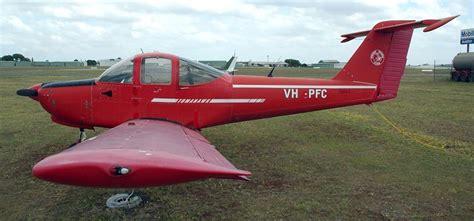
The story of the Piper Tomahawk is filled with unique handling traits, accidents, investigations, differing opinions, and plenty of controversy. It’s a classic case of ‘be careful what you wish for,’ because sometimes, you get exactly what you ask for. But before diving into the details of this intriguing aircraft, let’s first take a step back and explore where the Piper Tomahawk came from.
History of Piper Aircraft
Piper Aircraft’s roots trace back to 1927 when Clarence and Gordon Taylor founded the Taylor Brothers Aircraft Manufacturing Company in Rochester, New York. Their first plane, the Taylor Chummy, was a two-seat, high-wing monoplane, priced at $4,000. Unfortunately, sales were slow, and in 1928, tragedy struck when Gordon died in a plane crash. This led Clarence to move the company to Bradford, Pennsylvania, after the town offered a new factory and investment money. One of the major investors was William T. Piper, who would later earn the nickname ‘The Henry Ford of Aviation.’ Initially, Piper helped finance the company while Taylor continued his engineering work. However, a rift developed, and in 1937, Piper bought out Taylor Brothers, renaming it Piper Aircraft.
The newly established Piper Aircraft quickly rose to prominence, starting production with the E-2 Cub, a small, affordable plane aimed at the post-Depression market. The Piper J-3 Cub soon followed and became a legend in aviation, known for its military variant during World War II. After the war, Piper faced a sales decline, but the Korean War sparked a resurgence in demand for military aircraft. Post-war, the company expanded its offerings, and by 1978, the Piper PA-38-112 Tomahawk was introduced. Even today, the Tomahawk remains one of the most affordable Piper aircraft in existence.
Designing the Piper Tomahawk
Piper’s design team set out with a clear goal: to create the ideal trainer aircraft for flight instructors (CFIs). To make sure they understood exactly what CFIs wanted, the team sent out a survey to over 10,000 flight instructors, asking for their input on the perfect trainer’s features and handling characteristics. The consensus was clear: the ideal plane needed realistic spin characteristics, heavier control surfaces to simulate larger aircraft, a simple and accessible fuel system, and improved cabin space and visibility.
With this feedback in hand, Piper’s design team went to work, and in 1977, the PA-38-112 Tomahawk was born.
Key Design Features of the Piper Tomahawk
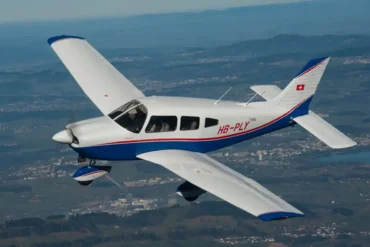
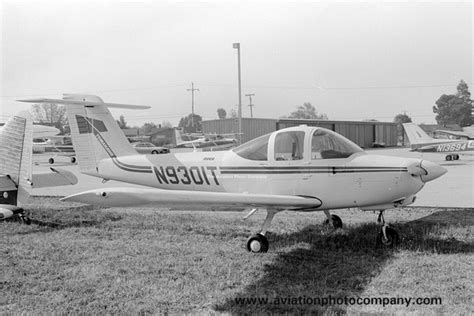
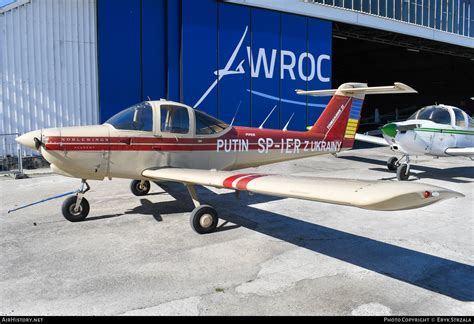
The Tomahawk is a two-seat, single-engine plane with a tricycle landing gear and a low cantilever wing configuration, featuring a T-tail. The design features align with the results from the flight instructor survey, ensuring the aircraft meets the specific needs of a flight trainer.
Stall/Spin Characteristics
The Tomahawk’s stall and spin characteristics are defined by the NASA Whitcomb GAW-1 airfoil. When the plane stalls, pilots must follow the full textbook recovery procedure—there are no shortcuts. The aircraft does not have self-recovery tendencies, which allows CFIs to demonstrate spins effectively to students. The Tomahawk tends to drop a wing during a stall, and if the ailerons, rudder, or elevator are mishandled, a spin can easily develop. While this makes the aircraft a valuable training tool, it has also led to debates about the safety of these characteristics.
Heavy Controls & T-Tail
The Tomahawk is also known for its heavier control surfaces, which make it an excellent training plane for pilots transitioning to larger aircraft. The heavier feel of the controls closely mimics the handling of larger planes, providing pilots with valuable experience. Additionally, the T-tail design shares similarities with many larger aircraft. While the T-tail decreases elevator control below certain airspeeds (around 35 KIAS), proper training can mitigate this risk. Still, T-tail aircraft, including the Tomahawk, have seen a higher rate of accidents during takeoff and landing, accounting for 61% of all Tomahawk-related incidents. However, for pilots who understand and respect these unique handling traits, the Tomahawk can be a valuable steppingstone toward flying bigger aircraft.
Engine Access
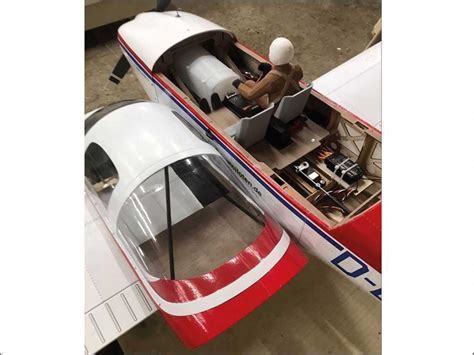
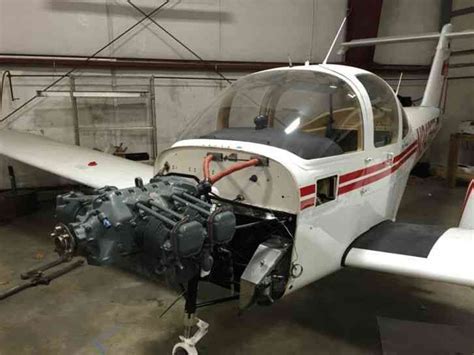
The Tomahawk makes engine maintenance straightforward. The Lycoming engine can be accessed easily through a wide, double-opening cowling. If repairs require removing the engine, it can be done with the propeller still attached, which saves time and labor.
Visibility
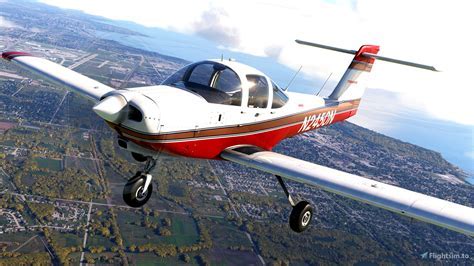
The cockpit of the Tomahawk is equipped with extensive wrap-around windows, providing nearly 360-degree visibility. This feature, combined with the low-wing design, makes it easier for new pilots to spot other aircraft in their flight path, helping to avoid mid-air collisions.
Cabin Space
The cockpit’s bubble-shaped design maximizes cabin space, offering a comfortable environment for pilots. The aircraft features a front-hinged over-the-wing door on either side for easy entry and exit.
History of the Piper Tomahawk
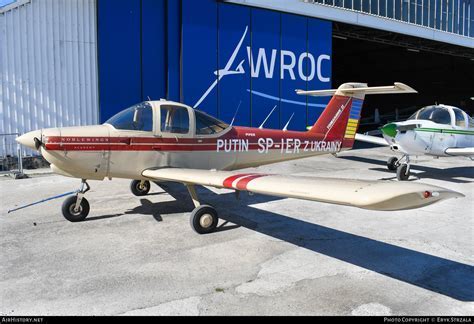
Production of the Piper Tomahawk began in 1977, and by 1982, almost 2,500 units had been built. The Tomahawk entered a competitive two-seat trainer market, with rivals like the Cessna 152 and the Grumman AA-1, which were similarly powered by Lycoming engines. Priced at $19,730, the Tomahawk was a budget-friendly option for flight schools and new pilots. The aircraft’s unique design and affordable price garnered significant attention in the market.
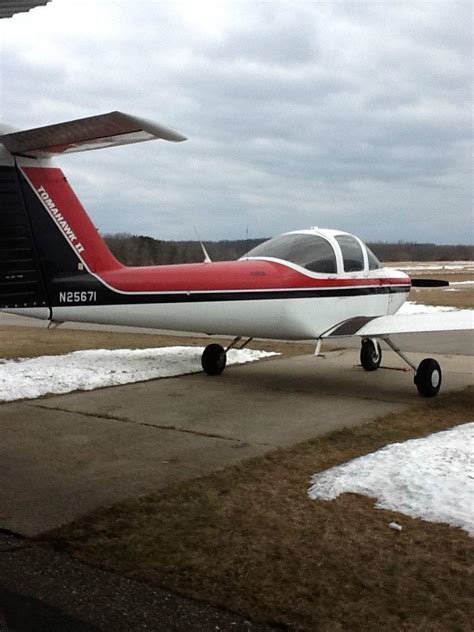
However, with attention came problems. Soon after its release, the Tomahawk faced a series of issues that required airworthiness directives and service bulletins. In response, Piper addressed these problems and released the Tomahawk II in 1981, which corrected all outstanding airworthiness concerns. Despite these efforts, the early 1980s aviation slump caused Piper to suspend production after just five years. By the end of its production run, around 2,500 Tomahawks had been built, with only a few hundred being the updated Tomahawk II model.
Tomahawk Wing Controversy
A significant chapter in the Tomahawk’s history revolves around controversy over its wings. In March 1994, a dual-fatality crash involving a Tomahawk prompted the NTSB to investigate. Their findings revealed reports of noticeable differences in stall characteristics between the certified aircraft and the production models. Further investigation showed that turning flight stalls with extended flaps and accelerated stalls had never been tested during certification. The NTSB discovered that certification was conducted on a single pre-production aircraft. Multiple test pilots reported that production Tomahawks exhibited completely different stall characteristics than the certified model.
A Piper engineer testified that soon after production began, operators complained about the aircraft’s unpredictable lateral directional characteristics during stalls. The Tomahawk showed a rapid roll when it stalled, making recovery difficult. In response, Piper modified the wing in 1979 by adding two stall strips to the original two. This led to the release of AD 83-14-08, although the FAA wasn’t involved in testing the new modifications. A Swedish investigation into a fatal 1979 stall/spin accident concluded that the Tomahawk’s stall characteristics did not meet certification standards for wings-level stalls.
In 1998, after reviewing production drawings, the FAA concluded that the wing design of the production models matched that of the certification model. Despite this, the controversy lingered in the minds of some pilots, and the entire ordeal did little to improve the Tomahawk’s reputation.
Flying the Piper Tomahawk
The public perception of the Tomahawk has been mixed. Early on, it became known for its tendency to be involved in spin/stall accidents, earning it unflattering nicknames like “Traumahawk” and “Terrorhawk.” Rod Machado, a well-known pilot and author, discussed the plane’s handling characteristics, saying that its highly responsive T-tail made it easy to over-rotate during takeoff or landing, potentially damaging the tail. Machado also noted that designing aircraft by committee was a flawed approach. The 40% of CFIs who requested an aircraft that could demonstrate spins may have gotten what they wanted, but at the cost of safety. Some believe this focus on spin recovery training led to a more specialized trainer but opened the door for more accidents.
Statistically, the Tomahawk has a higher fatal stall/spin accident rate than the Cessna 150/152. The fatality rate for the Tomahawk is 0.336 to 0.751 accidents per 100,000 flight hours, compared to the Cessna’s 0.098 to 0.134. This suggests the Tomahawk is three to five times more likely to be involved in a fatal spin accident. However, the Tomahawk’s overall accident rate is a third of that of the Cessna 150/152, indicating it is safer overall despite the higher rate of fatal stalls.
The AOPA Air Safety Foundation conducted a safety review of the Tomahawk to determine if its bad reputation was justified. Their analysis showed that most stall/spin accidents occurred at low altitudes, where recovery would have been difficult, regardless of aircraft type. The ASF dispelled the myth that students or instructors were deliberately spinning the Tomahawk at safe altitudes and getting locked into unrecoverable situations. They also noted a revision to the POH, explaining that normal recovery controls could steepen the nose-down attitude, but this was a sign the plane was recovering from the spin. It was crucial to maintain full antispin rudder and keep the control wheel fully forward until recovery was complete.
The AOPA recommended that pilots follow these guidelines:
- Be aware of the Tomahawk’s POH revisions and commit to the proper control inputs during stalls.
- Always add extra altitude margin when conducting stalls or spins intentionally.
- Ensure a skilled instructor with Tomahawk spin experience demonstrates stall/spin recovery procedures before soloing.
- Understand and anticipate the unique handling traits of the Tomahawk’s T-tail.
Despite its reputation, the Tomahawk has positive traits that many pilots appreciate. The aircraft provides excellent cockpit visibility, reducing mid-air collision risks, and has a strong night training safety record. It has also been involved in fewer fuel exhaustion incidents than the Cessna models. For many pilots, the Tomahawk remains a preferred trainer, as long as airworthiness directives are addressed and they are aware of the plane’s unique handling characteristics.
One such pilot is Erasmo ‘Eddie’ Malacara of Eddie Aviation Services, who demonstrates and trains pilots on Tomahawk spin techniques.
Eddie’s Tomahawk Spin Training
Eddie has refined his technique for stall/spin recovery, and during his demo, he explains the differences in handling between the Tomahawk and the Cessna 150/152. As Eddie guides his student through the recovery procedure, he emphasizes that the process isn’t instantaneous and requires sustained control inputs. He also highlights that a left spin is typically more violent than a right one due to P-factor, and that the tail exhibits a characteristic shudder as it enters the spin. Eddie stresses the importance of investing time in spin training with a qualified instructor, which significantly contributes to safer flying.
Variants of the Piper Tomahawk
In the final two years of production, Piper made several updates to the Tomahawk, culminating in the Tomahawk II. This improved version offered greater comfort and reliability. Notable upgrades included better cabin heating, enhanced soundproofing, and improved windshield defrosting performance. The elevator trim system was also refined, and the airframe’s longevity was improved with the use of zinc-chromate anti-corrosion treatment. Additionally, the Tomahawk II featured larger wheels and tires, which were 6 inches in diameter and better suited for unimproved grass or dirt runways. The increased propeller clearance from these tires was another notable improvement.
Most importantly, the Tomahawk II addressed all airworthiness directive issues, making it a more reliable option than the earlier models. This makes the Tomahawk II the preferred, though more expensive, variant if you’re looking to purchase a used Piper Tomahawk. However, Tomahawk IIs are harder to find, as fewer than 500 units were produced, compared to nearly 2,500 of the original Tomahawk.
Piper Tomahawk II PA-38-112 Specifications
- Engine: Lycoming O-235-L2C
- Horsepower: 112 hp
- Propeller: Sensenich 72-inch fixed-pitch 2-blade
- Length: 23 feet 1.25 inches
- Height: 9 feet 1 inch
- Wingspan: 34 feet
- Wing Area: 124.7 square feet
- Wing Loading: 13.39 pounds/square foot
- Power Loading: 14.9 pounds/horsepower
- Seats: 2
- Empty Weight: 1,128 pounds
- Maximum Gross Weight: 1,670 pounds
- Useful Load: 542 pounds
- Baggage Capacity: 100 pounds
- Fuel Capacity: 30 gallons
Piper Tomahawk II PA-38-112 Performance
- Takeoff Distance Ground Roll: 820 feet
- Takeoff Over 50 ft. Obstacle: 1,460 feet
- Rate of Climb, Sea Level: 718 feet per minute
- Top Speed: 126 miles per hour
- Cruise Speed: 115 miles per hour
- Stall Speed: 56.5 mph
- Fuel Consumption: 6.5 gallons per hour at 75% power
- Range: 539 miles
- Service Ceiling: 13,000 feet
- Landing Ground Roll: 635 feet
- Landing Over 50 ft. Obstacle: 1,020 feet