Hermeus Corporation, a trailblazing American aerospace startup, is redefining the limits of flight speed and efficiency. Founded in 2018 and headquartered in Atlanta, Georgia, Hermeus is not merely developing aircraft — it is attempting to bring the hypersonic age to life, with bold plans that extend from military applications to commercial passenger transport. Their approach combines innovative propulsion technologies, strategic defense partnerships, and high-profile venture backing, positioning them as a formidable force in the next generation of aviation.
The Genesis of Hermeus and Its Founding Vision
Hermeus was founded by AJ Piplica (CEO), Skyler Shuford (COO), Glenn Case (CTO), and Mike Smayda (CPO) — all veterans of aerospace engineering, with a vision to develop Mach 5-capable aircraft. Backed initially by Khosla Ventures, the company quickly attracted interest from high-caliber investors including Sam Altman, Founders Fund, Canaan Partners, and In-Q-Tel.
Their mission is rooted in the belief that time is the most valuable commodity. By drastically reducing global travel durations, Hermeus hopes to unlock enormous economic and logistical advantages, as well as reshape strategic air mobility for defense.
Quarterhorse: A Hypersonic Testbed Like No Other
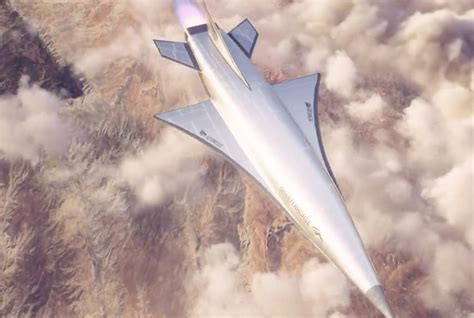
The Quarterhorse is Hermeus’ flagship technology demonstrator. It is not a passenger aircraft, but a high-speed flight test platform designed to validate critical systems necessary for hypersonic travel. The goal is to reach Mach 5 — over 3,800 mph — a speed five times that of sound and over twice the cruising speed of the retired Concorde.
Quarterhorse is being developed in four stages:
- Mk 0: A non-flying platform to test systems integration.
- Mk 1: The first flyable test article.
- Mk 2: A supersonic demonstrator targeting speeds over Mach 2.5.
- Mk 3: A hypersonic-capable vehicle powered by the Chimera engine, projected to exceed Mach 3.3.
Propulsion Breakthrough: The Chimera Engine
A central technological leap comes in the form of Chimera, a turbine-based combined cycle (TBCC) engine. This hybrid propulsion system combines a pre-cooled turbojet with a ramjet, enabling efficient propulsion across a vast range of speeds.
The key innovation is the precooler, which drastically reduces the temperature of incoming air before it reaches the turbine. This prevents thermal degradation at high speeds, allowing the engine to remain compact and reusable.
- At low speeds, the turbojet provides thrust.
- As velocity increases, air is rerouted around the turbine and directly into the ramjet.
- The ramjet ignites beyond Mach 3, propelling the aircraft into hypersonic territory.
This architecture was validated during ground tests in November 2022, marking a milestone in hypersonic engine design.
Air Force Contracts and Strategic Defense Ties
In 2020, the U.S. Air Force awarded Hermeus a $1.5 million contract under the Presidential and Executive Airlift Directorate to explore the feasibility of a hypersonic successor to Air Force One. This relationship deepened in 2021 with an additional $60 million in funding as part of a broader innovation initiative.
Hermeus’ designs fit seamlessly into the military’s long-term interest in rapid global mobility, allowing personnel and critical assets to be transported in hours rather than days.
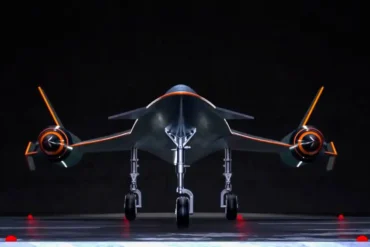
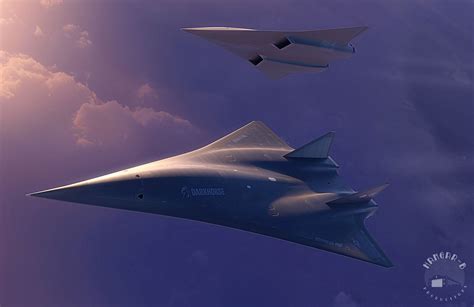
The military’s investment also includes testing and scaling of Darkhorse, an uncrewed hypersonic drone tailored for intelligence, surveillance, and reconnaissance missions — a system designed for high-volume, low-cost deployment.
Toward Hypersonic Passenger Travel: The Halcyon Jet
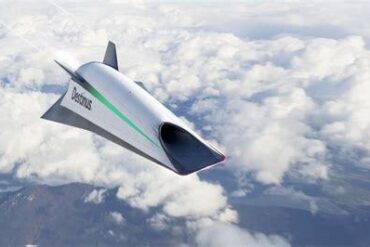
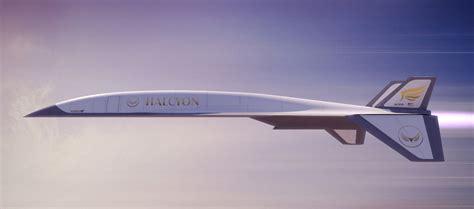
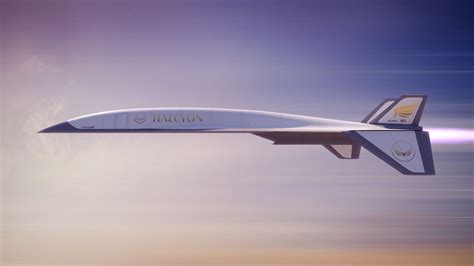
While Quarterhorse and Darkhorse serve strategic and test objectives, Halcyon is Hermeus’ commercial crown jewel — a hypersonic passenger jet designed to carry travelers across continents in a fraction of current flight times.
Projected to cruise at Mach 5, Halcyon will shrink transoceanic travel into 90-minute journeys. For example, New York to Paris — currently a 7-hour trip — could take just 90 minutes. Hermeus envisions an aircraft built from heat-resistant titanium alloys, featuring shockwave-forming geometries for supersonic efficiency.
Though still in early-stage conceptual design, Halcyon represents the long-term vision of democratizing high-speed, intercontinental air mobility.
Testing and Development Milestones
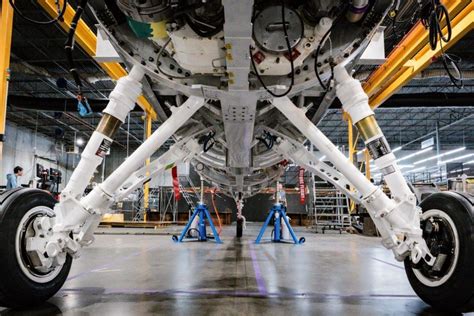
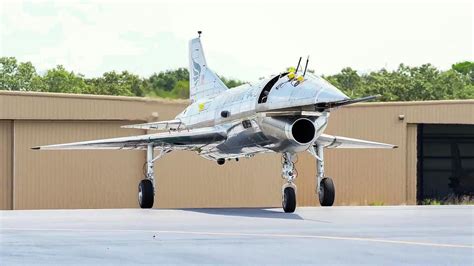
Hermeus follows a hardware-first approach, building and testing early and often. This was evident with the Quarterhorse Mk 0, which served as a non-flying proof of concept for systems integration. In August 2024, the team completed low-speed taxi tests, an essential step prior to flight testing of the Mk 1.
Each test vehicle is designed to iterate on lessons learned from the last, with rapid cycles of improvement similar to Silicon Valley-style agile development, uncommon in traditional aerospace.
Their headquarters includes two dedicated facilities in Atlanta — one for propulsion development and another for aircraft assembly and integration. This co-location fosters a tight feedback loop between engineering, manufacturing, and testing.
Investors and Financial Backing
Hermeus’ progress has been fueled by over $160 million in funding from a combination of venture capital and government contracts. In March 2022, the company closed a $100 million Series B round led by Sam Altman, with participation from:
- Founders Fund
- In-Q-Tel
- Bling Capital
- Khosla Ventures (early lead investor)
- Canaan Partners
These investors are betting on Hermeus’ ability to bring real, scalable hypersonic aircraft to market — not just prototypes. Their confidence underscores Hermeus’ credibility in both technological execution and visionary leadership.
A Competitive Landscape in Supersonic and Hypersonic Aviation
Hermeus exists in a rapidly growing ecosystem of companies reviving high-speed flight. Its commercial counterparts include:
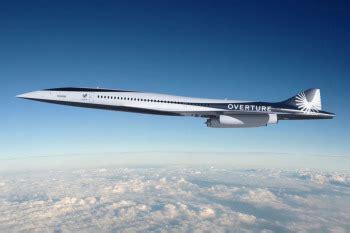
- Boom Supersonic – developing the Overture, a Mach 1.7 supersonic airliner.
- Exosonic – working on low-boom supersonic aircraft for commercial and executive travel.
- Spike Aerospace – focused on quiet, efficient supersonic jets.
However, Hermeus is the only major hypersonic contender targeting both military and civilian markets with a combined-cycle propulsion strategy. Its use of military-grade turbojet cores, combined with ramjets and precoolers, places it in a unique category of rapid innovation.
Challenges and the Road Ahead
Despite its momentum, Hermeus faces formidable challenges. Hypersonic flight introduces extreme heat loads, requiring exotic materials and advanced thermal protection systems. The regulatory framework for such high-speed aircraft is also underdeveloped, especially in terms of civil aviation certification.
Furthermore, infrastructure at airports must evolve to accommodate vehicles that operate at unprecedented temperatures and speeds. Safety, noise pollution, and emissions are all active concerns that Hermeus must address transparently.
Yet, with a team of aerospace veterans, strong backing, and military partnerships, Hermeus is in a better position than most to tackle these systemic hurdles.
Conclusion: The Dawn of Practical Hypersonic Flight
Hermeus is not just pushing the envelope — it is attempting to fold it in half. By uniting engineering innovation, agile development, and dual-market strategies, the company is laying the groundwork for a new era of air travel. If successful, Hermeus could enable a world where hypersonic transport is not the realm of science fiction, but a daily reality.
With Quarterhorse leading development, Chimera driving propulsion evolution, and Halcyon poised to disrupt global mobility, Hermeus stands at the frontlines of a transformative movement in aviation.
Whether enabling military dominance through Darkhorse or making Paris a 90-minute hop from New York, Hermeus is crafting a future where distance becomes irrelevant.