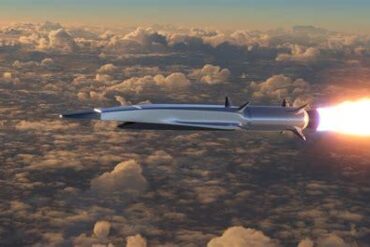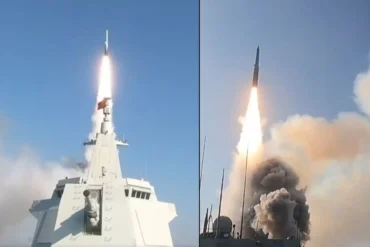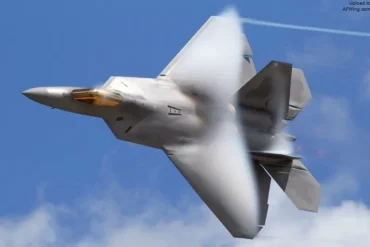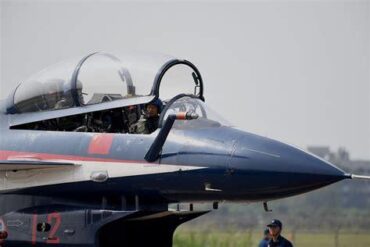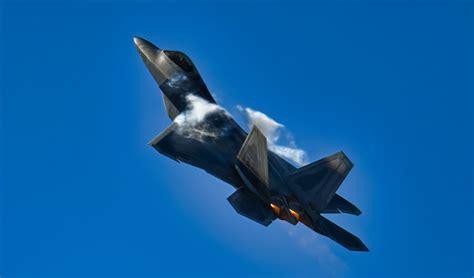
Air-to-air missiles (AAMs) have long dominated the realm of aerial combat, shaping strategic doctrines and operational planning across the globe. From short-range dogfights to beyond-visual-range (BVR) engagements, AAMs have evolved into decisive tools of air superiority. However, China’s recent development of a hypersonic AAM boasting an unprecedented 1,000 km range threatens to upend the foundational principles of air warfare. This capability, once operational, could significantly neutralize the perceived invincibility of stealth aircraft like the F-22 Raptor and B-21 Raider, forcing adversaries to rethink their air dominance strategies.
The Hypersonic Leap: China’s 1,000-KM Missile
Earlier this year, Chinese military scientists confirmed that development of a next-generation hypersonic air-to-air missile (AAM) had reached final testing phases. Boasting a range between 800 and 1,000 km, this missile represents a quantum leap in missile technology. For context, this range overshadows the Meteor missile’s 200 km, as well as the AIM-174B and PL-17, both capped around 400 km.
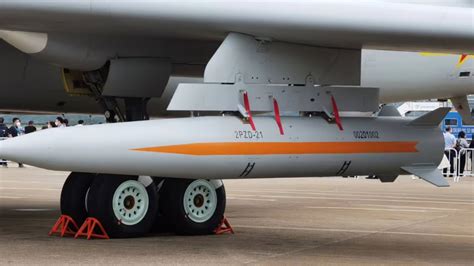
More alarming than range is its hypersonic velocity, reportedly enabling the missile to operate at speeds exceeding Mach 5. The implications are dire: even aircraft like the F-22 Raptor, capable of Mach 2 speeds, would struggle to evade such a threat once locked on. Large platforms such as B-21 Raider stealth bombers, AWACS, and refuelling tankers, which rarely exceed subsonic speeds, face near-certain destruction if targeted.
In a simulated 2023 air combat exercise conducted by the Northwestern Polytechnical University, this missile was reportedly launched from a sixth-generation Chinese fighter. After climbing to near-space altitudes, it plunged towards its target at hypersonic speeds, rendering evasive action nearly impossible.
Air Superiority Under Siege: Strategic Implications
The strategic fallout from this development could be seismic. With Chinese fighters theoretically able to neutralize threats without even leaving their national airspace, air superiority doctrines across the Indo-Pacific region will be forced into revision. The missile’s reach extends not only over Taiwan but deep into Japanese airspace, locking out adversary aircraft before they can pose a threat.
Defense analyst Patrícia Marins warns this missile may represent a paradigm shift. In her analysis, the range of this system is double that of the longest-range Russian AAMs and four to five times the best Western counterparts. She points out that modern aircraft radars rarely detect targets beyond 400 km. Consequently, China could rely on stealth drones and high-altitude reconnaissance platforms to acquire targets far beyond manned fighter detection capabilities.
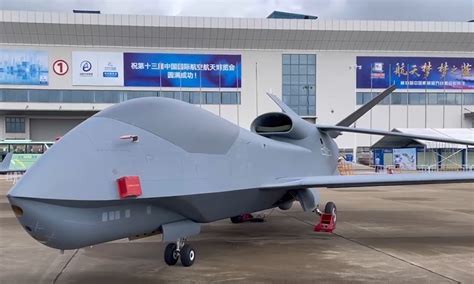
This strategy would see these drones loitering in near-space or stealth modes, feeding target data to missile-equipped fighters positioned within Chinese airspace. The result is a distributed, long-range kill network capable of pre-emptively denying airspace to adversaries.
How Air-to-Air Missiles Evolved Into Game Changers
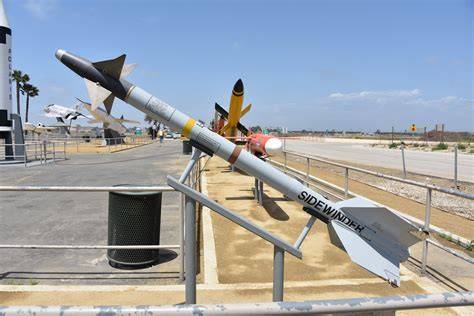
To understand how this missile could redefine air combat, one must examine the historical evolution of AAMs. From their inception in the 1950s with the AIM-9 Sidewinder and Soviet K-5, AAMs have dictated the outcomes of air battles. The Vietnam War showcased early AAM dominance, while the 1965 Indo-Pak war underlined their decisive edge.
Initially reliant on infrared seekers and rear-aspect engagement limitations, AAMs evolved through radar guidance and BVR capabilities. The AIM-120D, PL-15E, and Meteor pushed ranges beyond 200 km, transforming fighter aircraft into long-range shooters. Russia’s R-37M and China’s PL-17 pushed the envelope to 400 km, yet none approached the realm of 1,000 km.
However, even long-range BVR missiles today rely on target acquisition within their seeker limits. The hypersonic AAM’s integration with drones overcomes this constraint, allowing engagements well beyond radar horizons.
Why F-22 and B-21 Are Now Vulnerable
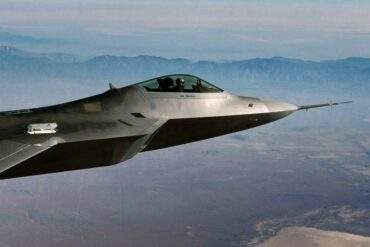
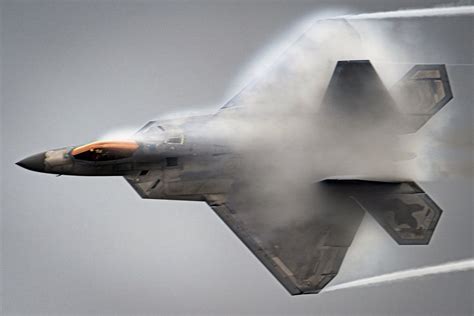
Stealth fighters like the F-22 Raptor and B-21 Raider rely on their low observability and maneuverability to survive contested environments. Yet, hypersonic missiles, traveling at speeds exceeding Mach 5 and guided by offboard data links from drones, nullify these advantages. Once fired, the missile’s kinetic energy and speed render evasion practically impossible.
The B-21, optimized for deep strike missions, does not possess the speed or agility to outmaneuver hypersonic threats. Similarly, the F-22, while the world’s premier dogfighter, was never designed to evade hypersonic, long-range missiles launched from beyond detection ranges. Even tanker and AWACS fleets, critical to sustaining long-range missions, are now under unprecedented threat.
Technological Enablers: What Makes This Missile Possible
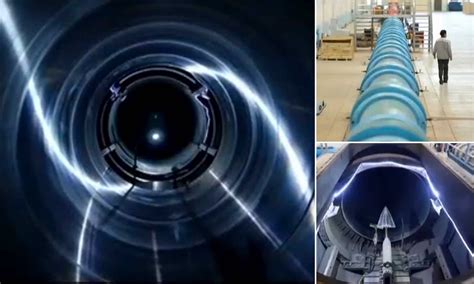
Chinese researchers report that the missile’s development leveraged extreme heat-resistant materials, tested in a Mars simulation tunnel to withstand airframe temperatures generated by hypersonic flight. Furthermore, the missile features high-precision seekers resistant to electronic countermeasures and plasma sheathing disruption at high speeds.
The missile also benefits from advancements in artificial intelligence (AI)-enabled targeting and control systems, ensuring optimal intercept courses and minimal reaction windows for targets. Combined with China’s investments in quantum communication networks and satellite data relays, this weapon could operate as part of a vast sensor-to-shooter kill chain.
Implications For Indo-Pacific Security
In the near term, if China’s 1,000 km hypersonic AAM enters operational service, regional air strategies across the Indo-Pacific will need urgent recalibration. Nations like Japan, Taiwan, South Korea, and even the United States will face an unprecedented A2/AD (Anti-Access/Area Denial) challenge extending far beyond China’s immediate airspace.
Carrier-based aviation, long the backbone of US power projection, would be particularly vulnerable. Hypersonic AAMs could target aircraft launched from carriers before they even approach contested airspace, potentially rendering carrier strike groups obsolete in certain operational theaters.
Moreover, strategic bombers like the B-21 would lose their ability to penetrate defended airspace without suffering unsustainable losses. This capability shift could embolden Chinese military planners and constrain adversary options in crisis scenarios.
Is It Real? The Skepticism Factor
Despite the ominous narrative, skepticism remains. China has a documented history of exaggerating weapons capabilities for deterrence and propaganda. The missile remains in the testing phase, with no confirmed operational deployment. Moreover, technological hurdles in hypersonic guidance, seeker accuracy at high speeds, and long-range target discrimination are non-trivial.
However, if even partially true, China’s 1,000 km hypersonic AAM represents a genuine threat to US and allied air superiority. As Western defense analysts monitor developments, rapid countermeasures such as directed energy weapons, hypersonic interceptors, and enhanced drone surveillance networks may become priorities.
Conclusion: Redefining Aerial Combat
In the words of Patrícia Marins, this Chinese hypersonic air-to-air missile could be the “game-changer of air dominance” in the 21st century. Capable of bypassing traditional defenses, negating stealth, and extending engagement envelopes exponentially, this missile introduces a new dimension to aerial warfare. The United States, Russia, and regional powers must now prepare for a future where air superiority no longer belongs exclusively to those who control the skies—but to those who can deny access from hundreds of kilometers away.