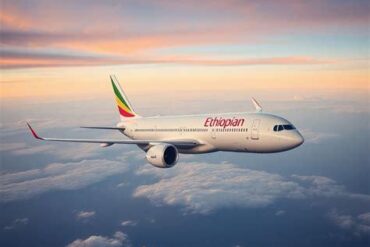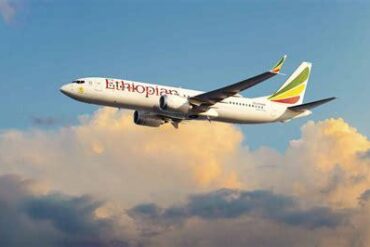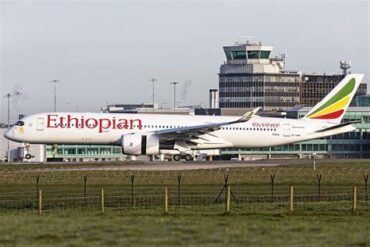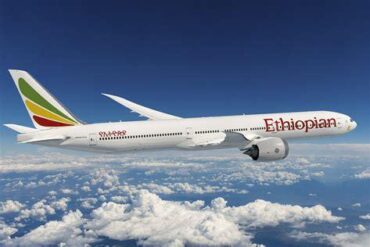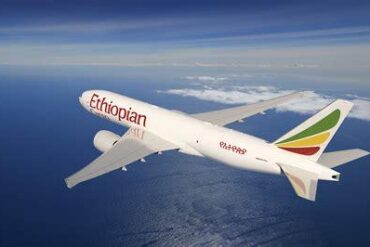
London Heathrow’s evening skies have long been the launching point for travelers bound for East Africa, and Ethiopian Airlines’ A350 business class service aims to blend modern comfort with the airline’s signature hospitality. From the moment you check in at Terminal 2 to the final descent into Addis Ababa, every touchpoint shapes the overnight journey. In our in-depth analysis, we explore how booking flexibility, lounge access, cabin design, inflight amenities, dining sequences, and crew performance coalesce into an experience that either soothes or frustrates the discerning business‑class passenger.
The allure of Ethiopian Airlines business class lies primarily in its award availability and Star Alliance partnerships, which open doors to Africa via competitive mileage redemptions. For a one‑way redemption on the A350 from London Heathrow (LHR) to Addis Ababa (ADD), 60,000 Aeroplan points plus US$337 in fees secures access to a fully flat seat, priority services, and lounge privileges. Yet beyond the numbers, the real measure of value emerges in how these benefits translate to tangible comfort and convenience on a seven‑hour red‑eye flight.
Despite ample award space and generous baggage allowances—two checked bags up to 50 lb each, a 15 lb carry‑on, and a personal item—several operational hiccups can erode the sense of luxury. Equipment swaps occasionally disrupt expectations, and the airline’s practice of routing some services through intermediate European cities can interrupt late‑night connections. For nonstop travelers, the A350-900 flight ET701, departing at 8:15 p.m. and arriving at 7 a.m., remains the gold standard, provided the promised staggered 1‑2‑1 layout is in place.
The ground experience at Heathrow begins in Zone D, where business‑class check‑in desks and a fast‑track security lane expedite the pre‑flight process. Lounge access is equally straightforward: Star Alliance business‑class passengers may choose between the United Club and the Singapore Airlines KrisFlyer lounge at Terminal 2’s B pier. The United Club impresses with a full‑service bar and a buffet of high‑quality hot and cold dishes—chicken meatballs, vegan chili, artisanal cheeses—that mirror a Polaris‑style environment. Yet boarding can feel chaotic when gate announcements conflict with priority‑lane instructions, hinting at procedural inconsistencies that foreshadow the inflight service.
Cabin Comfort and Seating Experience
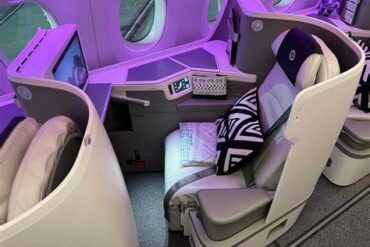
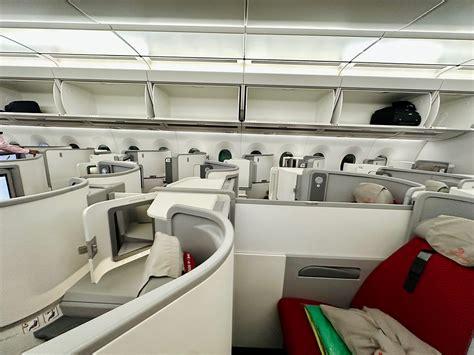
When Ethiopian reserves the newer staggered “Cloud Nine” seats, passengers enjoy direct aisle access from every berth. Unfortunately, equipment swaps sometimes substitute older Collins Aerospace Diamond seats in a 2‑2‑2 configuration, offering a 78‑inch lie‑flat bed and 22‑inch width but minimal privacy. The lack of high walls or partitions leaves seat pairs feeling exposed, and storage is confined to under‑foot compartments and a shallow armrest cubby. Adjustable headrests and foldable wings provide modest ergonomic support, but without a mattress pad, the firm surface and thick but unyielding headrest can hinder restorative sleep.
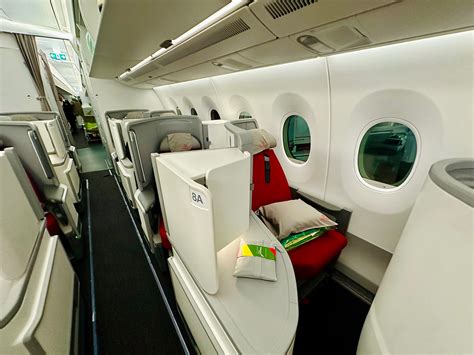
Mood lighting on the A350—designed to ease passengers through wake‑up and sleep cycles—is reduced to basic on/off settings on many Ethiopian aircraft, limiting the intended circadian benefits. Charging options include a USB‑A port and two universal outlets shared between adjacent seats, ensuring electronic devices remain powered throughout the flight. Lavatories, though compact, are well maintained, equipped with touchless sinks, branded cologne, and lotion in a nod to modern hygiene standards.
Amenities, Inflight Entertainment, and Connectivity
Upon boarding, each business‑class passenger discovers a thick pillow, lightweight comforter, and a distinct yellow amenity kit containing socks, dental kit, earplugs, eye mask, comb, pen, hand sanitizer, and lip balm. While thoughtful, the fluorescent interior of the eye mask fails to block ambient light, so bringing a personal mask may improve rest. Noise‑canceling headphones are notably absent; the supplied over‑ear set offers basic sound quality but cannot isolate cabin noise during boarding or meal service.
Inflight entertainment promises a catalogue of new‑release films—”Barbie,” “Magic Mike’s Last Dance,” and “The Equalizer 3” among them—but technical glitches often render the seat‑mounted screen inoperative. Crew efforts to reset the system may prove futile, forcing passengers to relocate to functioning units further aft. Even when connectivity works, selection remains limited to around 16 titles, hardly sufficient for a seven‑hour journey.
Wi‑Fi packages range from US$5 for one hour to US$25 for a full‑flight pass, yet in practice, download speeds hover near 2 Mbps, barely adequate for email and unusable for streaming. When connectivity falters, the promise of a digitally connected journey becomes an added frustration rather than a convenience.
Culinary Journey Above the Clouds
Ethiopian Airlines distinguishes itself on African‑origin flights with traditional stews and injera, but westbound services from London omit these cultural highlights. Instead, boarding begins with a choice of Trouillard Extra Selection Brut Champagne or fresh orange juice, served at your seat rather than on a cart. A bowl of kolo—nutty popped grains reminiscent of wheat puffs—accompanies an initial round of drinks, offering a flavorful amuse‑bouche before the main meal.
Dinner unfolds slowly. Appetizers of chicken reshmi tikka with mint chutney or marinated vegetables arrive more than an hour after takeoff, accompanied by salad and warm bread. Though both starters show promise, packaging details—plastic chutney tubs with lids—undermine the premium positioning. The printed wine list boasts a dozen varietals, yet crew members report only two options onboard: a local white and a French red. When entrees finally appear over two hours into the flight, choices are often depleted; quail breast in thyme sauce and seared salmon may be the sole survivors of the kitchen’s offerings. Overcooked vegetables and lukewarm presentation do little to salvage the lengthy service.
Dessert service is swift by comparison: a fresh fruit plate arrives on demand, though passengers craving a sweet finale may find the selection inert. To maximize sleep, breakfast is delayed until 45 minutes before landing, offering omelets, apple‑Gruyère crepes, or vegetable bhaji with mini naan. The crepes, intended as a decadent option, instead clash sweet batter with savory cheese, producing an unsettling flavor that lingers as the aircraft descends toward Bole International Airport.
Service Dynamics and Passenger Wellbeing
Ethiopian’s cabin crew are consistently described as warm, engaging, and enthusiastic. Yet enthusiasm cannot compensate for procedural inefficiencies that extend meal service across half the flight, keep cabin lights at full brightness, and overlook passengers’ desire for uninterrupted rest. A more effective approach would mirror Air Canada’s overnight protocol: pre‑ordering meals during boarding followed by consolidated tray service post‑takeoff, freeing passengers to settle into repose.
Minor missteps—confusing boarding announcements, delayed meal orders, and reluctance to adjust lighting—compound to create an experience where frustration eclipses comfort. In an era where every minute of sleep in business class holds value, these oversights become critical failings rather than inconsequential details.
Final Verdict and Comparative Outlook
Ethiopian Airlines’ A350 business class offers undeniable advantages: seamless award bookings, generous baggage policies, and a standout lounge at Heathrow. Yet the combination of outdated seating, unreliable IFE, sluggish Wi‑Fi, and protracted dining service falls short of the expectations set by competing carriers such as Emirates, Qatar Airways, and Turkish Airlines on similar routes.
For frequent flyers with transferable credit card points, Ethiopian remains an appealing option for Star Alliance connectivity to and throughout Africa. However, for those prioritizing privacy, cutting‑edge cabin design, and streamlined service on an overnight flight, alternatives may deliver greater value and comfort. Until Ethiopian modernizes its onboard product and refines its service cadence to honor passengers’ rest needs, travelers seeking a truly restorative business‑class experience may look elsewhere when bound for East Africa.