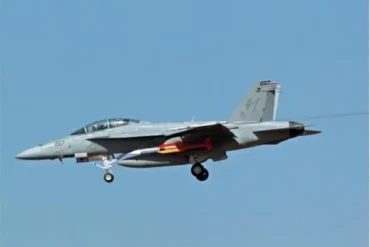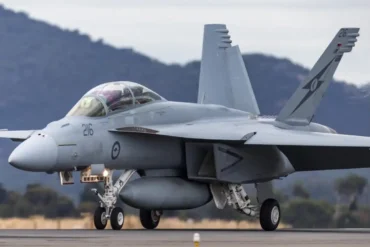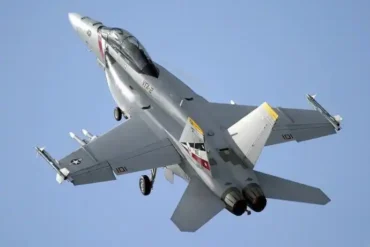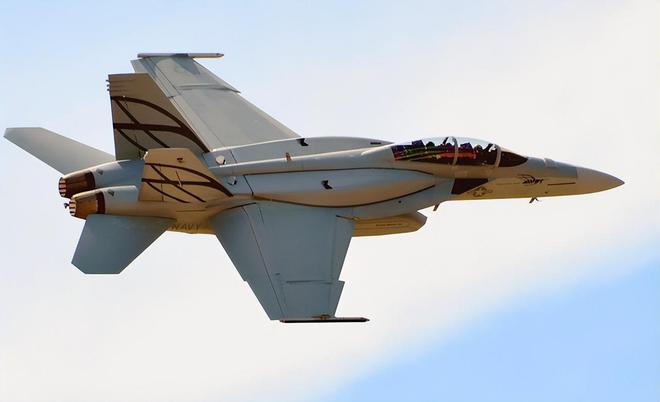
India’s interest in acquiring the F/A-18E/F Super Hornet stems from the need to replace its aging fleet of MiG-29K carrier-based fighters, which have been plagued by high maintenance costs, frequent failures, and low operational availability. The Indian Navy launched a carrier-borne fighter procurement process in 2018, aiming to equip its INS Vikrant aircraft carrier with a more capable multirole fighter. The final contenders in this competition were the Boeing F/A-18E/F Block III Super Hornet from the United States and the Dassault Rafale M from France.
Advantages and Upgrades of the F/A-18 Super Hornet
Carrier Suitability and Performance Enhancements
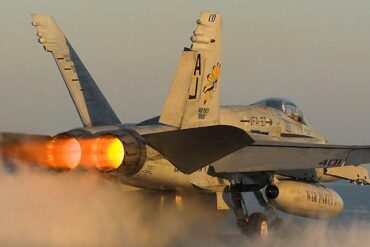
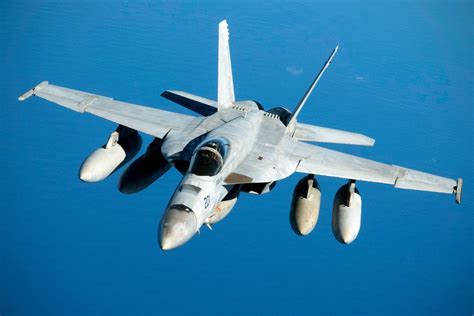
A major advantage of the F/A-18 Block III is its ability to operate from India’s ski-jump aircraft carriers. Boeing has conducted extensive tests, demonstrating the Super Hornet’s short takeoff capability from land-based ski-jump ramps, proving its compatibility with India’s CATOBAR (Catapult Assisted Take-Off but Arrested Recovery) carriers.
- Extended Combat Radius: The Block III version includes conformal fuel tanks, increasing its range to approximately 944 kilometers in combat scenarios.
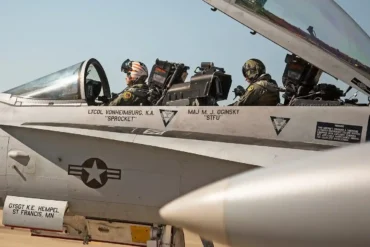
- Improved Avionics: It features an advanced digital cockpit, a tactical targeting network technology (TTNT) data link, and the ability to integrate with India’s P-8I Poseidon maritime patrol aircraft for enhanced situational awareness.
- Enhanced Airframe Durability: Boeing claims the airframe lifespan of Block III has been extended to 10,000 flight hours, offering greater sustainability for long-term naval operations.
F/A-18 vs. Dassault Rafale M: The Key Battle
Comparison of Operational Capabilities
The Dassault Rafale M, which is already in service with the Indian Air Force (IAF) in its land-based variant, presents a strong competition. However, it has significant drawbacks for carrier operations:
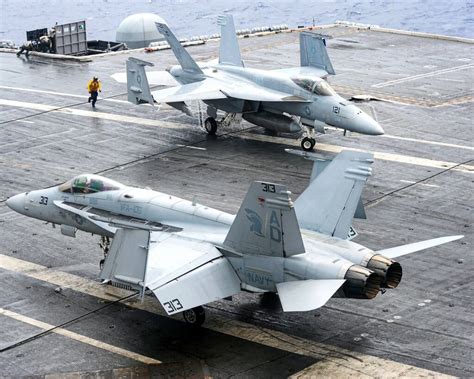
- Foldable Wings: Unlike the F/A-18, the Rafale M does not feature foldable wings, creating compatibility issues with India’s aircraft carrier elevators and potentially requiring modifications.
- Higher Operational Costs: The Rafale M has a higher per-hour operational cost compared to the Super Hornet, making long-term fleet sustainability a concern.
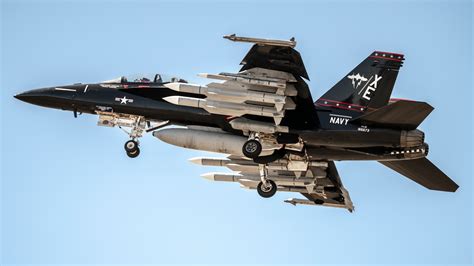
- Weapons Integration: The F/A-18 is compatible with a wide range of U.S.-made weapons, including the AGM-154 Joint Standoff Weapon (JSOW) and AIM-120 AMRAAM, which India has already procured for other platforms.
Geopolitical Considerations and Defense Cooperation
Beyond pure technical capabilities, the political dimension of the deal is crucial. India and the United States have strengthened defense ties under agreements like COMCASA (Communications Compatibility and Security Agreement) and BECA (Basic Exchange and Cooperation Agreement), facilitating deeper integration of U.S. military technology into India’s defense infrastructure.
- The United States’ offer includes local production under the “Make in India” initiative, with Boeing committing to $3.6 billion in investments.
- In contrast, France’s Rafale M proposal lacks a firm local manufacturing component, making it less attractive for India’s defense industry development.
Strategic Challenges and Considerations
Geopolitical and Military Balance
India’s shift towards the F/A-18 would signal a move away from Russian-made platforms, reducing reliance on Moscow’s defense exports. However, concerns remain regarding the Super Hornet’s actual battlefield effectiveness in the Indian Ocean and Indo-Pacific theaters:
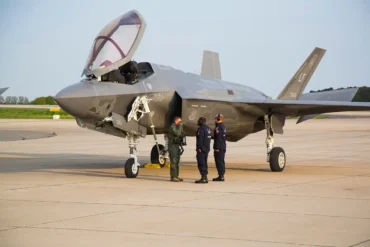
- Survivability Against Chinese Threats: Some defense analysts argue that the Super Hornet lacks stealth capabilities, making it vulnerable to China’s J-35 stealth fighter and advanced anti-air systems.
- Carrier Strike Capability: The absence of a dedicated carrier-based airborne early warning (AEW) aircraft like the U.S. E-2D Hawkeye could weaken India’s naval air superiority.
- Dependence on U.S. Technology: Future software and hardware upgrades would require U.S. approval, potentially restricting India’s autonomy in modifying and upgrading the aircraft.
Latest Developments and Future Outlook
Boeing has announced a partnership with General Electric (GE) to manufacture F414 engines in India, which power both the F/A-18 Super Hornet and India’s indigenous Tejas Mk2 fighter. This collaboration is seen as a key incentive to boost local aerospace manufacturing.
- Projected Delivery: If India selects the F/A-18, initial deliveries are expected by 2028.
- Technology Transfer Uncertainty: While Boeing has promised industrial cooperation, questions remain regarding the extent of actual technology transfer.
- Potential Mixed Fleet Strategy: Analysts suggest India might procure a mix of F/A-18 and Rafale M to diversify risks and maintain flexibility.
Conclusion
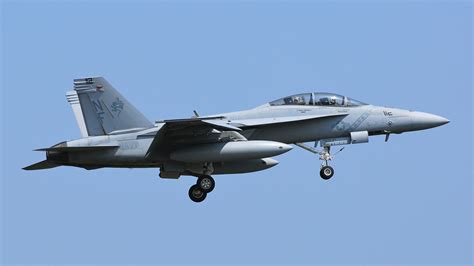
The selection of the F/A-18E/F Super Hornet by the Indian Navy represents a strategic decision that extends beyond mere fighter performance. While the Super Hornet offers superior carrier compatibility, advanced avionics, and a potential local production line, concerns regarding its long-term survivability and reliance on U.S. technology remain key issues.
Ultimately, India’s naval combat effectiveness will depend not just on the aircraft but on its ability to integrate these fighters into a modernized carrier battle group with robust surveillance, data-sharing, and missile defense capabilities.
FAQ
1. Why is India replacing the MiG-29K with the F/A-18?
The MiG-29K has faced significant operational challenges, including high maintenance costs, poor serviceability, and frequent engine failures. The F/A-18 Super Hornet offers better reliability, enhanced avionics, and superior compatibility with India’s aircraft carriers.
2. What advantages does the F/A-18 Block III have over the Rafale M?
The Super Hornet has foldable wings, allowing seamless operation on INS Vikrant, unlike the Rafale M, which requires structural modifications. Additionally, it has lower operational costs and better weapons integration with existing Indian platforms.
3. When will India finalize its decision on the Super Hornet?
India is expected to make a final decision by late 2025, with initial deliveries targeted for 2028. The process will depend on final operational evaluations, cost considerations, and geopolitical negotiations with the U.S. and France.
The selection of India’s next-generation carrier-borne fighter is a critical milestone in its naval aviation strategy, shaping the country’s defense capabilities for the next several decades.