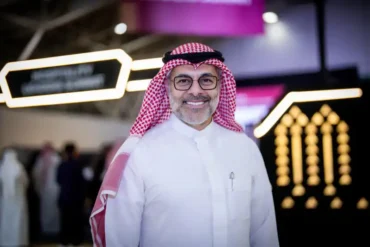
When Chief Financial Officer Mahmood Habib took the stage at the Future Hospitality Summit 2025, he presented an ambitious roadmap for Amsa Hospitality that balances robust financial returns with environmental stewardship and cultural authenticity. In a candid discussion with Travel and Tour World, Habib detailed the rigorous analytical framework that guides every investment decision, the nuances of Saudi Arabia’s diverse markets, and the company’s pioneering approach to marrying profitability with sustainability. His remarks painted a clear picture of how Amsa Hospitality intends to lead the industry into a new era of responsible growth.
Investment Criteria: Seeking Unique Opportunities with Strong Returns
At the core of Amsa Hospitality’s strategy lies a disciplined investment filter designed to identify projects that deliver both exceptional guest experiences and compelling financial metrics. Habib explained that the process begins with a thorough assessment of location, focusing on high-potential markets such as Riyadh, Mecca, and Medina, alongside select secondary cities that exhibit untapped demand. Once geography is confirmed, the team evaluates operator quality and star rating alignment, ensuring that brand partnerships and service standards resonate with target demographics. The final layer involves in-depth financial modeling, where conservative assumptions around Average Daily Rate (ADR) and occupancy are stress-tested against multiple scenarios to safeguard against overoptimistic projections. This three-tiered approach—location, operator, financials—ensures that each opportunity undergoes rigorous scrutiny before capital is committed.
City-Specific Perspectives: Tailoring Hospitality to Local Demand
Understanding that each Saudi city possesses its own character and visitor profile, Habib underscored the importance of tailoring hotel concepts to local market dynamics. In Mecca and Medina, for instance, demand is overwhelmingly driven by religious tourism, requiring properties that offer efficient pilgrimage-focused services, spacious prayer facilities, and proximity to holy sites. Conversely, Riyadh and Jeddah cater primarily to business travelers, demanding upscale conference facilities, seamless connectivity, and urban luxury. Beach destinations such as the Red Sea coast call for resort-style amenities—private villas, water sports access, and wellness spas. By mapping each city’s unique demand drivers, Amsa Hospitality designs properties that not only satisfy guest expectations but also contribute to the enhancement of local lifestyles and economies.
Guest Preferences: Catering to Generation Z and Beyond
Today’s travelers, especially members of Generation Z, are redefining the hospitality landscape with a hunger for authenticity and novelty. Habib noted that these younger travelers eschew generic luxury in favor of one-of-a-kind experiences—from pop-up culinary events to immersive cultural workshops. Recognizing Saudi Arabia’s youthful demographic profile, Amsa Hospitality conducts granular demand-supply analyses across its target cities, comparing historical arrival patterns, length of stay, and spending profiles. By aligning product offerings—such as themed boutique hotels or tech-driven co-living spaces—with emerging preferences, the company aims to capture market segments that traditional operators may overlook. This customer-centric ethos ensures that each Amsa property resonates with local culture while delivering the experiential edge that modern guests demand.
Demand-Supply Analysis: Building Robust Financial Projections
Amsa Hospitality’s finance team employs a data-driven methodology to forecast key performance indicators such as ADR and occupancy rates. Habib detailed how the group reviews multi-year historical data for each market, identifying seasonal peaks and troughs to construct conservative financial models. For a proposed four-star upscale hotel, for example, the team might apply a discount to historical peak ADRs while incorporating conservative occupancy assumptions to buffer against unforeseen downturns. These scenarios are then stress-tested against various economic and geopolitical shocks, allowing Amsa to calibrate its return expectations with precision. The result is a transparent projection framework that mitigates downside risk without sacrificing upside potential.
Managing External Risks: Seasonality and Geopolitical Factors
The hospitality industry is uniquely vulnerable to external variables such as weather fluctuations and global political events. Habib emphasized that Amsa Hospitality integrates seasonality analyses from benchmark destinations—like the summer crowds of Venice and the winter lulls of Barcelona—into its Saudi forecasts. By modeling how temperature extremes, religious holidays, and political developments have historically impacted demand, the finance team can anticipate revenue swings and adjust room rates, staffing levels, and marketing spend accordingly. This proactive stance enables Amsa to navigate low-season dips, capitalize on peak periods, and maintain operational resilience amid shifting external conditions.
Analytical Rigor: Leveraging AI, Machine Learning, and Partnerships
To stay at the forefront of forecasting accuracy, Amsa Hospitality continuously refines its analytical toolkit. Habib highlighted the integration of AI and machine learning algorithms to detect emerging travel patterns in real time, such as shifts in booking lead times or social-media sentiment around specific destinations. In parallel, the company collaborates closely with tourism bodies and regional stakeholders to access the latest industry data and regulatory insights. This dual approach—advanced technology paired with strategic partnerships—ensures that Amsa’s projections remain agile and informed, allowing the team to pivot swiftly in response to new trends or policy changes.
Profitability with Sustainability: A Holistic Approach to Hotel Development
Sustainability is no longer a mere add-on; it has become integral to the financial equation. Habib pointed out that energy-efficient systems, such as solar panels and smart HVAC controls, significantly reduce operating expenses over a property’s lifecycle. Meanwhile, local sourcing of food, materials, and services not only supports Saudi supply chains but also resonates with eco-conscious travelers. Each new Amsa development incorporates green certifications, water-saving fixtures, and waste-reduction programs designed to minimize environmental impact. Far from undermining profitability, these initiatives deliver long-term cost savings and bolster brand reputation, attracting guests who prioritize responsible tourism.
Future Trends: Experiential Travel and Technological Innovation
Looking ahead, Habib identified experiential travel as the defining trend of the next decade. From desert glamping retreats to urban art-installations in hotel lobbies, Amsa Hospitality intends to offer curated programs that immerse guests in local culture and community engagement. On the technology front, the adoption of smart rooms, AI-powered customer service, and contactless check-in will further personalize the guest journey, reducing friction and enhancing satisfaction. By marrying bespoke experiences with seamless digital interfaces, Amsa aims to set a new benchmark for hospitality that is both deeply human and rigorously efficient.
In sum, Mahmood Habib’s presentation at the Future Hospitality Summit 2025 reaffirmed Amsa Hospitality’s commitment to a strategic investment framework that prioritizes strong returns, risk management, and sustainable innovation. Through meticulous data analysis, city-tailored concepts, and forward-looking partnerships, the company is poised to lead the region’s hospitality renaissance—delivering value for investors, communities, and guests alike.