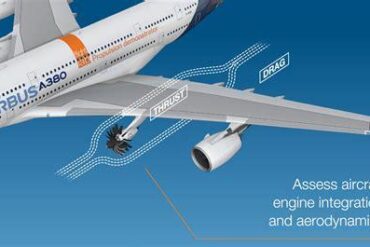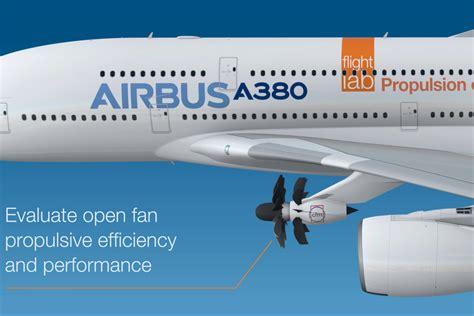
The return of the Airbus A380 to the center of aerospace innovation marks an unexpected new chapter for the world’s largest passenger aircraft. Airbus is preparing to transform the first A380 prototype ever built into a flying laboratory for testing an advanced open fan engine technology developed with CFM International. The project represents one of the aviation industry’s most ambitious efforts to rethink commercial aircraft propulsion and reduce emissions from future air travel.
The A380 was selected because of its unique characteristics. Its enormous size, four-engine layout, and spacious internal structure provide engineers with the room required for advanced flight-test equipment. Unlike a conventional twin-engine aircraft, the A380 can continue operating during testing even if one propulsion system is unavailable, making it a suitable platform for evaluating experimental technologies in real-world conditions.

Airbus and CFM Advance the Revolutionary Open Fan Engine Program
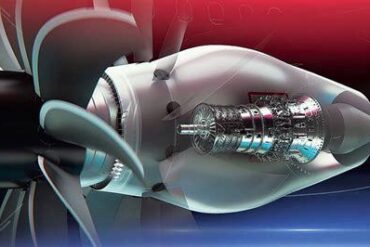
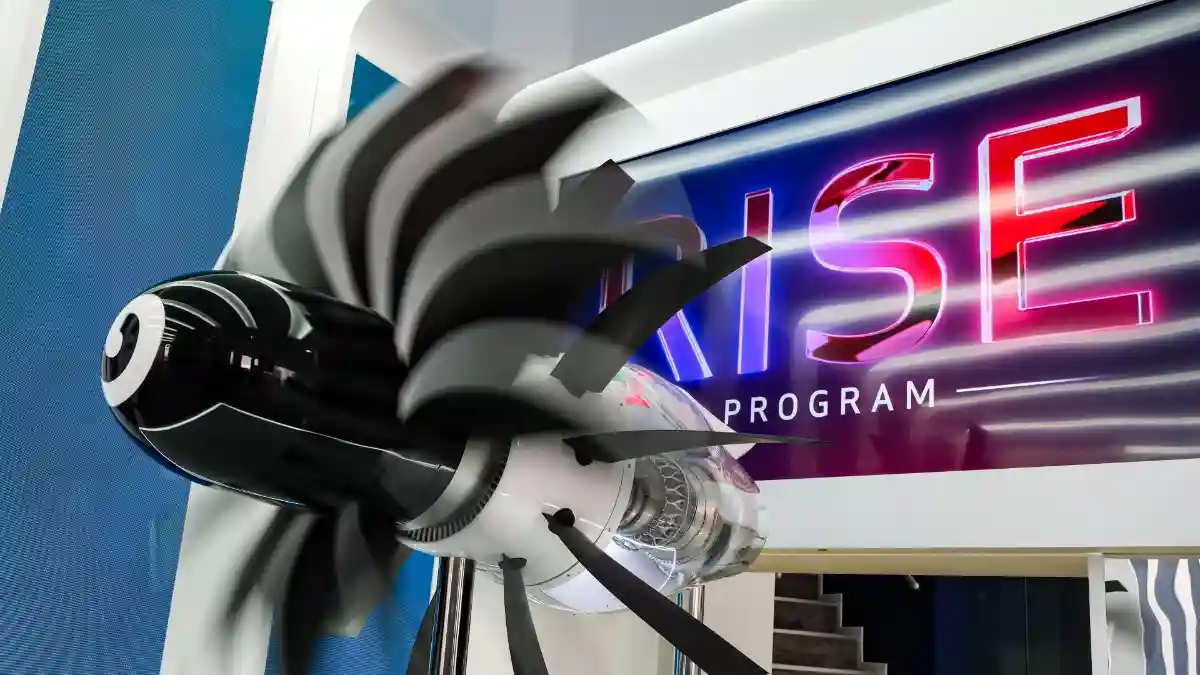
The upcoming testing campaign is part of the Revolutionary Innovation for Sustainable Engines (RISE) program, a collaboration between Airbus and CFM International focused on developing cleaner and more efficient aircraft propulsion. The open fan concept is designed to deliver significant fuel savings by replacing the traditional enclosed turbofan architecture with a large exposed fan system.
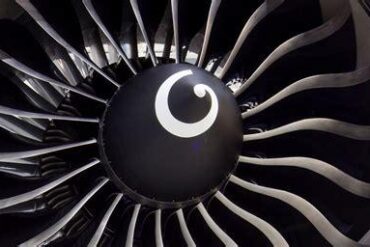
Traditional jet engines have relied on nacelles surrounding the fan for decades. The open fan design removes this outer structure, allowing larger fan blades to move greater amounts of air more efficiently. By increasing propulsion efficiency while maintaining commercial aircraft performance, the technology could become a major step toward reducing aviation’s environmental footprint.
Airbus and CFM believe the technology has the potential to improve fuel efficiency by around 20% compared with current-generation narrowbody aircraft engines. The development effort is also supported by European research initiatives, including the Open Fan for Environmental Low Impact of Aviation (OFELIA) project, which aims to accelerate the transition toward lower-carbon aviation.
The first A380 flight test aircraft is expected to begin operations with the open fan demonstrator toward the end of the decade. Although the technology is being developed primarily for future single-aisle aircraft, the A380 provides the ideal platform to validate performance, reliability, and operational safety.
Why the Airbus A380 Is the Perfect Experimental Aircraft
Using the A380 as a technology demonstrator highlights how older aircraft can continue contributing to aviation innovation. While airlines have increasingly moved toward smaller, more efficient twin-engine aircraft for long-distance operations, the A380 remains valuable as an engineering test platform because of its unmatched size and capabilities.
The aircraft’s four-engine configuration gives researchers additional flexibility during testing. Engineers can collect data from the experimental propulsion system while relying on existing engines to maintain safe flight operations. The wide-body aircraft also offers significant space for sensors, monitoring equipment, and data-recording systems required during complex flight evaluations.
The choice also creates a symbolic connection between Airbus’ past and future. The A380 represented the peak of traditional large-scale commercial aviation, while the open fan engine represents a possible future where aircraft achieve greater efficiency with radically different propulsion systems.
Open Fan Technology Could Redefine Future Aircraft Engines
The open fan design is one of the most significant departures from conventional jet engine development in decades. By exposing the fan blades, engineers can create a propulsion system with a much higher bypass ratio, allowing more thrust to be generated with less fuel consumption.
However, the technology also introduces challenges. Engineers must address concerns involving noise reduction, aerodynamic performance, safety, and public acceptance. Open fan engines require careful design to manage external fan blades, potential bird strike risks, and passenger comfort.
CFM and Airbus are developing solutions to overcome these obstacles while maintaining the benefits of the design. If successful, the technology could enter service on next-generation aircraft during the middle of the 2030s, potentially changing the way commercial aircraft are powered.
Hybrid-Electric Research Adds Another Layer to Aviation Innovation
Alongside the open fan program, Airbus is also participating in research projects exploring hybrid-electric propulsion. One major initiative is the SWITCH (Sustainable Water Injecting Turbofan Comprising Hybrid-Electrics) concept, which investigates ways to combine advanced turbofan technology with hybrid-electric systems.
The SWITCH project is expected to explore technologies that could reduce fuel consumption by approximately 25% while lowering carbon dioxide and nitrogen oxide emissions. The program involves several major aerospace companies, including MTU Aero Engines, Collins Aerospace, GKN Aerospace, Pratt & Whitney, and Airbus.
Hybrid-electric propulsion uses batteries or fuel cells to support aircraft energy requirements, improving efficiency during certain phases of flight. Although fully electric commercial aircraft remain limited by current battery technology, hydrogen fuel cells and hybrid systems could provide important pathways toward cleaner aviation.
Airbus is also continuing to expand the use of sustainable aviation fuel (SAF), with current aircraft capable of operating with significant SAF blends and future developments expected to increase compatibility.
A New Future for Commercial Aviation Begins With the A380
The decision to use the first Airbus A380 as an open fan engine testbed demonstrates the aerospace industry’s commitment to finding new solutions for sustainable flight. The aircraft that once represented the era of ultra-large passenger jets may now help define the next generation of efficient propulsion.
While many technical challenges remain, the partnership between Airbus and CFM could reshape commercial aviation by introducing engines that consume less fuel, produce fewer emissions, and support the industry’s long-term climate goals. The upcoming A380 test flights will provide valuable insight into whether open fan technology can move from experimental research into the aircraft of tomorrow.