The Boeing 747 has always lived at the intersection of brute force and elegance, a machine that made the impossible routine and the distant ordinary. When the 747-8 emerged as the final and most advanced chapter in this lineage, it carried not just a stretched fuselage and modernized wings, but also a quiet revolution beneath those wings. For the first time in the Jumbo Jet’s long life, Boeing offered no engine choice. The aircraft flew with a single, exclusive powerplant: the GE GEnx-2B. That decision was neither sentimental nor accidental. It was the product of shifting market physics, engineering pragmatism, and a sober reading of aviation’s future.
The 747-8 arrived at a moment when the commercial aviation world was shedding old certainties. Twin-engine widebodies were rewriting the economics of long-haul travel, regulators were rewriting ETOPS rules, and airlines were rewriting fleet strategies. The four-engine airliner was no longer the default solution for global range and payload. Against that backdrop, Boeing had to design a final Jumbo that could survive in a shrinking niche while borrowing as much proven technology as possible. Engine strategy became the fulcrum of that effort.
In earlier decades, engine competition had been a selling point. Airlines could pit Pratt & Whitney, General Electric, and Rolls-Royce against one another, extracting favorable pricing and tailoring performance to specific missions. By the time the 747-8 was conceived, that logic had inverted. Complexity, cost, and time were now liabilities. Boeing needed certainty, speed, and leverage more than optionality.
The End of the Multi-Engine Era for the Jumbo
From the original 747-100 onward, Boeing had treated engines as a competitive marketplace. The JT9D, CF6, and RB211 families each left their fingerprints on different generations of the aircraft. This diversity helped the 747 dominate global fleets for decades, but it also came at a price. Each engine option required unique pylons, nacelles, systems integration, flight testing, and certification campaigns. In the high-volume years of the 1970s through the 1990s, those costs were easily amortized. By the early 2000s, they were not.
Boeing’s internal forecasts for the 747-8 were brutally realistic. The company expected roughly 300 total sales, split between passenger and freighter variants. That number alone changed everything. Supporting two or three engine types would have multiplied non-recurring costs while delivering diminishing returns. Certification alone for multiple engines would have consumed hundreds of millions of dollars and years of schedule margin Boeing no longer had.
The competitive pressure from Airbus sharpened this calculus. The A380 had been launched with significant fanfare and early orders, forcing Boeing to respond quickly to protect its high-capacity segment. Speed to market mattered. Every additional engine option would have slowed the program and diluted resources already stretched by the ambitious 787 Dreamliner.
Why GE Stood Apart at the Right Moment
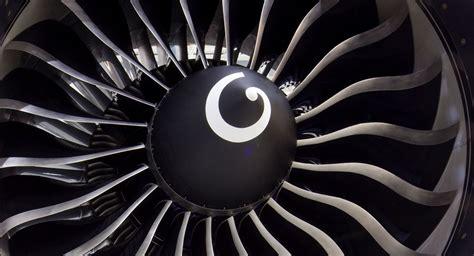
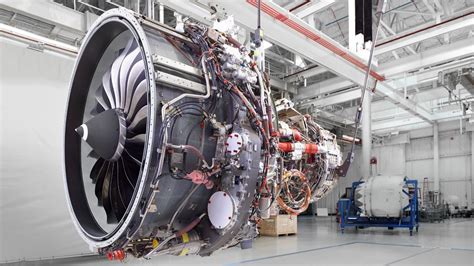
Among the three historic engine suppliers, GE Aerospace occupied a uniquely advantageous position. By the time serious design work on the 747-8 began, GE was deeply embedded in Boeing’s most important new program: the 787. The GEnx-1B, developed for the Dreamliner, represented a generational leap in materials, aerodynamics, and efficiency. Composite fan blades, advanced cooling, and a modern core architecture were already paid for, tested, and maturing.
This created an opportunity Boeing could not ignore. By adapting the GEnx architecture for the 747-8, Boeing could leverage billions of dollars of existing investment while minimizing new technical risk. The resulting engine, designated GEnx-2B, would share roughly 80 percent of its line-replaceable units with its 787 sibling. That commonality promised lower development costs, simplified supply chains, and long-term maintenance advantages for operators.
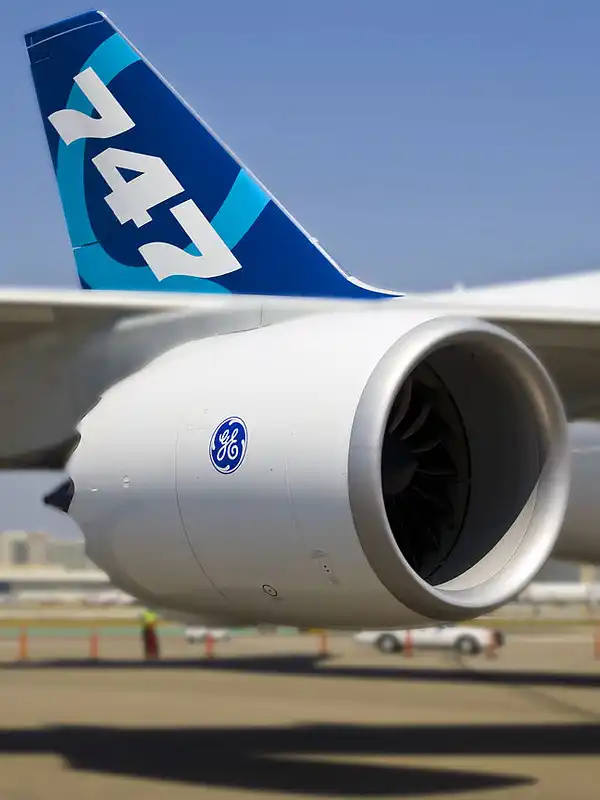
GE also brought something less tangible but equally valuable: confidence. The company had dominated late-model 747 sales with the CF6-80C2 on the 747-400, proving both performance and reliability at scale. For Boeing, GE represented continuity during a period of strategic upheaval.
Engineering a GEnx for a Four-Engine Giant
Adapting the GEnx to the 747-8 was not a matter of simple resizing. The Dreamliner’s GEnx-1B had been designed for a bleedless architecture, relying heavily on electrical systems. The 747-8, by contrast, retained traditional pneumatic systems for pressurization and anti-icing. This required a fundamental reintroduction of bleed air capability into the engine design, carefully balanced to avoid efficiency penalties.
Physical constraints also shaped the GEnx-2B. The 747’s landing gear geometry and wing height imposed strict limits on fan diameter. GE reduced the fan size from 111 inches to approximately 105 inches, trimming thrust accordingly. In a four-engine configuration, raw thrust was less critical than efficiency, redundancy, and weight optimization. GE simplified the low-pressure compressor and turbine stages, shaving mass while preserving performance margins.
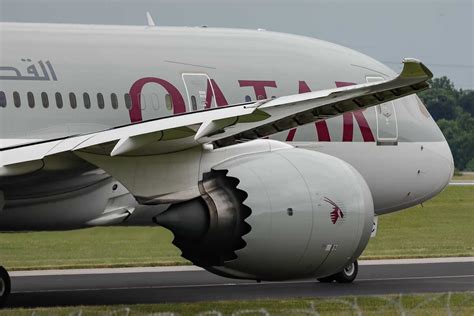
Noise reduction became another focal point. The 747-8 was expected to meet far stricter airport noise regulations than its predecessors. Serrated chevrons on the nacelles, refined airflow management, and optimized exhaust geometry combined to reduce the noise footprint by roughly 30 percent compared to the 747-400. For an aircraft of its size, this was a remarkable achievement and a key factor in securing airport access worldwide.
Pratt & Whitney’s Strategic Exit
Pratt & Whitney’s absence from the 747-8 program was not a rejection so much as a deliberate withdrawal. By the early 2000s, P&W had staked its future on Geared Turbofan (GTF) technology. This was a transformative bet aimed squarely at the high-volume narrowbody market, where efficiency gains could be multiplied across thousands of aircraft.
Developing a new widebody engine for the 747-8 would have required billions in additional investment, diverting resources from the GTF at a critical moment. The economics were unforgiving. Even a successful bid would have yielded a modest slice of a small production run, with little opportunity to scale. P&W’s leadership correctly judged that the four-engine widebody market was in structural decline.
There was also a practical disadvantage. Unlike GE, Pratt & Whitney did not have a modern widebody core readily adaptable to the 747-8. Starting from scratch would have been both expensive and slow, undermining Boeing’s need for rapid program execution.
Rolls-Royce and the Limits of Ambition
Rolls-Royce, long a romantic favorite among 747 enthusiasts, faced a different constraint: overload. At the time the 747-8 engine decision was taking shape, Rolls-Royce was juggling an extraordinary portfolio. The Trent 1000 was competing head-to-head with the GEnx on the 787. The Trent 900 was battling the Engine Alliance on the A380. Most critically, the Trent XWB had been selected as the exclusive engine for the Airbus A350, a program with far greater long-term potential than the 747-8.
Each of these engines demanded massive engineering, testing, and financial resources. Adding another widebody adaptation for a low-volume aircraft would have stretched Rolls-Royce beyond reasonable limits. Strategic focus mattered. The A350 represented the future of long-haul twin-engine travel, while the 747-8 represented the elegant sunset of a fading paradigm.
Certification, Cost, and the Tyranny of Time
Beyond corporate strategy and engineering elegance lay a more prosaic reality: certification. Every engine variant requires exhaustive testing across thousands of flight hours, environmental conditions, and failure scenarios. Multiply that by two or three engine options, and the costs balloon rapidly.
By committing to a single engine supplier, Boeing slashed certification complexity. Regulators dealt with one propulsion system, one integration philosophy, and one performance envelope. This accelerated approval timelines and reduced the risk of late-stage surprises. For a program already under pressure from market skepticism, this simplification was invaluable.
Financially, the decision likely saved Boeing hundreds of millions of dollars in non-recurring costs. Those savings helped keep the 747-8 viable at all, especially as resources were siphoned toward the troubled early years of the 787 program.
A Technical Triumph in a Shrinking Market
Commercially, the 747-8 never met Boeing’s hopes. Only 155 aircraft were delivered before production ended, the majority as freighters. Yet judging the engine decision solely by sales numbers misses the deeper story. The GEnx-2B proved to be a robust, efficient, and reliable powerplant. Early issues with ice crystal icing and component lubrication were identified and resolved through software updates and material changes, demonstrating the maturity of GE’s support infrastructure.
In service, the engine delivered on its promises. Fuel burn improved by approximately 15 percent over the CF6-80C2, emissions fell, and noise levels dropped dramatically. Dispatch reliability climbed into the high 99 percent range, a critical metric for cargo operators whose margins depend on predictability.
The Deeper Meaning of Boeing’s Choice
Boeing’s selection of GE as the exclusive engine supplier for the 747-8 was not an act of favoritism or nostalgia. It was a clear-eyed response to an unforgiving landscape. The company chose the partner that minimized risk, maximized leverage, and aligned with its broader technological trajectory.
In doing so, Boeing acknowledged a hard truth: the era that made the 747 possible had passed. The 747-8 was never meant to restart that era. It was meant to conclude it with dignity, efficiency, and technical excellence. The GEnx-2B, humming quietly beneath those immense wings, became the final expression of that philosophy.
The Queen of the Skies deserved a final engine worthy of her legacy. In choosing GE, Boeing ensured that the last Jumbo would not merely fly, but fly well, carrying the accumulated wisdom of half a century of aerospace progress into a graceful sunset.