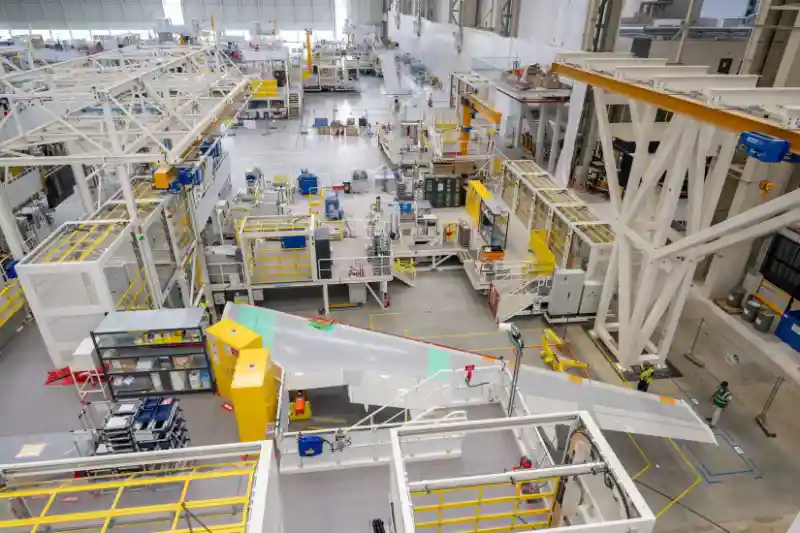
Airbus is bringing a former A380 wing production facility back into active service as it races to expand production of the A321neo. The European aircraft manufacturer announced on September 21 that it will invest $200 million (£150 million) to transform its Broughton facility in North Wales, turning infrastructure once associated with the Superjumbo into an important new part of the A321neo production system.
The investment is expected to create 480 new jobs in the United Kingdom later this year, increasing Airbus’s workforce in the local area to almost 6,500 employees. More importantly for Airbus, the revived factory will add badly needed wing-production capacity at a time when the company’s narrowbody order book remains exceptionally large. The A321neo and its derivatives have become central to Airbus’s commercial aircraft strategy, creating a manufacturing challenge that extends far beyond final assembly lines.
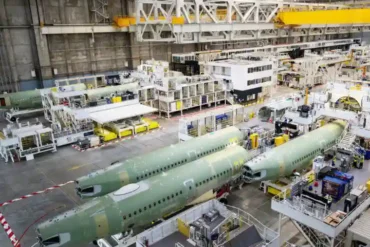
The Broughton facility will be known as Airbus’s new “Home of Wings”, reflecting the site’s longstanding role in the company’s global wing-production network. Once the conversion is complete, the factory is expected to contain six wing production jigs, an equipping line, and a dedicated paint shop for A321-family wings. Airbus says the manufacturing environment has been designed with employees involved directly in the production process, incorporating technology and ergonomic improvements intended to make the expanded operation more efficient.
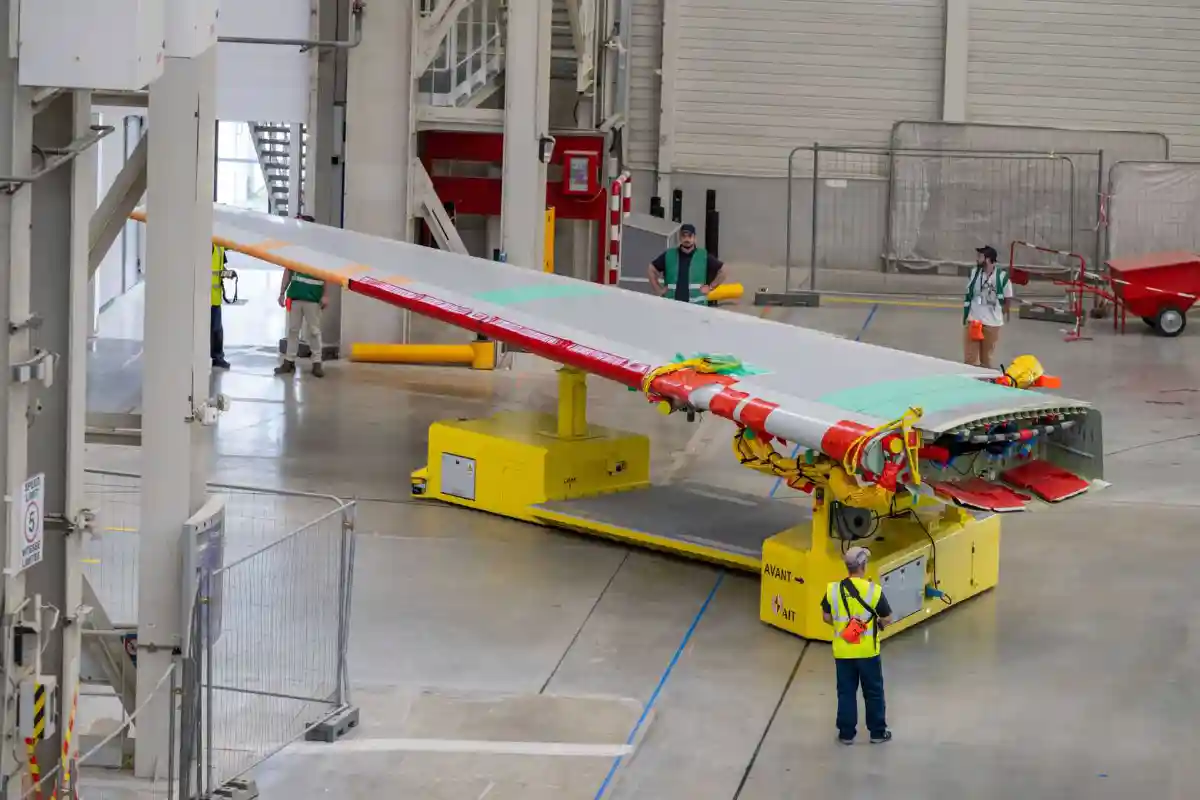
The first A321neo wing is already well underway at the revitalized facility, giving Airbus a visible starting point for its latest production expansion. The six jigs are expected to reach full-rate output by the end of 2026, supporting the manufacturer’s broader ambition to reach a global production rate of 75 commercial aircraft per month. Airbus’s wing operations are particularly important because wings are among the most technically demanding major structures on a modern airliner, requiring extensive systems integration, precision manufacturing, testing, and logistical coordination before they reach final assembly.
A321neo Demand Is Driving Airbus Production Expansion
The scale of the challenge becomes clearer when the A321neo backlog is considered. Airbus has an overall A320-family order book of roughly 5,700 aircraft, with the A321neo accounting for approximately 70% to 75% of that total. That makes the aircraft the dominant product in Airbus’s narrowbody portfolio and explains why the manufacturer is investing heavily in additional industrial capacity.
Demand for the A321neo has been particularly strong because the aircraft occupies an increasingly valuable position between traditional single-aisle jets and smaller widebodies. The longer-range A321LR and A321XLR variants have expanded that role further, allowing airlines to operate routes that previously required larger aircraft or aircraft such as the Boeing 757.
Boeing’s lack of a direct replacement for the 757 has also helped Airbus establish a strong position in this part of the market. The A321neo combines the economics of a narrowbody aircraft with range capabilities that can make transatlantic and other long-distance operations commercially practical. That combination has turned the aircraft into one of the industry’s most sought-after products.
Airbus Still Faces Supply Chain Constraints
More wing capacity, however, does not automatically solve Airbus’s production problems. The manufacturer continues to deal with constraints throughout the global aerospace supply chain, including delays involving Pratt & Whitney engines. Airbus Chief Executive Guillaume Faury has acknowledged that engine availability has affected production planning and contributed to the postponement of the company’s Rate 75 objective until 2027.
The Broughton investment therefore represents more than simply reopening unused industrial space. It gives Airbus additional capacity that can be brought into the production system as other bottlenecks ease. Expanding the wing operation also allows the company to prepare its manufacturing network ahead of future demand rather than waiting until final assembly capacity becomes the limiting factor.
Britain’s Role in Airbus Wing Manufacturing
The expansion also reinforces the United Kingdom’s strategic position inside Airbus’s global industrial network. Airbus says it spent more than $4.5 billion with almost 2,000 UK suppliers in 2025, while its broader British operations support around 14,000 direct jobs.
Broughton remains the company’s global center of excellence for wing manufacturing, while Belfast is another major production location and is simultaneously expanding A220 wing production. In England, Filton hosts a major aerospace engineering operation, while Bristol is home to Airbus’s Wing Development Center, where engineers are working on technologies intended to improve future single-aisle aircraft.
The revival of the former A380 factory is therefore part of a much larger industrial strategy. Airbus is repurposing existing infrastructure, adding jobs, expanding wing production, and preparing its supply chain for sustained A321neo demand. A facility once associated with the world’s largest passenger aircraft is now being redirected toward one of the industry’s most commercially important narrowbody programs—a fitting example of how dramatically the priorities of commercial aviation have changed.