Russia’s war machine is growing, and children are now among its engineers. Behind patriotic slogans and competitive gaming platforms, a chilling reality unfolds: the systematic recruitment of minors into military drone design and production. An explosive investigation by the exiled Russian outlet The Insider reveals how the Russian government is exploiting its youngest citizens to fuel its increasingly drone-dependent war against Ukraine.
The Digital Trap: From Video Games to the Battlefield
It starts with a video game. Launched in 2022, “Berloga” is more than a harmless digital pastime. In the game, players guide intelligent bears who use drones to fight off swarms of bees. At face value, it seems educational and entertaining. But beneath the surface lies a sophisticated funnel system designed to identify and cultivate tech-savvy youth.
Success in Berloga isn’t just for bragging rights. Top players are rewarded with exam bonuses, boosting their chances of gaining access to elite schools and universities. This system, backed by state institutions, leads promising players into more advanced programs such as “Big Challenges”, a national competition aimed at spotting exceptional students. Many of the companies behind these competitions are linked to the Russian defense industry, some already under international sanctions.
Teen finalists from these programs described how their skills were directly applied to military projects. “The kids are actively involved in modelling components of drones, including UAV parts for major enterprises,” one said. Another explained how they were instructed to mask the military purposes of their work with supposedly civilian applications. “It’s an unwritten rule. Every project must appear dual-use, especially when you’re a student.”
Militarization Disguised as Education
What appears as a vibrant educational pipeline is, in fact, a covert militarization effort. Russian President Vladimir Putin has prioritized drone development as a cornerstone of the war strategy. With Russia and Ukraine locked in an increasingly technological war, drones have become essential. The battle evolves quickly: longer ranges, smarter evasion tactics, and better jamming resistance are all part of the current arms race.
To stay ahead, Russia is bypassing the adult workforce and grooming tech prodigies from adolescence. Through state-run initiatives, patriotic youth movements, and pseudo-educational projects, children are guided into defense careers without fully understanding the moral or legal implications.
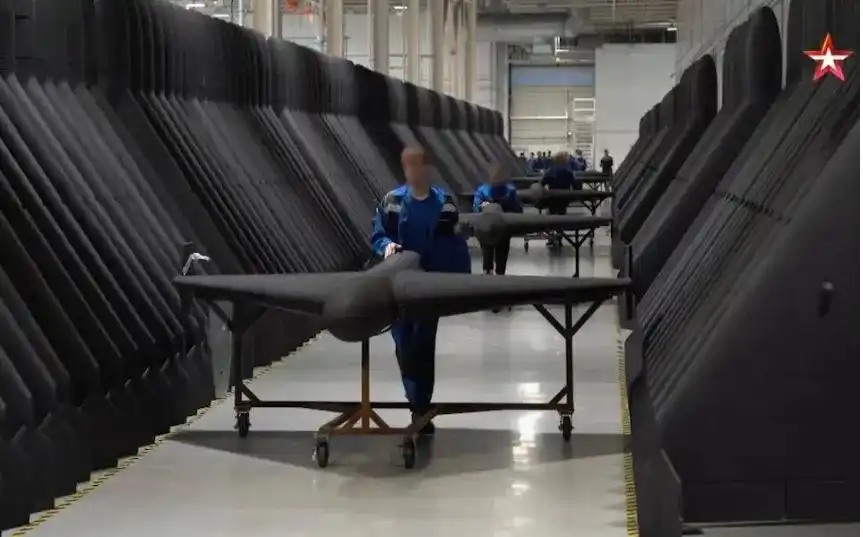
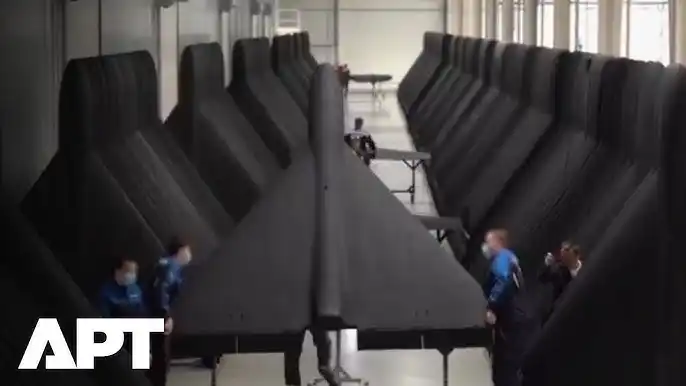
The line between civilian and military is deliberately blurred. Students at special colleges next to drone factories are promised careers in high-tech fields but often end up assembling weapons of war. The Alabuga facility in Tatarstan, now under EU sanctions, has publicly acknowledged its involvement in this effort. Footage from Russia’s Zvezda TV showed 14- and 15-year-olds working on Geran-2 kamikaze drones, with faces blurred to hide their identities.
Geran-2: Child-Built Engines of War
The Geran-2, an adapted version of Iran’s Shahed-136, has a range of nearly 1,000 miles and is central to Russia’s drone assault campaign. Moscow claims these drones target only military infrastructure, yet dozens of strikes have hit civilian areas, causing massive destruction in Kyiv and other cities.
Teenagers are seen helping to construct these weapons inside Alabuga, which Russia boasts is the world’s largest drone production center. The facility itself has become a target of Ukrainian long-range strikes. Ironically, the very children constructing these drones are working in legally defined military targets, violating multiple international conventions regarding the involvement of minors in armed conflict.
A Factory of Future Soldiers and Engineers
The Alabuga complex is more than a factory. It functions like a military-industrial boarding school, where students from nearby drone colleges transition seamlessly into drone production roles. According to The Insider, these children aren’t merely interns. They’re trained to operate advanced software, assemble complex payload systems, and even train soldiers on drone usage.
In one shocking revelation, a 13-year-old boy claimed he had trained military personnel on drone operations in a state-run defense facility. This wasn’t a workshop or science fair. It was a classified military site, and he was treated as a peer and asset, not a child.
The normalization of children working in military environments not only violates UN conventions on child labor and wartime ethics, but it also represents a strategic pivot. Russia is investing in a generational war infrastructure, one that indoctrinates and trains children long before they’re of military age.
Coercion and Secrecy: The Culture of Silence
These young participants are not blind to the realities. Several confessed to knowing the true nature of their projects, but they were instructed by mentors and supervisors to maintain the illusion of civilian intent. This coercion was internalized, institutionalized, and normalized.
Statements from interviewees showed a chilling awareness of their complicity and a resignation to the rules. “We were forbidden to say it was needed for the war,” said one teen, “but we all knew.” This speaks to a state-sponsored deception campaign, targeting both the international community and its own people.
The lack of independent journalism within Russia has further helped keep these operations in the dark. Since the full-scale invasion began in 2022, most independent media outlets have been shuttered or forced into exile. The Insider’s team posed as state media reporters to secure interviews, a risky but effective strategy to uncover these disturbing truths.
International Response and Legal Implications
The use of children in military manufacturing and training violates international laws, including the Optional Protocol to the Convention on the Rights of the Child on the Involvement of Children in Armed Conflict (OPAC). Russia ratified this treaty in 2008, yet continues to flout its core provisions.
Moreover, the strategic involvement of minors in wartime industries complicates targeting decisions. If children are working inside legitimate military facilities, does it make those children legitimate combatants? It’s a moral and legal minefield, and Russia appears to be exploiting the ambiguity.
Western nations, particularly the EU and U.S., have responded with expanded sanctions on companies like those operating the Alabuga plant. However, the visibility of child labor in such settings has not yet catalyzed widespread condemnation. That may soon change as more revelations emerge.
The Long-Term Impact: A War Generation in the Making
What happens to a society that teaches its children to build weapons instead of futures? Russia is rapidly creating a war generation — not just soldiers, but engineers, programmers, and logisticians bred for perpetual conflict.
The legacy of such a system will be deep. These children are being shaped by militarism disguised as meritocracy, praised not for innovation in peace, but for efficiency in destruction. The psychological consequences will likely be profound, with potential future instability as this generation comes of age having been indoctrinated into the ethics of war.
Conclusion: Behind the Patriotism, a Systemic Abuse
The story unfolding in Russia is not simply one of youthful ambition hijacked by national interest. It’s one of calculated exploitation, where education, gaming, and science fairs become pipelines into warfare.
The Russian government is rewriting the playbook on how to wage war — not with overwhelming force, but with tech-savvy children hidden behind patriotic slogans and blurred TV footage. This isn’t just a moral crisis; it’s a strategic evolution of warfare, one that the global community must confront with urgency and clarity.
As the drones built by children rain down on Ukrainian cities, the world must ask: What are the long-term costs of a war built on the backs of minors? And more urgently: **Who will stop it?