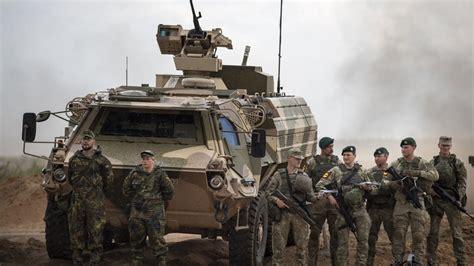
Germany has launched its most ambitious military buildup since the Cold War, signaling a tectonic shift in European defense strategy. On July 30, 2025, the German government announced an expansive series of defense procurements aimed at fundamentally reshaping its military posture and assuming a leadership role in European security. This initiative, backed by sweeping constitutional reforms introduced by Chancellor Friedrich Merz, aims to create Europe’s most powerful conventional army, independent of U.S. military support.
Strategic Reorientation: From Postwar Restraint to Regional Vanguard
Germany’s post-World War II military doctrine has long been defined by caution and constraint. Bound by constitutional limitations and a culture of pacifism, the Bundeswehr remained under-equipped and strategically reliant on NATO’s American backbone. However, a dramatic geopolitical shift — triggered by Russia’s continued aggression in Eastern Europe, growing instability in Africa and the Middle East, and questions over U.S. reliability — has driven Berlin to redefine its defense identity.
The adoption of a revised defense budget, enabled by Merz’s constitutional overhaul, has opened the financial floodgates. The plan includes the procurement of 20 Eurofighter Typhoon jets, up to 3,000 Boxer armored vehicles, and a staggering 3,500 Patria infantry fighting vehicles — acquisitions that vastly exceed Germany’s existing inventories.
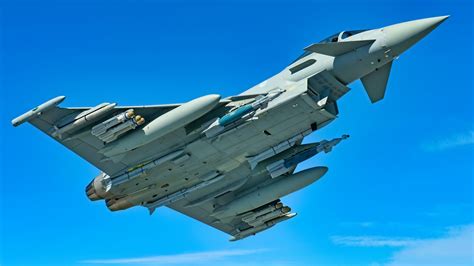
Eurofighter Typhoon: Strengthening the Luftwaffe’s Backbone
At the core of the Luftwaffe’s modernization is the Eurofighter Typhoon — a multi-role combat aircraft jointly developed by Airbus, BAE Systems, and Leonardo. Germany already operates 138 Typhoons; the acquisition of 20 additional units represents more than a symbolic gesture. It boosts Germany’s air combat fleet by 14%, enhancing operational depth and aerial deterrence capabilities.
The Typhoon has seen active deployment across NATO missions in Eastern Europe and the Middle East, reinforcing its versatility and combat readiness. With advanced avionics, radar systems, and network-centric warfare capabilities, it is designed for both air superiority and ground attack roles. Though not a stealth fighter, the Typhoon offers high survivability and competitive edge over older fourth-generation fighters.
Germany’s investment in the Typhoon underscores a dual ambition: to strengthen NATO air dominance while retaining European industrial autonomy, as the platform is produced within Europe without U.S. technological dependency.
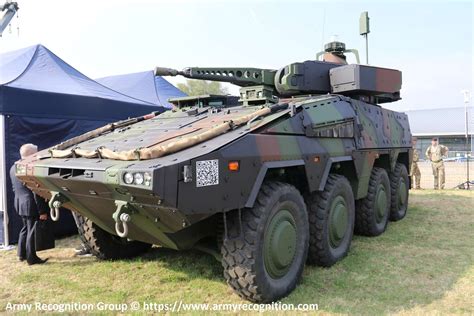
Armored Might: The Boxer and Patria in Historic Quantities
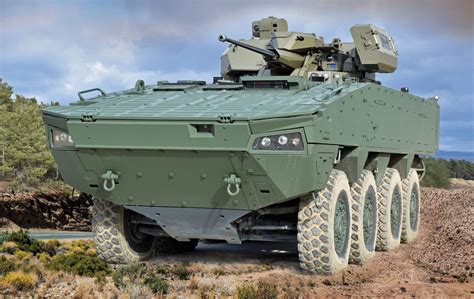
Perhaps even more transformative is the planned massive mechanized expansion. Germany’s order of 3,000 Boxer armored vehicles is unprecedented. Co-developed with the Netherlands, the Boxer is a modular 8×8 vehicle that excels in blast protection, modularity, and payload capacity. Its variants include troop transport, medical evacuation, command & control, and even mobile artillery platforms. Germany currently operates approximately 405 Boxers — the new order increases that number by over 640%.
In tandem, Berlin intends to purchase 3,500 Patria AMVs, developed by Finland. Known for amphibious mobility, all-terrain performance, and exceptional troop protection, the Patria has never before been part of the Bundeswehr arsenal. Integrating this platform marks a significant doctrinal shift, signaling Germany’s readiness for high-intensity, expeditionary warfare. The Patria’s battlefield adaptability aligns with NATO’s push for rapid reaction forces capable of deployment from the Baltic to the Sahel.
Quantitative Expansion: A New Benchmark in Europe
When compared to existing European military inventories, the scale of Germany’s orders dwarfs its neighbors. France, for example, operates fewer than 300 Leclerc main battle tanks and under 1,000 armored personnel carriers. Poland’s recently announced expansion involves under 2,000 vehicles in total. Germany’s combined 6,500 vehicle procurement alone positions the Bundeswehr as Europe’s largest mechanized force by far.
In air power, the additional Typhoons give Germany a total of 158 — nearly double the number of modern fighter jets operated by Spain or Sweden. This not only enhances Berlin’s air defense capability, but also its ability to enforce air dominance in multi-national theaters without American F-35 support.
Strategic Goals: Autonomy, Readiness, and Leadership
Germany’s new strategy reflects three overarching ambitions: strategic autonomy, rapid deployment capability, and military leadership within Europe. With the EU still grappling with defense cohesion and NATO’s future under question, Berlin is stepping up as a self-reliant security guarantor. This move complements French efforts to boost defense capacity, but outpaces them in scale, signaling that Germany is no longer content with a supporting role.
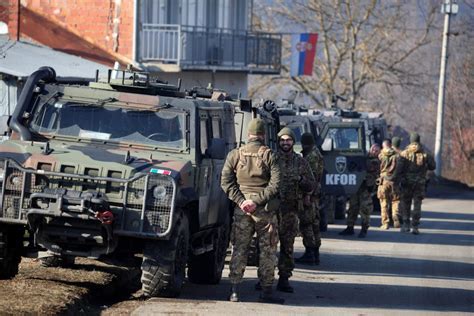
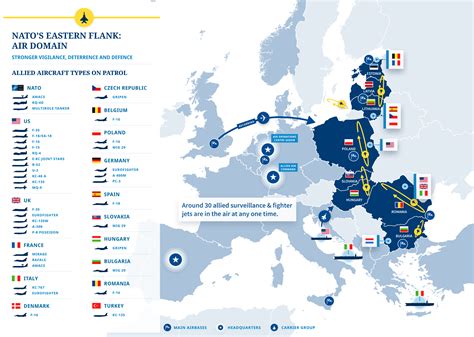
Additionally, the acquisition spree will enable the Bundeswehr to fulfill NATO obligations more robustly, particularly in forward deployment to Eastern Europe. Germany has already led Enhanced Forward Presence (eFP) missions in Lithuania; with this modernization, it can lead multinational task forces across several fronts simultaneously, from the Baltic to the Balkans.
Industrial and Political Ramifications
The defense procurement plan will also serve as a boon for the European defense industry. Companies such as Rheinmetall, Krauss-Maffei Wegmann, Airbus Defence and Space, and Patria will benefit immensely from these contracts. The Boxer and Patria vehicles will likely be produced in joint ventures with German participation, securing jobs and technological growth within the EU defense ecosystem.
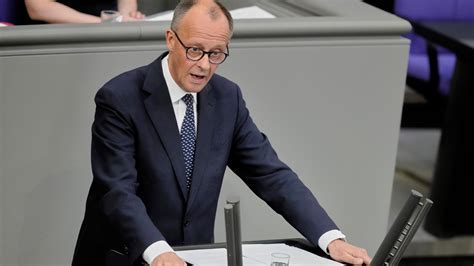
Politically, the expansion marks a break with decades of strategic restraint. Chancellor Friedrich Merz has framed this as both a necessity and a responsibility, declaring in a recent Bundestag session: “Europe must learn to stand on its own feet. Germany will not outsource its security to others. We will lead.” His reforms have received mixed reactions domestically — lauded by hawks and NATO allies, but raising concerns among Greens and pacifist factions.
A Clear Message to Adversaries and Allies
Germany’s defense push sends a resounding signal. To allies, it offers a credible commitment to burden-sharing and a shift away from the perception of Germany as NATO’s weak link. To adversaries, particularly Russia, it warns that military incursions in Europe will face rapid and overwhelming force. The Bundeswehr, long seen as underfunded and ill-prepared, is now undergoing a renaissance that could tilt Europe’s defense equilibrium.
This transformation is not merely about equipment. It involves training, logistics, interoperability, and doctrine evolution. NATO exercises like DEFENDER-Europe and German-led drills will now feature more robust German contingents, faster mobilization times, and expanded logistical support networks.
The End of German Military Passivity?
This new era of German militarization is fundamentally different from past modernization efforts. It is not reactionary or symbolic. It is structural, long-term, and ideologically motivated. Germany is preparing not just for deterrence, but for active military leadership. It is building the tools not just to defend, but to command — to take charge in the face of crisis.
There are still hurdles ahead. Questions remain about training capacity, integration timelines, and political will across successive governments. However, the scale and scope of these procurements cannot be dismissed as transitory. They represent a foundational pivot in German statecraft and defense philosophy.
As Europe stands at the crossroads of rising threats and shifting alliances, Germany has chosen to lead not by words, but by steel, speed, and resolve.