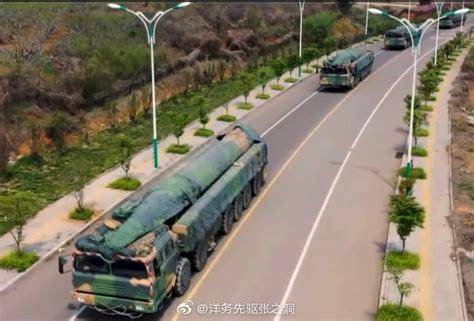
The revelation of the DF-27, a cutting-edge missile developed and fielded by the People’s Liberation Army (PLA), marks a transformative moment in global strategic military balance. The 2025 Pentagon report on China’s military capabilities has formally recognized the DF-27 as the world’s first conventional Intercontinental Ballistic Missile (ICBM) with a confirmed anti-ship role, potentially altering the dynamics of maritime warfare and homeland security.
The DF-27’s Strategic Breakthrough: An Intercontinental Anti-Ship Menace
The DF-27 distinguishes itself through its dual threat nature—capable of targeting both land and maritime assets across distances of 5,000 to 8,000 kilometers. This range grants China a vast strike envelope, including the U.S. Pacific territories, mainland USA, and critical military bases in Australia.
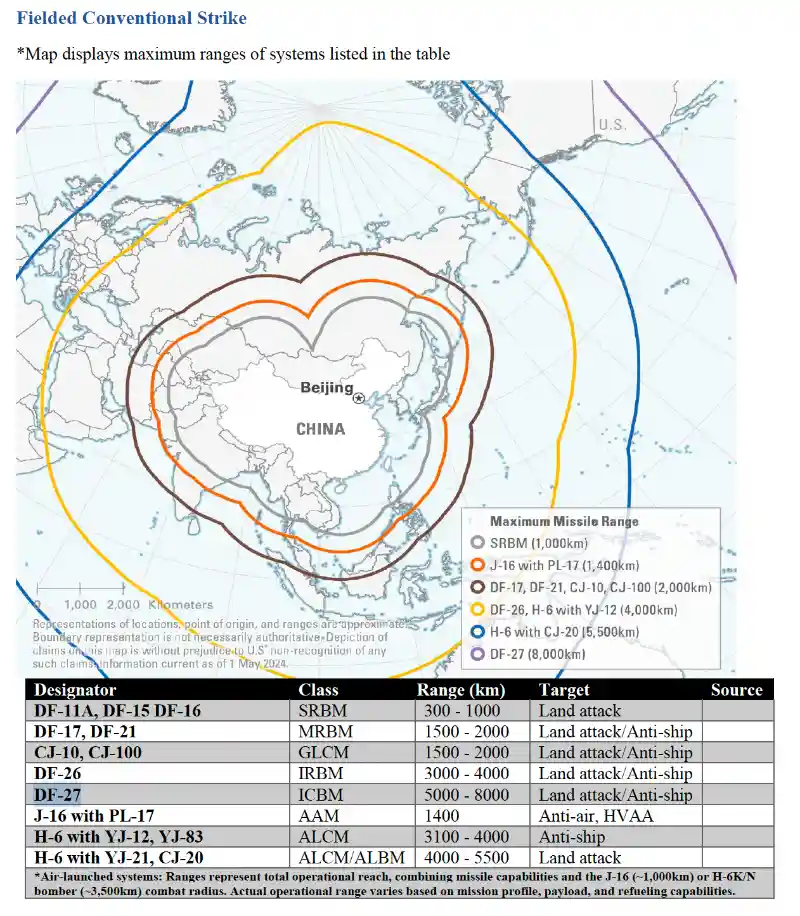
The newly fielded missile, which now features in the PLA’s conventional strike arsenal, transcends the capabilities of China’s older cruise, supersonic, and hypersonic missile systems. Unlike nuclear ICBMs such as the DF-41, the DF-27 remains conventionally armed, signaling China’s pursuit of escalation control while still achieving strategic deterrence.
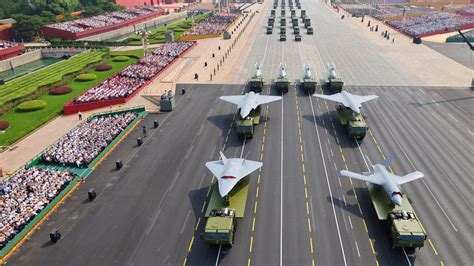
Its incorporation within the PLA’s Rocket Force offers the Chinese military a significant leap in non-nuclear deterrent power, enabling long-range precision strikes without crossing the nuclear threshold. Most notably, its anti-ship functionality extends Beijing’s reach far beyond the Western Pacific, potentially jeopardizing the entire U.S. Navy’s Pacific fleet.
Hypersonic Glide and Maneuverability: The DF-27’s Tactical Advantage
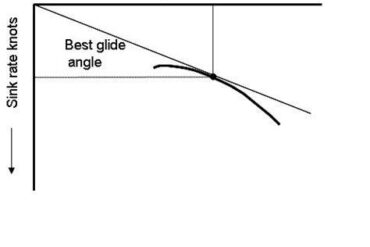
The DF-27 is believed to support a Hypersonic Glide Vehicle (HGV), an advancement that dramatically complicates enemy interception. Unlike standard ballistic trajectories, HGVs can perform agile mid-flight maneuvers, altering paths during the terminal phase, effectively evading missile defense systems like THAAD and Aegis.
This trait renders high-value naval assets—aircraft carriers, destroyers, amphibious assault ships—especially vulnerable. American warships navigating the First and Second Island Chains may find themselves within range of a missile capable of intelligent course correction, matching real-time target movements.
A Disruption to American Naval Dominance
While the SM-6 interceptor has demonstrated some success against maneuvering threats, it remains largely unproven against fully developed hypersonic gliders. The United States is still advancing its counter-hypersonic infrastructure, which currently lacks systems optimized specifically to neutralize DF-27-like threats.
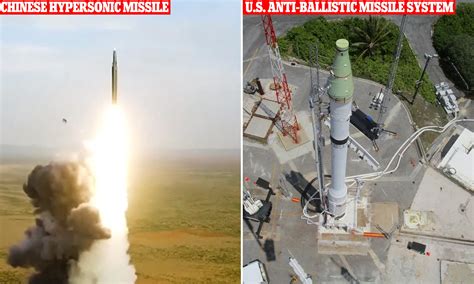
The 2023 missile test—leaked through classified Pentagon documents—reported a 12-minute flight over 2,100 kilometers, with an assessed “high probability” of evading American defenses. This marks an operational turning point: China now fields a missile that could strike American warships at sea or even hit land-based targets on the U.S. mainland without nuclear provocation.
Origins and Secrecy: From Rumors to Reality
Initial whispers of the DF-27 emerged from the 2021 China Military Power Report, which labeled it as a “long-range weapon under development.” The missile evaded public view during major events like the September 2025 Victory Day Parade, where numerous high-profile Chinese weapons debuted.
Its existence remained mostly theoretical until leaks and U.S. intelligence assessments began piecing together evidence of field trials, production, and now, confirmed deployment.
By 2024, the DF-27 was officially listed as “deployed” to the PLA Rocket Force, but ambiguities remained about its operational loadouts. The 2025 Pentagon report has now clarified its designation as a non-nuclear, conventional ICBM, which aligns with China’s evolving doctrine of conventional strategic deterrence.
A2/AD and Carrier-Killer Expansion: China’s Naval Wall
The DF-27 extends China’s formidable Anti-Access/Area Denial (A2/AD) network, complementing existing “carrier killers” like:
- DF-21D (MRBM)
- DF-26B (IRBM)
- Air-launched KD-21
- Sea-launched YJ-21
Each of these systems is optimized for different ranges and launch platforms, creating a layered ballistic strike architecture that deters intervention, especially by U.S. Carrier Strike Groups (CSGs).
The DF-27 completes this puzzle by offering intercontinental precision capability, giving the PLA a credible means to neutralize foreign military assets beyond the Second Island Chain and into the continental U.S. territory. In doing so, it helps secure China’s maritime periphery in the event of a Taiwan Strait conflict.
According to Dr. Andrew Erickson of the U.S. Naval War College, the DF-27 constitutes “a new form of naval force” and should be viewed as part of a combined maritime-strike strategy rather than a standalone platform.
The Taiwan Flashpoint: Implications for Indo-Pacific Stability
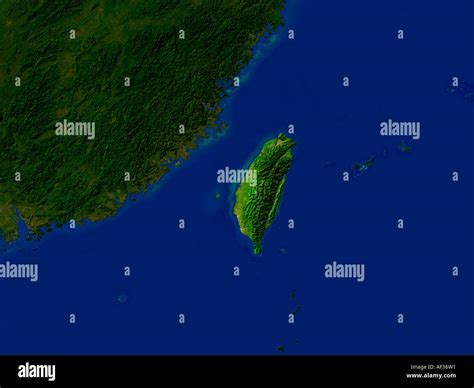
Tensions surrounding Taiwan play a critical role in contextualizing the DF-27’s deployment. Chinese military planning increasingly envisions a scenario in which the U.S. and its allies would attempt to intervene militarily in a cross-strait conflict. The DF-27 offers China a way to escalate horizontally, striking support infrastructure deep within U.S. territory without relying on nuclear escalation.
This capability potentially deters intervention, forcing Washington to reconsider the cost-benefit balance of defending Taiwan in the face of assured conventional reprisal strikes.
Furthermore, its integration into the PLA’s strategic toolkit supports broader A2/AD enforcement, enhancing China’s confidence to act decisively in its near seas. In a contested maritime campaign, the DF-27 might target American forward-operating bases, airfields, and supply chains, thereby neutralizing logistical support before kinetic operations even begin.
DF-27 in the Context of Hypersonic Arms Race
With the INF Treaty collapse in 2019, both the U.S. and Russia restarted work on intermediate-range missiles. However, China has outpaced both rivals in fielding actual hypersonic-capable operational platforms. The DF-27 confirms China’s lead in this domain.
The combination of long-range precision, hypersonic maneuverability, and anti-ship focus gives Beijing an entirely new deterrent capability—conventional strike without nuclear fallout, but with strategic scale consequences.
In light of this, the recent Pentagon-funded RAND study recommending reduced reliance on aircraft carriers gains relevance. It argued that heavy capital ships are now vulnerable and should be supplemented by unmanned systems, agile assets, and decentralized naval architectures.
Redefining the Naval Balance of Power
In sum, the DF-27 represents a quantum leap in missile warfare. Its ability to threaten the U.S. homeland and sea-based forces with a single conventional system bridges the gap between tactical strike and strategic deterrence. It also redefines maritime boundaries by extending A2/AD to intercontinental scale.
Dr. Andrew Erickson concludes that “by becoming the first major ASBM power and steadily expanding its ASBM families, China has dramatically changed the naval balance and the prospective ways of war in the Western Pacific and beyond.”
Going forward, U.S. defense planning must internalize the reality of intercontinental conventional strike platforms. The DF-27’s fielding is not merely a Chinese achievement—it is a challenge to the strategic calculus of deterrence, projection, and survivability in the maritime battlespace of the future.