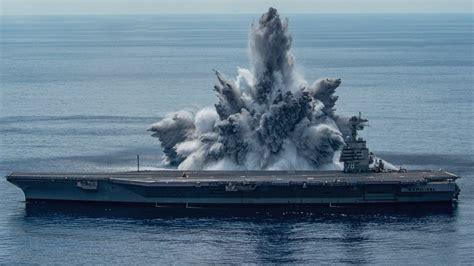
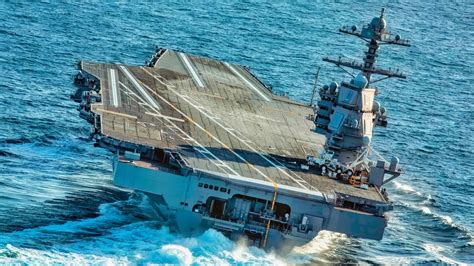
Modern U.S. aircraft carriers are often described as floating fortresses—self-contained cities of steel, nuclear power, and overwhelming air superiority. Vessels like the USS Gerald R. Ford (CVN-78) represent the absolute pinnacle of naval engineering, displacing over 100,000 tons and projecting power across entire oceans. They are not just warships; they are strategic assets that redefine global military balance.
Yet even the most advanced machines ever built are not invulnerable. Aircraft carriers operate within layered defensive systems—carrier strike groups, Aegis-equipped escorts, advanced radar, electronic warfare suites, and combat air patrols. Under normal conditions, penetrating these defenses is extraordinarily difficult. But if those defenses were somehow neutralized or bypassed, the question becomes stark and unsettling: what could actually sink one?
The answer lies in a narrow set of weapons designed not merely to damage, but to catastrophically overwhelm structural integrity, buoyancy, or survivability systems. These are not everyday battlefield tools; they are purpose-built threats engineered with one goal—neutralizing the most powerful naval assets ever created.
Nuclear Weapons: The Ultimate Carrier Killer
There is no ambiguity here—a nuclear weapon remains the most definitive method of sinking an aircraft carrier. This is not theoretical speculation but grounded in historical testing. During Operation Crossroads in 1946, the United States detonated nuclear devices against a fleet of decommissioned ships at Bikini Atoll, offering a chilling preview of nuclear naval warfare.
One of those tests, known as “Baker,” was an underwater detonation with a yield of approximately 21 kilotons. The blast generated a massive column of water, shockwaves, and radiation that devastated nearby vessels. Among the casualties was the USS Saratoga, an aircraft carrier that ultimately succumbed to the damage and sank.
Modern nuclear weapons dwarf those early devices. Today’s warheads can range from sub-kiloton precision yields to hundreds of kilotons, with some strategic weapons reaching into the megaton range. A direct detonation near or beneath a modern carrier would unleash an overwhelming combination of thermal radiation, blast pressure, electromagnetic pulse, and water displacement.
The physics alone are unforgiving. A sufficiently close underwater nuclear explosion would create a pressure wave capable of crushing hull structures, disrupting internal compartments, and instantly compromising buoyancy. Even if the ship were not vaporized, it would likely be rendered unsalvageable within moments.
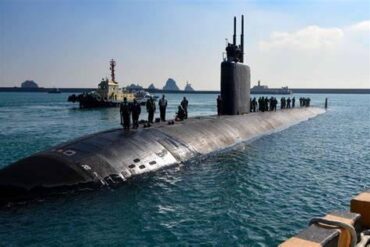
Advanced Heavyweight Torpedoes: Breaking the Backbone
If nuclear weapons are blunt-force annihilation, advanced torpedoes are surgical instruments of destruction. Modern heavyweight torpedoes are specifically engineered to exploit a ship’s greatest structural vulnerability: its keel.
Unlike early torpedoes that simply struck the side of a ship, weapons such as the U.S. Mark 48, Russia’s Type 65, or China’s Yu-6 employ a far more devastating tactic. They detonate beneath the hull, using the physics of water displacement to catastrophic effect.
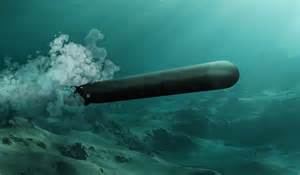
When such a torpedo explodes under a vessel, it creates a massive gas bubble that rapidly expands and collapses. This process effectively lifts the ship out of the water momentarily, removing the support normally provided by buoyancy. As the bubble collapses, the vessel slams back down, often resulting in a structural break along the keel—essentially snapping the ship in half.
For a vessel the size of a Ford-class carrier, the outcome would depend on the precise placement and yield. However, these torpedoes carry high-explosive warheads designed explicitly to cripple or destroy capital ships. Even a single well-placed detonation could inflict irreversible structural damage, especially if it compromises critical compartments or propulsion systems.
The unsettling truth is that such torpedoes were designed during the Cold War with one target in mind: U.S. carrier strike groups.
Hypersonic Anti-Ship Missiles: Speed as a Weapon
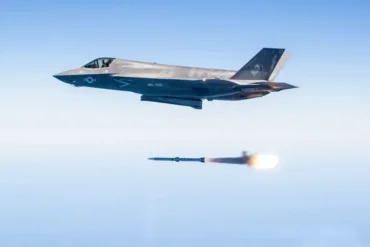
Speed changes everything. Hypersonic missiles, traveling at speeds exceeding Mach 5, introduce a level of threat that traditional defense systems struggle to counter. At these velocities, reaction times shrink dramatically, and interception becomes a near-impossible challenge.
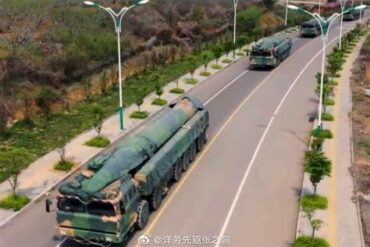
Russia’s 3M22 Zircon and China’s DF-ZF hypersonic glide vehicle represent the cutting edge of this technology. Capable of reaching speeds between Mach 9 and Mach 10, these weapons combine extreme velocity with advanced maneuverability, making their trajectories unpredictable.
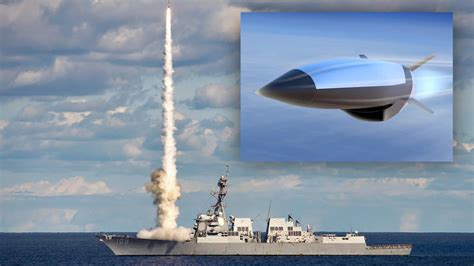
What makes hypersonic weapons particularly dangerous is not just their speed, but their kinetic energy. A multi-ton object traveling at hypersonic velocity carries immense destructive force even before its warhead detonates. Upon impact, the combination of kinetic energy and explosive payload can produce deep penetration and massive internal damage.
A direct strike on critical areas—such as the flight deck, island structure, or below-deck hangars—could ignite fuel, detonate munitions, and trigger cascading failures. Even without hitting the most vulnerable points, the sheer force involved could compromise structural integrity and ignite uncontrollable fires.
In a scenario where defenses fail, a hypersonic missile is less of a projectile and more of a precision-guided kinetic hammer.
Mass Drone Swarms: Death by Saturation
Not all threats rely on raw power. Some depend on overwhelming numbers and asymmetry, and this is where drone warfare enters the equation. Recent conflicts have demonstrated how uncrewed systems—cheap, scalable, and expendable—can threaten far more expensive platforms.
A coordinated swarm of explosive-laden unmanned surface vessels (USVs) could present a serious threat to an aircraft carrier. Individually, a single drone might cause limited damage. But in large numbers, striking simultaneously, they could overwhelm defenses and repeatedly impact the hull.
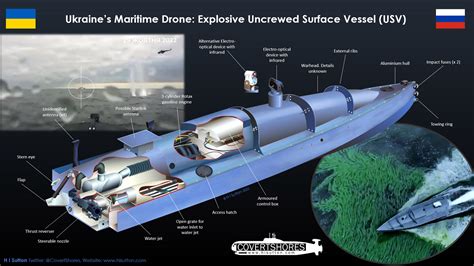
The danger lies in cumulative damage. Multiple explosions along the waterline could open progressively larger breaches, allowing seawater to flood compartments faster than damage control teams can respond. Fires, secondary explosions, and system failures would compound the chaos.
From a strategic perspective, the cost imbalance is almost absurd. A multi-billion-dollar carrier could, in theory, be threatened by a swarm costing a tiny fraction of that amount. This asymmetry forces navies to rethink defense strategies, because it’s not about stopping one attack—it’s about stopping dozens or hundreds simultaneously.
It’s a scenario that feels almost unfair, which is precisely why it’s taken so seriously.
Explosive-Laden Ships: The Oldest Trick, Scaled Up
Sometimes the most dangerous ideas are the simplest. Turning a large vessel into a weapon is not new, but scaling that concept to modern extremes creates a credible threat. Imagine a fully loaded oil tanker packed with explosives, deliberately rammed into the side of an aircraft carrier.
The physics are brutal. A massive ship carries enormous kinetic energy, and when combined with a large explosive payload, the resulting impact could produce a devastating breach in the carrier’s hull.
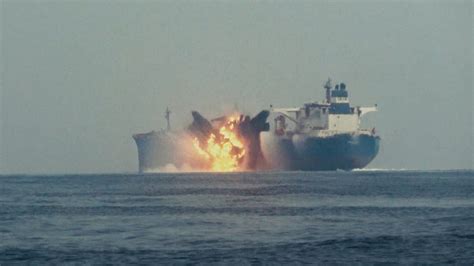
A smaller-scale version of this tactic occurred in 2000, when the USS Cole was attacked by a suicide boat packed with explosives. The blast tore a 40-foot-wide hole in the destroyer’s hull, killing 17 sailors. The Cole survived—but it was a much smaller ship, and the attacking vessel was tiny by comparison.
Scale that scenario upward. Replace the small boat with a massive tanker and multiply the explosive yield. The resulting detonation could rupture multiple compartments, ignite fuel stores, and destabilize the ship’s structure. For a carrier, which relies on careful balance and compartmentalization, such damage could prove catastrophic.
It’s not sophisticated. It doesn’t require cutting-edge technology. But under the right conditions, it could be devastatingly effective.
Why Sinking a Carrier Is Still So Difficult
Even with these terrifying possibilities, one reality remains constant: sinking a U.S. aircraft carrier is extraordinarily difficult. Each of the weapons discussed assumes a scenario where layered defenses have already failed—a situation that is, by design, incredibly unlikely.
Carrier strike groups are built around redundancy, detection, and interception. Threats are typically neutralized long before they come within striking distance. Submarines are hunted, missiles are intercepted, and surface threats are engaged at range.
Still, the existence of these weapons underscores a critical truth. No matter how advanced a system becomes, countermeasures evolve alongside it. The balance between offense and defense is never static—it’s a continuous cycle of adaptation.
And in that cycle, even the most formidable warship ever built must contend with the possibility—however remote—that somewhere, something exists that could bring it down.