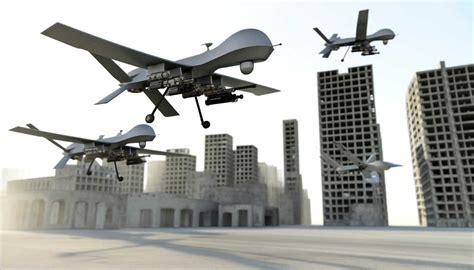
In a bold move signaling the rapid convergence of cutting-edge autonomy software with proven defense hardware, RTX and Shield AI have announced a strategic partnership that could reshape the future of drone and counter-drone warfare. This alliance merges Shield AI’s advanced Hivemind and ViDAR software systems with RTX’s powerful multi-sensor turrets and undisclosed “operational weapon,” hinting at significant capability enhancements for the U.S. military and its allies.
The announcement, made jointly in Washington, D.C., underscores a broader shift in the defense sector — a fusion of Silicon Valley-style innovation with defense-industry engineering, aimed at developing smarter, faster, and more resilient autonomous systems to confront evolving battlefield threats.
Shield AI’s Hivemind: A Breakthrough in Autonomous Combat Coordination
At the heart of this partnership is Shield AI’s flagship autonomy stack, Hivemind. Unlike traditional control models that require persistent, human-in-the-loop radio commands, Hivemind empowers autonomous vehicles to execute complex missions independently after receiving high-level objectives. This concept, known as Networked Collaborative Autonomy (NCA), is tailored for the Pentagon’s vision of human-machine teaming.
According to Shield AI, Hivemind is mission-agnostic and platform-agnostic, meaning it can be deployed across a wide spectrum of unmanned platforms — land-based robots, maritime vessels, and aerial systems. The architecture is highly modular, enabling seamless integration of different sensors, communications modules, and software plugins based on operational demands.
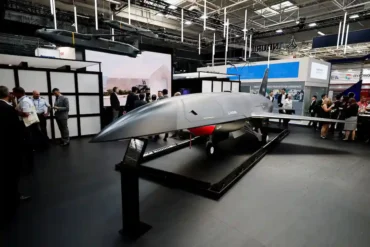
While details about the “operational weapon” project remain classified, the release confirms that this will be the first-ever operational weapon powered by Hivemind. Shield AI and RTX declined to elaborate further, leaving defense analysts to speculate that the system is likely a high-end UAV, perhaps a variant of Shield’s own V-BAT drone or another jet-powered unmanned platform.
Notably, Hivemind has already been tested on:
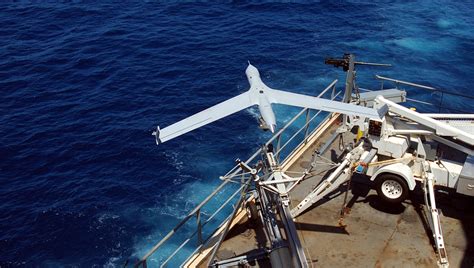
- Shield AI’s V-BAT vertical takeoff drone
- Kratos MQM-178 Firejet
- General Atomics MQ-20 Avenger
- Lockheed’s experimental VISTA F-16
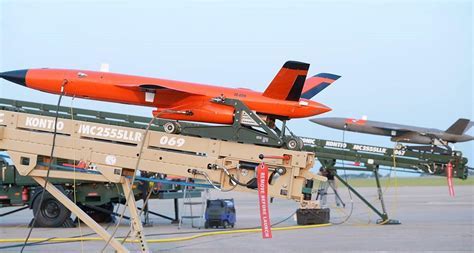
Its smaller sibling, Hivemind Edge, caters to frontline deployments where GPS is unreliable, and processing power is limited. This version enables swarming drones to operate in denied environments, autonomously navigate, and execute tactical decisions without centralized control.
RTX’s MTS Turret Meets ViDAR: AI for Threat Detection
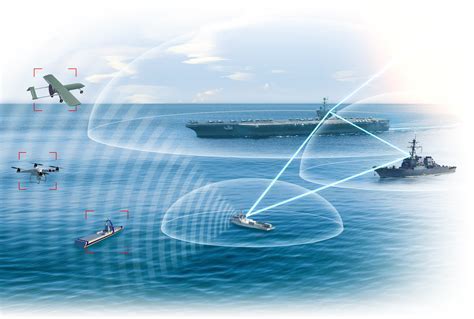
While the Hivemind integration focuses on offensive capabilities, the second prong of the RTX-Shield AI collaboration addresses defense and reconnaissance. Here, Shield AI’s ViDAR (Visual Detection and Ranging) software will be embedded into RTX’s widely deployed Multi-Spectral Targeting System (MTS) turrets.
ViDAR, which uses AI to synthesize input from multiple electro-optical and infrared sensors, significantly enhances target detection, classification, and tracking. Originally designed to locate shipwreck survivors in harsh sea conditions, it now enables real-time tracking of small, fast-moving threats like drones and unmanned speedboats.
RTX’s MTS turret, with over 3,000 units in 44 different subtypes already in global service, is a workhorse for aircraft such as the MQ-9 Reaper, MH-60 Seahawk, and other fixed-wing and rotary platforms. Under the new agreement, ViDAR’s software suite will be integrated into both new production units and retrofit upgrades for existing MTS installations.
This retrofitting ability is crucial. As U.S. and allied forces shift towards software-defined warfare, the ability to update legacy systems with AI capabilities offers a cost-effective path to modernization. ViDAR-equipped MTS systems will now have the capability to autonomously detect and track swarm threats in both maritime and aerial domains — a critical enhancement in an era of drone saturation and low-cost attack swarms.
A Vision of Battlefield Autonomy Without Government Investment
One particularly notable aspect of the Shield AI–RTX partnership is that both companies are self-funding the project. This decision marks a significant departure from the typical defense R&D model, which leans heavily on Pentagon contracts and congressional budgeting. Instead, the firms are taking a Silicon Valley-style investment approach, betting that faster development cycles and field deployment will outpace slower, bureaucracy-driven programs.
This move may also reflect increasing confidence from private defense investors in dual-use technologies that can transition between military and civilian applications. Shield AI has long positioned itself as a venture-backed innovator, and its recent partnership with a defense stalwart like RTX validates the commercial maturity and strategic relevance of its platforms.
Implications for the Future of Warfighting
This partnership goes beyond tactical gains. It marks a paradigm shift in how the Pentagon sources, fields, and deploys AI-based technologies. Instead of waiting for government contracts to drive development, firms like Shield AI are now forming private alliances with major primes like RTX to deliver field-ready solutions faster.
Several key implications emerge:
- Decentralized Autonomy: AI agents can now make decisions at the edge, reducing dependence on satellite comms or ground-based operators.
- Scalable Integration: Hivemind and ViDAR offer plug-and-play options for a range of platforms — manned and unmanned, old and new.
- Counter-Swarm Superiority: AI-powered turrets and drones can now respond to drone swarm attacks, increasingly common in modern conflicts.
- Budget Efficiency: Upgrading legacy systems avoids the massive costs of full platform replacements.
AI and the Indo-Pacific Theater: A Strategic Advantage
Given the growing emphasis on maritime and air superiority in the Indo-Pacific, this collaboration could not be more timely. The South China Sea, Taiwan Strait, and surrounding regions are increasingly the stage for great-power competition, where unmanned systems and counter-drone capabilities are playing a decisive role.
By embedding ViDAR into MTS turrets, the U.S. and its allies can enhance ISR (Intelligence, Surveillance, Reconnaissance) and early-warning defense capabilities across thousands of already deployed platforms — without needing to field entirely new aircraft. Likewise, Hivemind-enabled platforms can carry out long-range strike, surveillance, or jamming missions with limited oversight, an asset in scenarios involving GPS denial or communications disruption.
Looking Ahead: Fall UAV Launch and Battlefield Deployment
Although Shield AI and RTX remain tight-lipped about specific deployment timelines, Shield AI had previously announced a new UAV platform scheduled for rollout this fall. Given the secrecy surrounding the “operational weapon” project, it is increasingly likely that this new drone will be the first testbed to fully integrate Hivemind with RTX’s weapons and sensor suites.
Furthermore, with conflict zones such as Ukraine serving as real-time labs for autonomous systems, the Pentagon is racing to institutionalize lessons learned. AI-enhanced systems like Hivemind are already showing their value in providing force multiplication, rapid targeting, and battlefield resilience.
Shield AI’s approach to machine autonomy and RTX’s global reach create a powerful synergy. Their partnership may well serve as the model for future defense innovation — blending the agility of startups with the scale of traditional defense manufacturing.
As the demand for trusted autonomy in contested environments grows, the combined technologies of RTX and Shield AI are poised to dominate the skies — and potentially the seas and land as well — in the next generation of warfare.