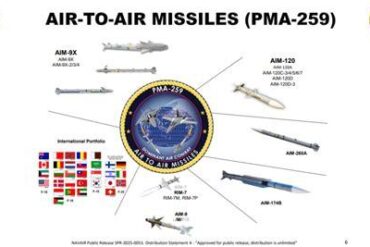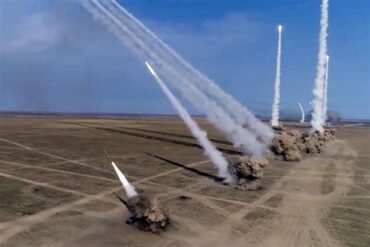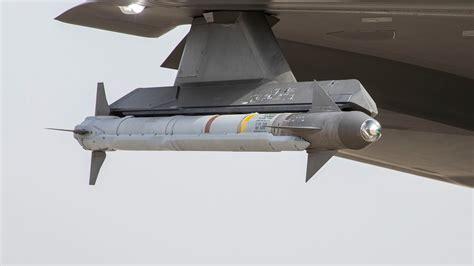
The $1.1 billion AIM-9X Sidewinder missile contract announced by the U.S. Naval Air Systems Command is far more than another defense procurement headline. It represents one of the largest efforts in years to rebuild the missile inventories that underpin Western air superiority. While headlines often focus on the acquisition of new fighter aircraft, those aircraft are only as effective as the weapons hanging beneath their wings—or concealed inside their weapons bays. Without a reliable supply of modern air-to-air missiles, even the world’s most advanced stealth fighter quickly loses its strategic value.
For decades, the AIM-9 Sidewinder has quietly evolved alongside generations of combat aircraft. From Cold War dogfights to fifth-generation stealth operations, the missile has remained one of the most dependable weapons in Western arsenals. The latest procurement demonstrates that modern warfare is no longer simply about developing revolutionary technologies. It is equally about maintaining industrial capacity capable of replacing sophisticated weapons at wartime consumption rates.
Rather than introducing an entirely new missile family, the Pentagon has chosen to dramatically expand production of a proven system that already equips dozens of allied air forces. That decision reflects an important strategic lesson emerging from recent combat operations: maintaining a deep magazine of reliable precision weapons may matter just as much as fielding cutting-edge aircraft.
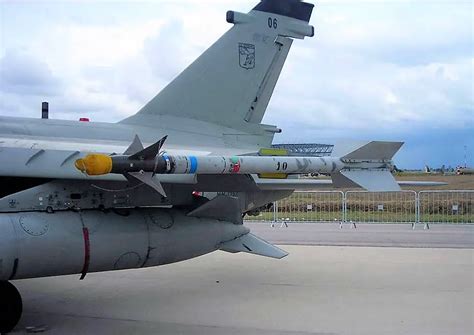
The $1.1 Billion Contract Marks A Major Production Shift
The newly awarded indefinite-delivery, indefinite-quantity contract calls for the production of a minimum of 2,000 AIM-9X Block II missiles, representing a dramatic increase over traditional annual output. Previous production lots generally measured only in the several hundreds, reflecting peacetime demand and predictable procurement cycles. The latest award fundamentally changes that equation by transforming a relatively steady manufacturing line into a high-volume production program scheduled to continue through September 2029.
At first glance, producing additional missiles may appear routine. In reality, scaling precision-guided weapon production is extraordinarily difficult. Every missile requires advanced infrared seekers, hardened electronics, specialized rocket motors, sophisticated guidance software, secure processors, precision machining, and exhaustive testing before entering operational service. Expanding production therefore requires investments across an entire industrial ecosystem rather than merely increasing assembly line speed.
This contract effectively secures manufacturing priority years into the future, allowing suppliers to confidently expand production capacity while ensuring that critical components remain available even during periods of heightened geopolitical instability.
Why Allied Nations Are Paying Most Of The Bill
One of the most striking aspects of the procurement is that approximately 67 percent of total funding originates from Foreign Military Sales partners, amounting to roughly $744 million. Although the United States remains the program’s anchor customer, allied nations collectively provide the majority of financial support.
This funding imbalance does not indicate that foreign operators are receiving most of the missiles. Instead, it reflects the broader package required under Foreign Military Sales agreements. Unlike the U.S. military, which already possesses decades of logistics infrastructure, overseas customers must purchase comprehensive support packages that include maintenance equipment, storage systems, testing hardware, spare parts, technical documentation, instructor support, and long-term sustainment services.
In addition, every Foreign Military Sales transaction requires oversight from the Defense Security Cooperation Agency, which verifies that recipient nations possess the infrastructure and training necessary to safely store, maintain, and operate advanced missile systems. Administrative requirements, technical assistance, certification processes, and lifecycle support significantly increase the overall value of each international procurement package.
The Missile That Equips Nearly Every Western Fighter Fleet
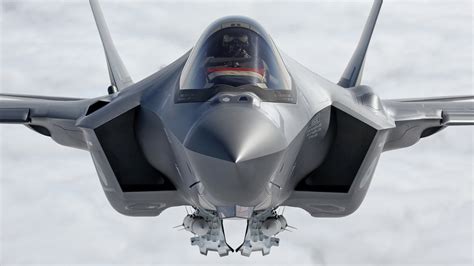
The remarkable success of the AIM-9X lies in its extraordinary compatibility. Although optimized for the Lockheed Martin F-35 Lightning II, the missile also serves aboard numerous fourth-generation and fourth-and-a-half-generation fighters operating across NATO and allied nations.
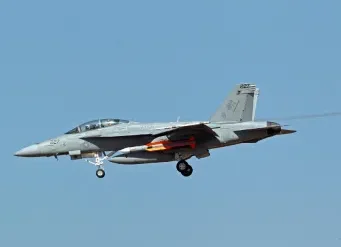
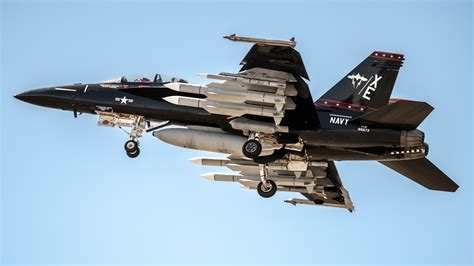
Among the aircraft capable of employing the AIM-9X are the F-35A, F-35B, F-35C, F-16 Fighting Falcon, F-15 Eagle, F/A-18E/F Super Hornet, EA-18G Growler, and the Eurofighter Typhoon. As additional nations introduce the F-35 into service, the missile’s user community continues expanding, further strengthening interoperability between allied air forces.
This standardization provides immense operational advantages. During coalition operations, participating air forces can train together, integrate tactics more efficiently, simplify logistics, and reduce maintenance complexity by relying upon common weapon systems. The missile effectively serves as a universal short-range air combat solution for much of the Western world.
Operation Epic Fury Exposed A Critical Weakness
Recent combat operations fundamentally altered assumptions surrounding precision-guided weapon consumption. During Operation Epic Fury, American and allied aircraft intercepted enormous numbers of cruise missiles and one-way attack drones, consuming advanced air-to-air munitions at rates rarely experienced since the Cold War.
The campaign demonstrated that missile inventories carefully accumulated during peacetime can disappear remarkably quickly once sustained high-intensity combat begins. Waves of inexpensive drones forced fighter pilots to repeatedly launch sophisticated interceptors against relatively low-cost threats, rapidly reducing available stocks.
Although the AIM-120 AMRAAM remained available for longer-range engagements, commanders frequently relied upon the heat-seeking AIM-9X for visual-range interceptions because employing expensive beyond-visual-range missiles against every drone simply proved economically unsustainable.
The resulting inventory depletion transformed what initially appeared to be a tactical issue into a strategic industrial challenge. Manufacturing capacity suddenly became almost as important as combat capability itself.
Why Production Capacity Matters As Much As Missile Performance
Modern precision weapons cannot be manufactured overnight. Unlike conventional artillery ammunition, advanced air-to-air missiles depend upon specialized technologies sourced through lengthy supply chains.
Infrared imaging seekers require sophisticated optical components. Rocket motors depend upon tightly controlled solid propellants. Guidance systems utilize secure electronics designed to withstand extreme operational conditions. Every component must pass rigorous quality assurance procedures before integration into finished weapons.
Consequently, rebuilding depleted inventories requires years rather than weeks. The new production contract acknowledges this industrial reality by extending manufacturing through 2029, providing the stability necessary for suppliers to expand facilities, hire skilled workers, and secure long-term component contracts.
Rather than reacting after another crisis emerges, the Pentagon is investing now to ensure continuous replenishment throughout the remainder of the decade.
Why The U.S. Navy Leads The Program
Although the AIM-9X equips multiple military services, the U.S. Navy continues serving as executive manager for the program. This arrangement reflects both history and operational necessity.
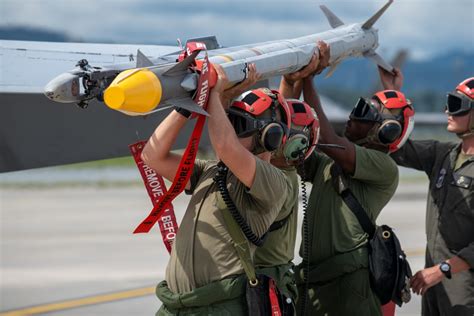
Carrier Strike Groups operate with finite onboard weapon inventories. Unlike land-based squadrons that can receive frequent logistical support, aircraft carriers carry limited magazines while deployed far from friendly ports. Every missile expended during sustained operations immediately reduces available defensive capability until replenishment becomes possible.
Operation Epic Fury highlighted this vulnerability as naval aviation consumed significant numbers of short-range interceptors protecting carrier forces and supporting coalition air operations. By leading the procurement effort, the Navy gains greater control over future production schedules, budgeting priorities, and international coordination.
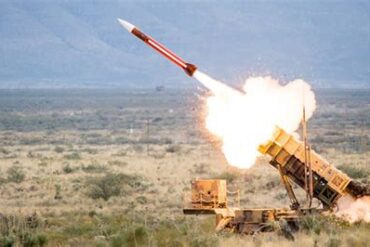
The missile’s growing importance extends beyond aviation as well. Through the National Advanced Surface-to-Air Missile System, the AIM-9X also contributes to modern ground-based air defense, expanding its strategic relevance across multiple military domains.
A Missile With Deep Naval Heritage
Long before becoming a multinational standard, the Sidewinder began as an innovative Navy research project at China Lake, California. Engineers developed an elegant heat-seeking missile that revolutionized aerial combat by allowing pilots to engage enemy aircraft using infrared guidance rather than relying solely upon guns.
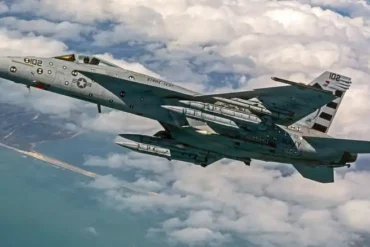
Subsequent decades saw continual refinement through variants that equipped legendary fighters including the F-8 Crusader, F-4 Phantom II, and F-14 Tomcat. Each generation improved seeker sensitivity, maneuverability, resistance to countermeasures, and overall lethality.
Following difficult lessons learned during the Vietnam War, the Navy established the famous TOPGUN school, where evolving Sidewinder capabilities influenced entirely new approaches to dogfighting tactics and pilot training. The missile therefore became inseparable from the broader evolution of modern Western air combat doctrine.
Today’s AIM-9X represents the culmination of that decades-long technological progression rather than an entirely new design.
The F-35 Changed How The Sidewinder Fights
Perhaps the greatest transformation in the missile’s history arrived with the introduction of the F-35 Joint Strike Fighter. Previous generations typically required pilots to establish seeker lock before launching. The AIM-9X Block II introduced Lock-On After Launch, enabling missiles to acquire targets after leaving the aircraft.
For stealth aircraft carrying weapons internally, this capability is invaluable. The missile can be launched from inside the F-35’s weapons bay before independently locating its assigned target. Combined with advanced helmet-mounted displays, pilots can engage hostile aircraft simply by looking toward them, even when those targets sit well outside the aircraft’s forward axis.
This extraordinary off-boresight capability dramatically alters close-range aerial combat by allowing engagements that would have been impossible using earlier missile generations.
As more than twenty nations continue introducing the F-35 into operational service, the AIM-9X naturally becomes their standard short-range air-to-air weapon, reinforcing its position as the dominant Western infrared-guided missile.
Building Today’s Missiles While Preparing For Tomorrow’s Fighters
The Pentagon’s investment reaches beyond current operational requirements. Future sixth-generation aircraft will demand weapons optimized for smaller internal weapons bays, enhanced stealth characteristics, greater networking capabilities, and increasingly autonomous target acquisition.
Recognizing this trajectory, the Navy is already pursuing a Compact Variant of the AIM-9X capable of delivering similar combat effectiveness within a reduced physical footprint. Maintaining today’s production infrastructure therefore also preserves the engineering expertise and industrial workforce required for tomorrow’s missile designs.
Rather than viewing current procurement solely as replenishment, defense planners increasingly see it as an investment that bridges existing fighter fleets with the next generation of air combat platforms now under development.
Why This Quiet Contract May Be One Of The Decade’s Most Important Defense Investments
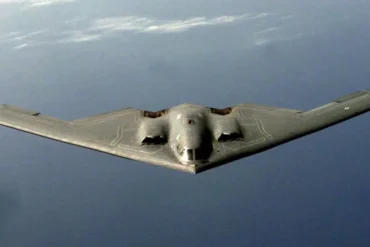
Major fighter aircraft programs often dominate headlines because their price tags stretch into the tens or hundreds of billions of dollars. Yet sophisticated aircraft derive their true combat effectiveness from the weapons they carry. An advanced stealth fighter without sufficient missile inventory becomes little more than an extraordinarily expensive reconnaissance platform.
The $1.1 billion AIM-9X contract quietly addresses one of the most significant strategic vulnerabilities exposed by recent conflicts: the gap between wartime missile consumption and peacetime production capacity. By dramatically expanding manufacturing while strengthening allied participation, the agreement reinforces not only American readiness but also the collective defensive posture of dozens of partner nations.
The procurement demonstrates a broader shift in defense planning. Military strength is increasingly measured not solely by possessing technologically advanced equipment, but by sustaining the industrial foundations capable of replacing that equipment when conflict inevitably consumes it. Factories, supply chains, skilled engineers, and long-term manufacturing commitments have become strategic assets every bit as important as aircraft carriers, stealth fighters, and missile performance specifications.
In that context, this contract is far more than another weapons purchase. It represents an industrial commitment to maintaining Western air superiority for years to come. Every new AIM-9X rolling off the production line strengthens not only the aircraft that carry it but also the multinational coalition whose collective deterrence depends upon having enough precision weapons ready before—not after—the next crisis begins.