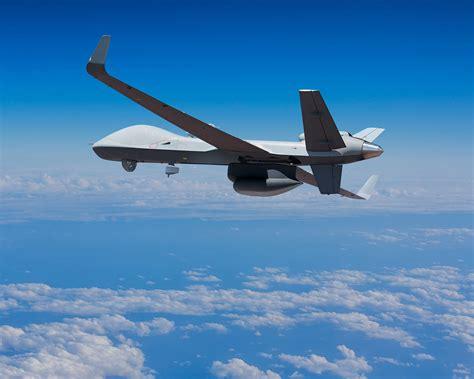
Taiwan is stepping into a new era of aerial intelligence as the first MQ-9B SkyGuardian drones are scheduled to arrive in the third quarter of 2026. On paper, it looks like a routine defense procurement update. In reality, it’s closer to upgrading from a pair of binoculars to a networked, high-altitude telescope that never blinks. The difference is not incremental—it’s architectural.
The Republic of China Air Force confirmed that two of the four ordered MQ-9B unmanned aerial vehicles (UAVs) will be delivered first, with the remainder completing the package shortly thereafter. This development does more than add hardware; it introduces a persistent, data-rich intelligence layer into Taiwan’s defense ecosystem, one designed to track, interpret, and anticipate China’s increasingly complex regional operations.
The strategic weight of this moment comes from timing. Chinese military activity around Taiwan has grown not just in volume, but in ambiguity—air sorties that test responses, naval patrols that blur the line between presence and pressure, and “gray-zone” operations that sit deliberately below the threshold of open conflict. Against that backdrop, information dominance—knowing what is happening, where, and why—becomes the first battlefield.
MQ-9B SkyGuardian: A Persistent Eye in the Sky
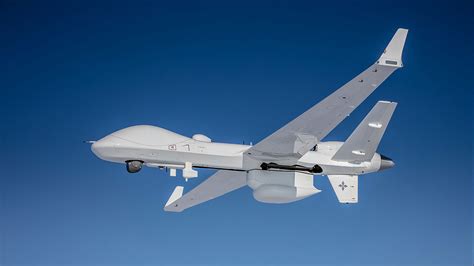
The MQ-9B SkyGuardian, developed by General Atomics Aeronautical Systems, represents the latest evolution in medium-altitude, long-endurance (MALE) remotely piloted aircraft systems. If earlier drones were scouts, this one behaves more like a patient strategist.
It can remain airborne for over 40 hours, operating through satellite links far beyond line-of-sight. That endurance transforms surveillance from intermittent snapshots into something closer to a continuous film reel. Patterns emerge. Anomalies stand out. Intent becomes easier to infer.
Technically, the platform is loaded with a sophisticated sensor suite:
- Lynx multi-mode radar capable of tracking surface and airborne targets
- Electro-optical and infrared (EO/IR) sensors for day-night imaging
- Automatic takeoff and landing systems, reducing operator burden
- A 79-foot wingspan and payload capacity up to 4,750 pounds
These features combine into something more than reconnaissance. The MQ-9B acts as a networked ISR node—ISR meaning intelligence, surveillance, and reconnaissance—feeding real-time data into command systems that can respond dynamically.
There’s a subtle but crucial shift here. Surveillance is no longer about seeing more; it’s about understanding faster.
From Aircraft Purchase to Operational Ecosystem
Taiwan’s acquisition, valued at approximately $217.6 million, includes not just the drones themselves but a full operational package: ground control stations, spare parts, and support infrastructure. This matters enormously.
Buying a drone without its ecosystem is like buying a brain without a nervous system. The MQ-9B program ensures integration into Taiwan’s broader command-and-control architecture, enabling seamless data flow between air, sea, and land forces.
This integration allows for:
- Real-time target cueing for missile systems
- Continuous maritime domain awareness
- Enhanced battle damage assessment
- Faster decision-making cycles under pressure
In military theory, this compresses the OODA loop—Observe, Orient, Decide, Act—a concept developed by strategist John Boyd. The side that cycles through this loop faster tends to dominate. The MQ-9B is essentially a machine built to accelerate observation and orientation.
Monitoring China’s Expanding Operational Footprint
Taiwan’s geographic reality is unforgiving. It sits at the center of overlapping operational zones: the Taiwan Strait, the Bashi Channel, and the Western Pacific approaches. Chinese forces operate across all of them, often simultaneously.
The MQ-9B’s endurance allows Taiwan to maintain persistent coverage across multiple axes, something that would otherwise require a large fleet of manned aircraft rotating constantly—an expensive and logistically exhausting approach.
This persistence enables what analysts call pattern-of-life analysis. Over time, the drone learns what “normal” looks like:
- Routine naval patrol routes
- Standard air sortie frequencies
- Coast guard movement patterns
Once “normal” is established, deviations become meaningful. A sudden concentration of vessels, unusual flight paths, or coordinated multi-domain activity can signal escalation. In a region where early warning could mean the difference between deterrence and surprise, this capability is priceless.
There’s a philosophical twist here: the MQ-9B doesn’t just collect data; it reduces uncertainty. And in geopolitics, uncertainty is often the most dangerous variable.
Beyond Surveillance: A Platform with Latent Power
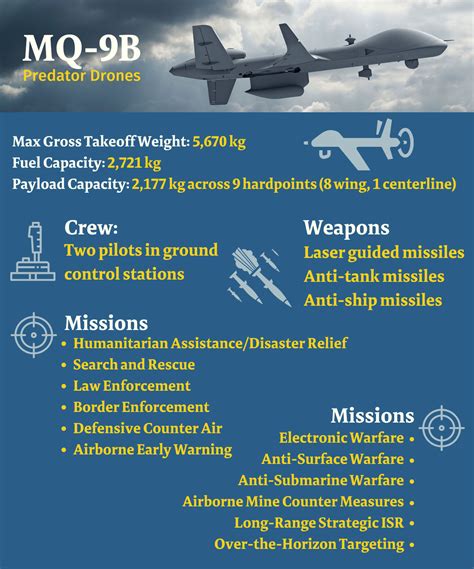
Although Taiwan’s current configuration focuses on surveillance, the MQ-9B is not inherently limited to passive observation. Its design supports a wide mission spectrum, including:
- Over-the-horizon targeting
- Electronic warfare support
- Search and rescue operations
- Maritime security missions
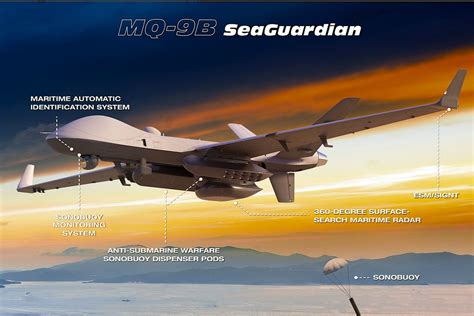
In its maritime variant, the SeaGuardian, the platform can even support anti-submarine warfare and mine countermeasures. Taiwan has not publicly indicated such roles in its current deployment, but the underlying architecture allows for future expansion.
Think of it as buying a high-end computer initially used for writing documents, but capable of running complex simulations when needed. The hardware quietly holds more potential than its initial use suggests.
A Proven Lineage Reducing Operational Risk
Military procurement is often haunted by uncertainty—delays, cost overruns, systems that underperform. The MQ-9B sidesteps much of that risk by building on a mature and widely used drone lineage.
General Atomics reports over 8 million flight hours across its drone family. That’s not a prototype pedigree; that’s industrial-scale operational experience. The United Kingdom’s Royal Air Force has already fielded the system as the Protector RG Mk1, reinforcing its credibility.
This matters for Taiwan in two ways. First, it reduces the learning curve for operators and maintenance crews. Second, it ensures compatibility with established training, logistics, and upgrade pathways.
In systems engineering terms, this is the difference between deploying a known quantity versus experimenting under pressure. Taiwan is choosing reliability over novelty—a pragmatic move in a high-stakes environment.
Strategic Implications: Time, Awareness, and Decision Space
The real power of the MQ-9B lies not in its sensors or endurance alone, but in what those capabilities create: time.
Time to detect.
Time to interpret.
Time to decide.
Against a larger adversary like China, Taiwan cannot rely on matching force with force. Instead, it leans into asymmetric advantages—information, agility, and resilience. The MQ-9B enhances all three.
By extending surveillance reach and persistence, Taiwan gains a clearer picture of unfolding events. This expanded awareness increases decision space, allowing leaders to respond with precision rather than haste.
Crucially, many potential crises will not begin with overt conflict. They will emerge through ambiguous signals—coercive maneuvers, incremental escalations, and strategic probing. In such scenarios, the ability to distinguish signal from noise becomes a decisive advantage.
A Shift Toward Network-Centric Defense
The arrival of the MQ-9B aligns with a broader transformation in modern military doctrine: the move toward network-centric warfare. In this model, the value of a platform is measured not just by its individual capabilities, but by how effectively it contributes to a connected system of systems.
The drone acts as a data relay and fusion node, linking sensors and shooters across domains. Information gathered in the air can inform decisions at sea or on land within seconds.
This interconnectedness creates a force that is:
- More adaptive to changing conditions
- More resilient against disruption
- More efficient in resource allocation
In essence, Taiwan is not just adding drones; it is reinforcing a digital nervous system for its defense apparatus.
The Quiet Revolution of Persistent Surveillance
There’s something deceptively calm about a drone that can loiter for 40 hours. No sonic boom, no visible show of force—just a steady presence high above. Yet this quiet persistence is reshaping how military power operates.
Historically, surveillance was episodic. Aircraft would fly missions, collect data, return, and analysts would piece together the picture. Now, with platforms like the MQ-9B, surveillance becomes continuous and dynamic.
This changes the tempo of decision-making. Instead of reacting to events after they unfold, commanders can track developments in real time, adjusting responses as situations evolve.
It’s a bit like switching from reading yesterday’s news to watching a live broadcast. The difference in awareness is profound—and so is the impact on outcomes.
Conclusion: A Subtle but Significant Shift in the Balance
The arrival of Taiwan’s first MQ-9B drones in 2026 will not dramatically alter the raw balance of military power across the Taiwan Strait. No single system can do that. But power is not just about quantity; it’s about clarity, timing, and coordination.
The MQ-9B strengthens all three.
It gives Taiwan a sharper, more persistent view of its surroundings. It buys precious time in moments of uncertainty. And it integrates seamlessly into a defense strategy built on information superiority and rapid response.
In a region defined by complexity and tension, the side that sees first and understands first holds a subtle but critical edge. The MQ-9B doesn’t shout its presence—but it doesn’t need to. It watches, it learns, and it quietly tilts the strategic equation.