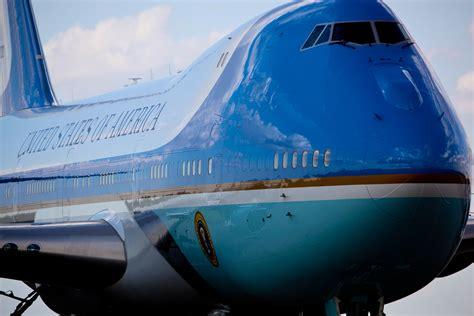
The aircraft commonly known as Air Force One is far more than a luxury jet carrying the President of the United States. It is a flying command center, a symbol of American power, a survivable wartime headquarters, and one of the most recognizable aircraft on Earth. While many commercial airlines have retired their Boeing 747 fleets in favor of more fuel-efficient twin-engine aircraft, the United States Air Force continues investing billions of dollars into modified 747s for presidential transport.
That decision may seem strange in an era dominated by the Boeing 787 Dreamliner and Airbus A350, but the reality is that no other aircraft combines the 747’s physical size, political symbolism, engineering flexibility, and survivability requirements in the same way. Even decades after the original VC-25A fleet entered service, the Jumbo Jet remains uniquely capable of fulfilling one of the most demanding aviation missions ever created.
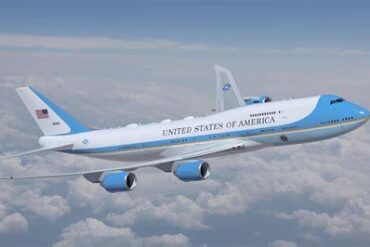
The current presidential fleet consists of heavily modified Boeing 747-200 aircraft designated VC-25A, while their replacements, the VC-25B, are based on the newer Boeing 747-8 Intercontinental. Despite delays, cost overruns, and the gradual retirement of the 747 from commercial aviation, the Air Force has effectively concluded that the Jumbo Jet is still the only realistic platform for the mission.
The continued reliance on the Boeing 747 reveals something important about military aviation: the requirements of national security often differ dramatically from the economics of commercial airlines. Fuel efficiency matters less than redundancy. Passenger density matters less than survivability. And prestige matters far more than most people realize.
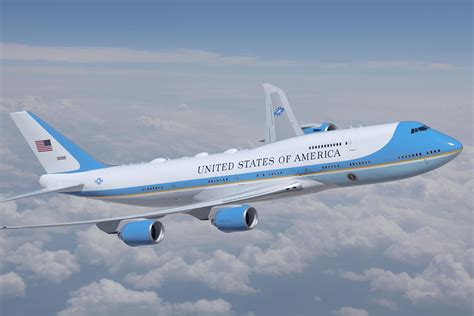
The Boeing 747 Became A Symbol Of American Power
From the moment the Boeing 747 entered service in 1970, it represented American industrial dominance. The aircraft was enormous, technologically ambitious, and unmistakably American. For decades, the Jumbo Jet symbolized long-distance global travel in the same way that the Statue of Liberty symbolized arrival in the United States.
That symbolism became even more important when the Air Force selected modified 747s for presidential transport. Every presidential aircraft serves two purposes simultaneously. It transports the commander-in-chief safely around the world, but it also acts as a diplomatic stage. Whenever Air Force One lands in a foreign country, the aircraft itself becomes part of the political theater.
The United States has long preferred domestically built aircraft for presidential transport. During the Cold War and beyond, using an American-built aircraft reinforced the nation’s industrial and technological leadership. Today, Boeing is effectively the only remaining American manufacturer capable of producing a widebody airliner suitable for such a mission.
Using a foreign-built aircraft like an Airbus A350 would be politically unimaginable for Washington. Even if another aircraft offered competitive performance, the symbolism alone would likely eliminate it from consideration. Air Force One is intended to project American prestige, and the Boeing 747 achieves that instantly.
The aircraft’s sheer visual presence matters too. The distinctive hump-backed silhouette of the 747 remains one of the most recognizable aircraft shapes ever designed. When foreign leaders, military personnel, reporters, or civilians see Air Force One approaching, there is no confusion about what it represents.
For the White House and the Pentagon, perception is part of the mission.
Why Smaller Boeing Aircraft Cannot Replace The 747
At first glance, it might seem logical to replace the aging VC-25A fleet with a modern twin-engine aircraft such as the Boeing 787 or Boeing 777X. These aircraft are more fuel efficient, require less maintenance, and dominate today’s commercial aviation market.
However, presidential transport requirements are radically different from airline operations.
The Air Force effectively narrowed its choices to Boeing aircraft only. That immediately eliminated Airbus designs. Boeing’s current commercial lineup includes the 737, 767, 777, and 787, while used 747-8 aircraft remain available on the secondary market.
The Boeing 737 is obviously too small for presidential missions. The 767, despite its military popularity as the KC-46 tanker platform, also lacks the internal volume needed for a full presidential support ecosystem. The Boeing 787 offers modern systems and efficiency, but its cabin dimensions still fall short once military modifications are installed.
That leaves the Boeing 777 and Boeing 747.
While the 777 is enormous by commercial standards, the Air Force determined that the 747 still provides superior internal flexibility. The 747’s upper deck, vast fuselage volume, and four-engine architecture make it uniquely adaptable for extensive military conversion.
The VC-25 aircraft contain roughly 4,000 square feet of interior floor space. That area must support:
- Presidential living quarters
- Conference rooms
- Secure communications centers
- Offices for senior staff
- Secret Service workspaces
- Medical facilities
- Crew rest compartments
- Press seating
- Galleys capable of serving around 100 meals
- Defensive system hardware
- Electrical and avionics infrastructure
The aircraft essentially functions as a mobile White House capable of operating independently during a global crisis.
Once all those systems are integrated, even a large twin-engine airliner begins running out of usable space surprisingly quickly.
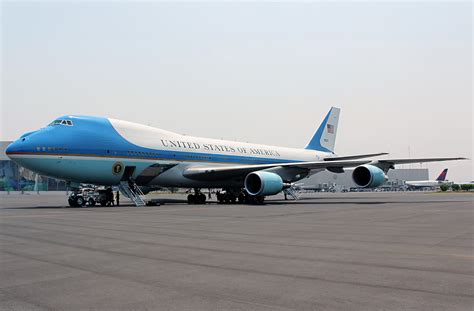
Air Force One Is Designed To Survive Catastrophic War
Most people think of Air Force One as a luxury aircraft for presidential travel. In reality, it is fundamentally a survivability platform.
The VC-25 fleet is designed to ensure continuity of government during extreme national emergencies, including nuclear conflict. That requirement changes everything about the aircraft’s design philosophy.
The aircraft contains hardened communications systems allowing the President to maintain contact with military commanders, nuclear forces, and government agencies anywhere in the world. Advanced satellite communications, encrypted networks, and classified defensive systems are integrated throughout the aircraft.
The VC-25 also incorporates protection against electromagnetic pulse attacks, commonly known as EMPs. Such systems are intended to keep the aircraft operational even if nuclear detonations disrupt electronic infrastructure below.
The aircraft’s defensive capabilities are equally significant. Although many systems remain classified, Air Force One reportedly carries countermeasures designed to defend against incoming missiles and electronic threats. Flares, electronic jamming systems, and infrared countermeasures are believed to be part of the aircraft’s survivability package.
The Boeing 747’s enormous airframe is critical because all these systems require substantial physical space, electrical capacity, cooling infrastructure, and structural reinforcement.
Another overlooked factor is the aircraft’s four engines.
Commercial airlines moved aggressively toward twin-engine aircraft because they reduce fuel consumption and maintenance costs. The military evaluates aircraft differently. Four engines provide additional redundancy during emergencies, especially during long-range overwater operations involving the President.
If one engine fails on a four-engine aircraft, the operational impact is less severe than on a twin-engine aircraft. For ordinary airlines, modern twin-engine reliability is sufficient. For presidential transport during potential wartime conditions, redundancy remains highly valued.
The Air Force prioritizes resilience over efficiency.
The VC-25B Program Shows How Complex Presidential Aircraft Really Are
Replacing the current VC-25A fleet has proven extraordinarily difficult. The replacement program demonstrates just how specialized Air Force One truly is.
The two future VC-25B aircraft are based on Boeing 747-8 Intercontinental airframes originally built for the now-defunct Russian airline Transaero. Since the aircraft were never delivered, they remained available in essentially new condition.
Boeing received the contract to convert these aircraft into the next generation of Air Force One, but the project quickly became one of the company’s most difficult modernization efforts.
The contract was initially valued at approximately $3.9 billion, structured as a fixed-price agreement. While politically attractive at the time, the arrangement became financially painful for Boeing as costs escalated and schedules slipped.
The engineering challenge is immense. Converting a commercial 747-8 into a VC-25B requires massive structural redesigns, secure communications integration, military-grade wiring systems, defensive equipment installation, electromagnetic hardening, and custom interior construction.
Unlike ordinary VIP aircraft, the VC-25B must function under combat conditions while maintaining uninterrupted command capabilities.
The project’s timeline has slipped repeatedly. Initial delivery expectations targeted the early 2020s, but current projections place operational readiness closer to 2028 or 2029.
That delay has created a major problem for the Air Force because the existing VC-25A aircraft are aging rapidly.
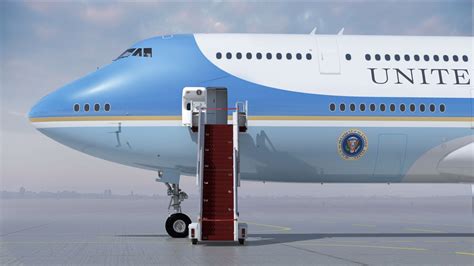
The Air Force Is Building A Temporary Presidential 747 Fleet
To bridge the growing gap between the aging VC-25As and delayed VC-25Bs, the Air Force has assembled an unusual collection of Boeing 747 aircraft.
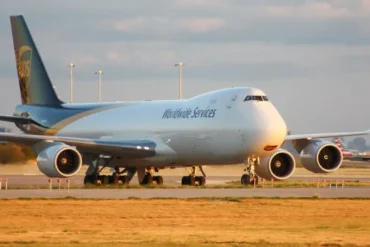
One of the most talked-about additions is the former Qatari royal family Boeing 747-8, sometimes referred to as the VC-25 Bridge Aircraft. This aircraft is being rapidly modified to provide interim presidential transport capability until the VC-25Bs arrive.
Unlike the future VC-25B fleet, the Bridge Aircraft is not expected to receive every advanced military upgrade. Reports suggest it may lack full nuclear hardening, comprehensive communications integration, and aerial refueling capability.
Even so, modifying the aircraft remains extremely expensive. Retrofitting a commercial 747 for presidential service requires extensive structural and systems work regardless of whether every military feature is installed.
The Air Force has also acquired two former Lufthansa Boeing 747-8 aircraft. These jets may support testing, training, logistics, or spare parts requirements associated with the future VC-25B fleet.
Together, these aircraft demonstrate how difficult it is to sustain presidential airlift operations. The Air Force cannot simply purchase a standard commercial jet and repaint it. Every aircraft requires years of engineering, certification, and military integration.
By the time the VC-25Bs finally enter service, the Boeing 747 production line will have been closed for many years. Yet the Air Force will still be investing heavily in the platform because no alternative currently matches its capabilities.
Why Military Aviation Often Uses “Outdated” Aircraft
One of the most fascinating realities of military aviation is that the newest technology does not always replace older aircraft designs immediately. In many cases, older airframes remain operational because they possess characteristics newer aircraft cannot easily replicate.
The Boeing 747 exemplifies this perfectly.
Commercial aviation retired many 747 fleets because airlines prioritize fuel efficiency and operating economics. The Air Force measures success differently. Military aircraft often remain operational for decades if they can still accomplish specialized missions effectively.
The Air Force continues purchasing Boeing 767-based KC-46 tankers despite the aircraft’s declining commercial relevance. The B-52 bomber, first introduced in the 1950s, is expected to remain operational into the 2050s. The E-3 Sentry AWACS aircraft still relies on Boeing 707 airframes long after the commercial 707 disappeared from passenger service.
Military organizations prioritize mission capability over commercial fashion.
The 747 also benefits from extraordinary structural durability. The aircraft was originally engineered during an era when manufacturers emphasized robust construction margins and long operational lifespans. Its immense fuselage volume provides unmatched flexibility for military adaptation.
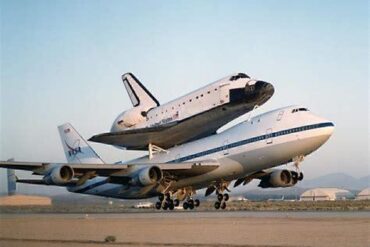
That is one reason the 747 became the foundation for several specialized aircraft types beyond Air Force One. NASA used modified 747s as Space Shuttle Carrier Aircraft, while the Air Force has relied on related 747-based platforms for strategic command missions.
The upcoming replacement for the E-4B Nightwatch “Doomsday Plane” is also expected to involve Boeing 747-8 airframes. That decision further reinforces how valuable the aircraft remains for highly specialized national security missions.
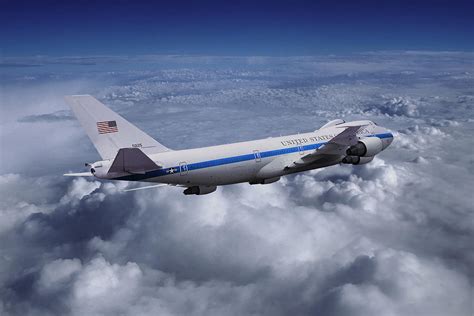
The Boeing 747 Still Has No True Replacement For Presidential Transport
The commercial aviation industry moved beyond four-engine giants years ago. Airlines now favor efficient twin-engine aircraft optimized for profitability and lower emissions. From a business perspective, the Boeing 747 era has largely ended.
But Air Force One operates in an entirely different category.
The mission requires a flying White House, a survivable wartime command center, a diplomatic symbol, a secure communications hub, and an aircraft capable of supporting the President under nearly any conceivable global crisis.
No current American-built aircraft combines those capabilities as effectively as the Boeing 747.
The 747-8 offers enormous cabin space, unmatched modification potential, four-engine redundancy, and iconic visual stature. It can absorb massive military upgrades while still maintaining intercontinental range and operational flexibility.
Even the delays and escalating costs surrounding the VC-25B program reinforce the point. Building Air Force One is so specialized and demanding that only a handful of aircraft in history could realistically serve as the foundation.
For all the headlines about retirement and obsolescence, the Boeing 747 remains irreplaceable in one critical role: carrying the President of the United States while preserving the continuity of American government itself.
That responsibility demands far more than an ordinary airliner.